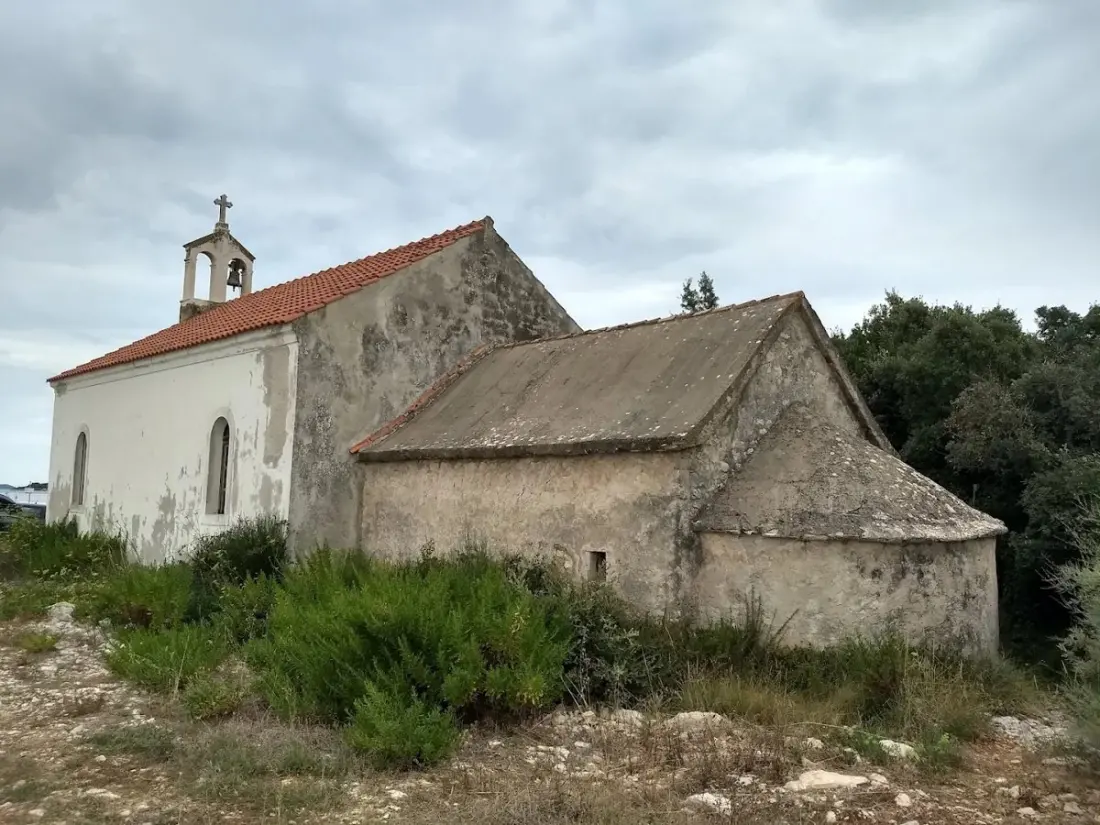
A merchant named Toricella, so the legend goes, was shipwrecked off the island of Ugljan near Zadar. He swam ashore at Ljokine Cove and, in thanks, built a small stone church on the very spot where he dragged himself out of the sea. That church - dedicated to Saints Cosmas and Damian, the twin physician-martyrs - still stands right at the water's edge, and Croatia's Ministry of Culture and Media has now declared it a protected cultural asset.
The Church of Saints Cosmas and Damian is believed to date from the 11th or 12th century, making it the oldest preserved church in the settlement of Ugljan. The original building was tiny: 4.8 by 2.8 metres, with walls 80 centimetres thick, a half-barrel vault, two small windows and a roof of broken stone slabs. In the early 20th century a ten-metre nave was added, and today the interior holds an altar, pews and paintings of the twin saints and the Virgin Mary with the Child. A stone bell-gable above the round window houses a bell made in the Split workshop of Jakov Cukrov.
The shipwreck story can't be confirmed, but Toricella's name does appear in history: on 6 August 1512, a will by F. Toricella from Bergamo left land to the priest who would celebrate a sung Mass there each feast day. Locals long celebrated that feast - 26 September - with pilgrims walking in from every settlement on the island. Mass is still held in the church, with blessings called down on Ugljan sailors and their ships around the world.
Why go? Ugljan itself is a treat: a green, 22-kilometre island nicknamed the "garden of Zadar," just across the Zadar Channel from the city, home to about 5,600 people and joined to neighbouring Pašman by a bridge at Ždrelac. The church sits in a quiet cove reachable by a gravel road through pine forest, near the hamlet of Guduće - where you'll also find a colourful mosaic bench made in 2019 by retired local Božica Kliman, depicting the church, a sunset, a squid and a lighthouse.
Add on the fortress of St. Michael above Preko for sweeping views of the archipelago, the Franciscan monastery on the islet of Galevac, and ancient olive-oil mill ruins at Muline. It's a slow-travel kind of island: coves, olive groves, fishing villages and water clear enough to make the ferry ride feel like part of the holiday.
Full story via Total Croatia.