Every family has a historian. Writer Yoon Kim's turned out to be his grandmother, Sonia Shin, a 99-year-old in Seoul who, after years of vague family lore, revealed she and her late husband once ran a textile factory that employed more than 50 people and helped pioneer industrial production of cotton flannel in postwar South Korea.
Kim, an early-forties writer who grew up in Arkansas, grew up with a grandmother who read palms and then inspected his shirt seams for quality — quirks that only made sense once he dug into her past. Over two and a half years, and with help from a bilingual cousin, his sister and his mother, he pieced together her story through interviews, old incorporation documents and photographs of looms and factory workers.
Her path there was extraordinary. Born in Pyongyang in 1928 under Japanese colonial rule, Sonia was married off in 1947 to KwangDal Suh, a railroad worker from Incheon. As the peninsula split along the 38th parallel, she fled south while pregnant with her second child, toddler strapped to her back — travelling by train, then on foot across ridgelines and mudflats, nearly drowning during a night river crossing as border guards fired shots. She never saw her parents again.
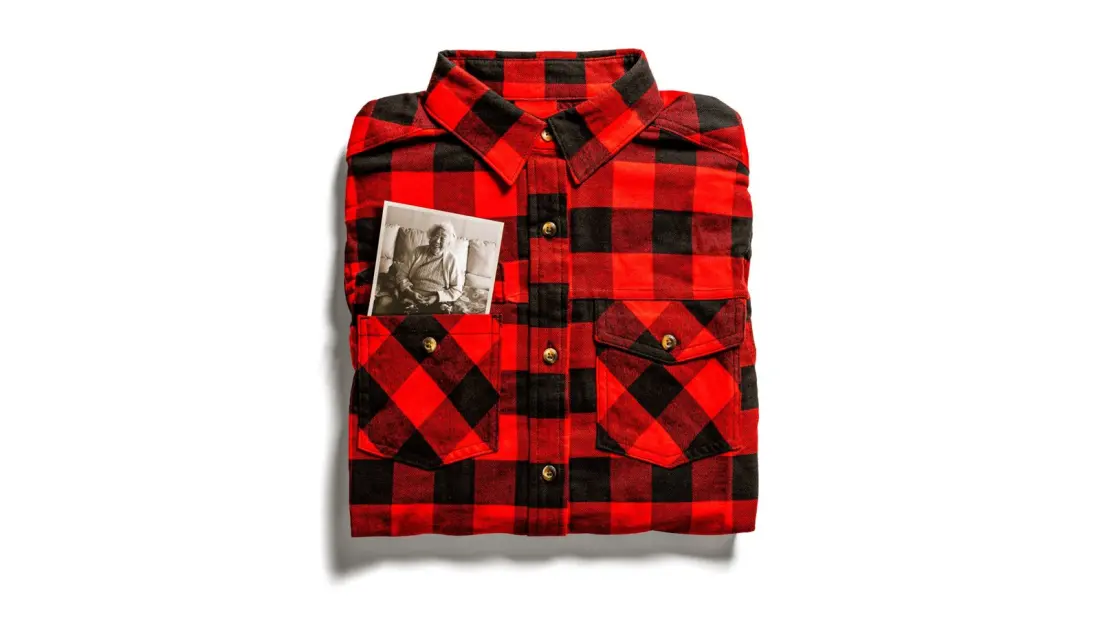
Why should a traveller or outdoor enthusiast care? Because flannel is the unofficial uniform of hiking trails, campfires and gear shops everywhere — and few people know what it actually is. The term doesn't mean plaid or wool: flannel is any woven cotton or wool fabric brushed until fuzzy, creating a soft insulating layer called the "nap." The technique traces back to 17th-century Wales, went industrial in Europe, and crossed to America via Pennsylvania brand Woolrich, whose 1850 red-and-black buffalo check became the lumberjack standard. Kim's reporting adds a surprising chapter: while the US has been shedding its own textile industry — roughly 70 percent of American clothing was domestically made in 1980, versus about 2 percent today, according to American Flannel author Steven Kurutz — a war refugee in Seoul was building an export-grade flannel operation from a half-burned factory. American production largely moved to China, Vietnam and Bangladesh; Woolrich's own mill, the oldest continuously running in the country, closed in 2018.
Kim's piece is part family memoir, part material history, and a reminder that the fabrics we wear carry global stories — of migration, industry and reinvention — stitched into every seam. For anyone who has ever pulled on a flannel before a cold-weather hike, it reframes a wardrobe staple. And for travellers heading to Seoul, it's a quiet prompt to look past the skincare shops and K-pop merch: the city's textile and garment heritage is a real, walkable layer of its history, from the markets of Dongdaemun to neighbourhoods like Apgujeong where Sonia still lives, watching WWE wrestling.