In Bhutan, when someone collapses or stops breathing, the wait for professional help can stretch long: emergency calls to 112 route through a central Health Help Center in Thimphu before responders are dispatched to the scene. Those first minutes, though, belong to whoever happens to be standing nearby — and most people have no idea what to do.
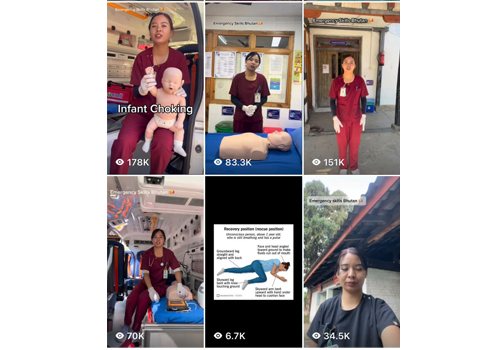
That gap is what Tenzin Choden decided to close. An Emergency Medical Responder at Punakha District Hospital, and part of the first EMR graduating class from the Faculty of Nursing and Public Health in Thimphu, she launched a Facebook initiative called Emergency Skills Bhutan (ESB), posting short, plain-language videos in the national language that teach ordinary people basic life support. The first video went up on 19 October, and the page has already passed 150,000 views.
So far she has demonstrated CPR, how to help a choking person, and the recovery position — placing an unconscious but breathing person on their side to keep the airway clear. The topics are deliberately everyday ones: choking can happen over dinner; collapses happen at work, at home, at gatherings.
Some of her advice corrects common instincts. Untrained bystanders should not waste time checking for a pulse — if someone is unresponsive and not breathing normally (or only gasping), call for help and start CPR. Fingers should never go into a choking person's throat, since that can push the obstruction deeper. Slapping an unconscious person or splashing cold water on their face does nothing. The most common mistake, she says, is simply panicking and delaying the call for help. Her rule of thumb: stay calm, make sure the scene is safe, call for assistance, then act.
She takes accuracy seriously. Each video is checked against current medical guidelines and reviewed with colleagues and doctors before posting. The response has been encouraging enough that institutions are now asking her for in-person first aid training, and she hopes to see emergency response skills taught in Bhutanese schools and offered in offices and workplaces. She points to Druk Sokchob, an existing programme providing hands-on first aid training to non-medical people, as a model she would like to support. A clinical nurse in Trongsa who follows the page has even suggested fellow health professionals could learn from it.
Why does this matter to a traveller? Anyone heading to Bhutan — especially trekkers heading into remote valleys far from a hospital — should know the local reality: the emergency number is 112, response times can be lengthy, and self-reliance counts. The fundamentals Choden teaches are universal, and watching a few of her videos before a trip is a genuinely useful use of five minutes. Better still, they serve as a reminder for anyone, anywhere: the person who saves a life is rarely a doctor. It is usually whoever is standing closest.
Story via The Bhutanese.