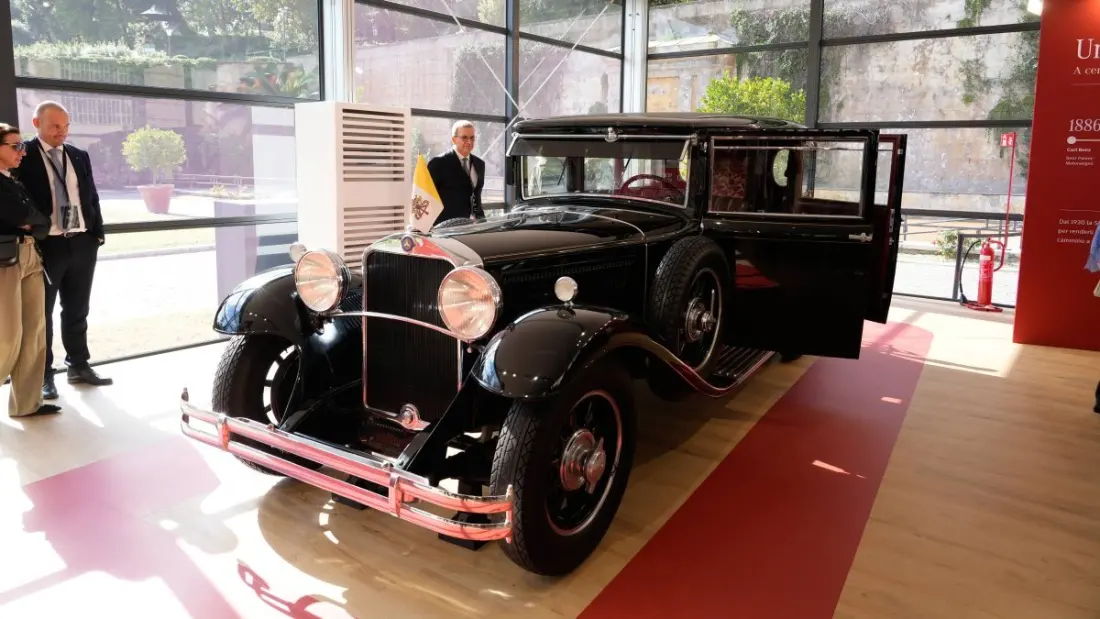
The Vatican Museums have opened a new exhibition marking 100 years of the popemobile, and it traces the story through eight Mercedes-Benz vehicles that carried popes from 1930 to today. 'A Century of the Popemobile' opened to the public on Thursday, following a preview unveiled by the museums the day before.
The star of the show is also the oldest: a Mercedes-Benz Nürburg 460 given to Pope Pius XI on 23 May 1930. It's less a car than a throne on wheels, with a silk-brocade-upholstered armchair and fine wood and metal detailing. Sandro Barbagallo, curator of the museums' Historical Collections Department, describes it as purpose-built for papal use, marking the shift from off-the-shelf vehicles to something designed around one man's needs: being visible to crowds while staying safe and comfortable.
From there, the exhibition shows how each decade added a new idea. In 1960, Pope John XXIII received a 300 d Landaulet with removable rear side windows — an early hint that popes wanted to reach out and touch people, not just ride past them. By 1980, when St. John Paul II travelled to Germany, Mercedes had developed the 230 G with a tall transparent dome at the rear: protection without losing sight of the millions who came to see him. Later designs, the curators note, were shaped around more recent papal habits, including blessing babies passed up through the crowd.
The modern chapter got an airing too. Pope Leo XIV, a self-described car enthusiast, met Mercedes-Benz executives at the preview and recalled the electric popemobile the company built for Pope Francis, in line with Francis's environmental agenda. Leo framed the vehicle's evolution in simple terms: what began as transport has become an 'instrument of encounter', helping the pope get close to the faithful at home and abroad. He urged the company to keep putting innovation to work for human dignity and care for creation.
For visitors to Rome, this is a genuinely quirky addition to a Vatican trip. The museums already pull in millions each year for the Sistine Chapel and Raphael rooms, and most people don't realise they also hold an extensive vehicle collection. This exhibition gives car fans a reason to visit and gives everyone else an unexpectedly readable history of the modern papacy — each vehicle tells you something about the pope who used it and the era's ideas about security, accessibility and spectacle. It's also free of queueing-for-the-Basilica energy: you can wander in, look at a pope's armchair bolted into a 1930s German sedan, and be on your way to lunch in Trastevere. If you're in Rome between now and the exhibition's run, it slots neatly into a standard Vatican Museums morning — book timed entry, arrive early, and save the Sistine Chapel for after the cars.
Reported by Daily Sabah Travel.