Planning a trip to Kyrgyzstan and vaguely worried about radiation? The country's Hydrometeorological Service has published its latest background gamma radiation readings, and they're reassuringly ordinary.
As of 30 October, the national average sits at 0.20 microsieverts per hour — well within what you'd expect from natural background radiation anywhere in the world. The service monitors 22 observation points across the country, from Issyk-Kul's lakeside resorts to high mountain passes.
The highest readings on record are still tiny. Cholpon-Ata, the main holiday town on Lake Issyk-Kul's north shore, tops the list at 0.33 microsieverts per hour, followed by the industrial town of Kara-Balta at 0.32. Sary-Tash — the mountain junction on the Pamir Highway route — and Kyzyl-Suu both register 0.27, with Baytik near Bishkek at 0.25. The capital Bishkek reads 0.21 and the southern city of Osh 0.22.
At the low end, Karakol and Gulcho record just 0.10 microsieverts per hour, with Batken at 0.12. For context, a long-haul flight exposes you to far more cosmic radiation per hour than any of these figures, and granite-floored buildings in many European cities produce comparable background levels.
The service notes that readings naturally vary with geology, altitude and the presence of radioactive elements in the soil — which explains why mountainous Sary-Tash at over 3,500 metres reads higher than lakeside Karakol. Crucially, it also stresses that an elevated reading in one settlement does not signal a radiation emergency or dangerous contamination.
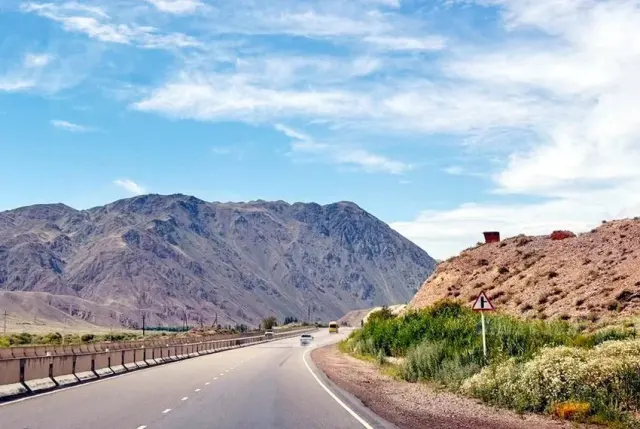
For travellers, the takeaway is simple: nothing in this data should change your plans. Trekking to alpine lakes, riding horses around Song-Kul, or road-tripping the Pamir Highway carries no radiation concern. Kyrgyzstan's mountain scenery, Soviet-era history and famously cheap guesthouses remain the draw — and, if anything, the existence of a 22-point national monitoring network is another sign this is a well-surveyed, increasingly organised destination.
The figures matter more for anyone travelling long-term or overlanding through Central Asia who likes to check environmental conditions before crossing a border. On this evidence, Kyrgyzstan's air, mountains and valleys are as safe as they come.