Tika Day is the emotional peak of Dasain, Nepal's biggest festival — the day elders press rice and vermilion onto younger relatives' foreheads and hand out dakshina, a ritual cash gift. But last week, for hundreds of thousands of Nepalis in Doha, the day looked very different. Most were on shift, working through the holiday while their families back home feasted and celebrated.
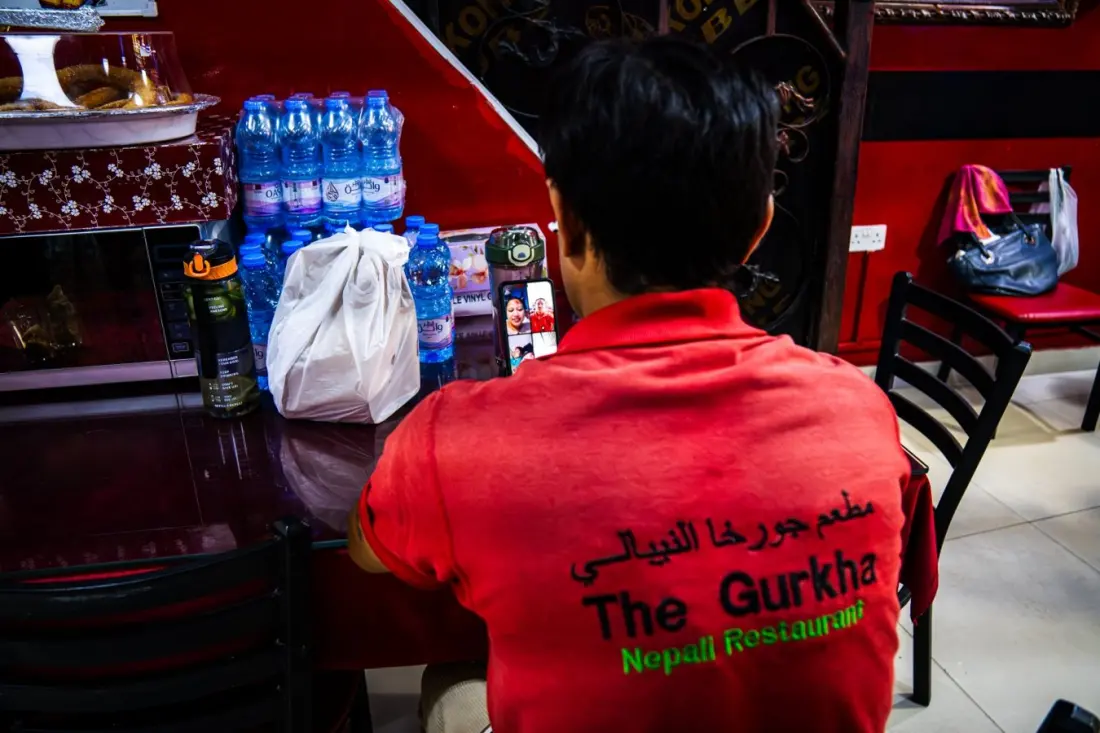
Qatar is home to an estimated 400,000 Nepalis, the second-largest foreign community in the country after Indians. For most, flying back to Nepal for Dasain is either a privilege or simply unaffordable — some haven't managed to celebrate the festival season at home in years. So the festivities happen where they can: in labour quarters, on work sites, and around the tables of Doha's Nepali restaurants, where the smell of familiar food takes the edge off the distance.
The small rituals carry the most weight. One delivery driver pulled over between orders just to call home on Tika Day. With a busy street as his backdrop, a proper ceremony wasn't possible, so the tika was given over a videocall on Messenger — blessings delivered across thousands of kilometres in a brief chat before both sides had to hang up. Then it was back to deliveries. There was money to be made, and that money is the whole point of being there.
Even the festival money itself is a reminder of the distance. Dasain dakshina in Doha comes in Qatari riyals, and one worker described the strange sight of a tika mark stamped on a one-riyal note — familiar tradition, foreign currency. With Tihar, the festival of brothers and sisters, coming next, another round of missing family is already on the horizon.
Why does this matter to travellers? First, it's a real window into Doha beyond the towers and the airport — the Nepali restaurants and neighbourhoods where the city's workforce eats, celebrates and keeps its culture alive. If you're in Qatar during Dasain or Tihar, some of the most genuine festivities in the country are happening there, and Nepali-run eateries are among the best cheap, hearty meals in town. Second, it reframes a place many visitors only pass through: the drivers, cleaners and labourers who keep Doha running are celebrating their biggest festivals in borrowed spaces, and a little awareness of that goes a long way. If you're a traveller in Doha during the festival season, ordering from a Nepali restaurant or simply knowing what Tika Day means is a small gesture of respect in a city built on migrant labour.
The picture that emerges is bittersweet — celebration improvised from what's available, connection strained through phone screens, and tradition adapting to a currency that isn't home's. But it's also a story of resilience: Dasain finds a way, even in the middle of a working week in the Gulf.