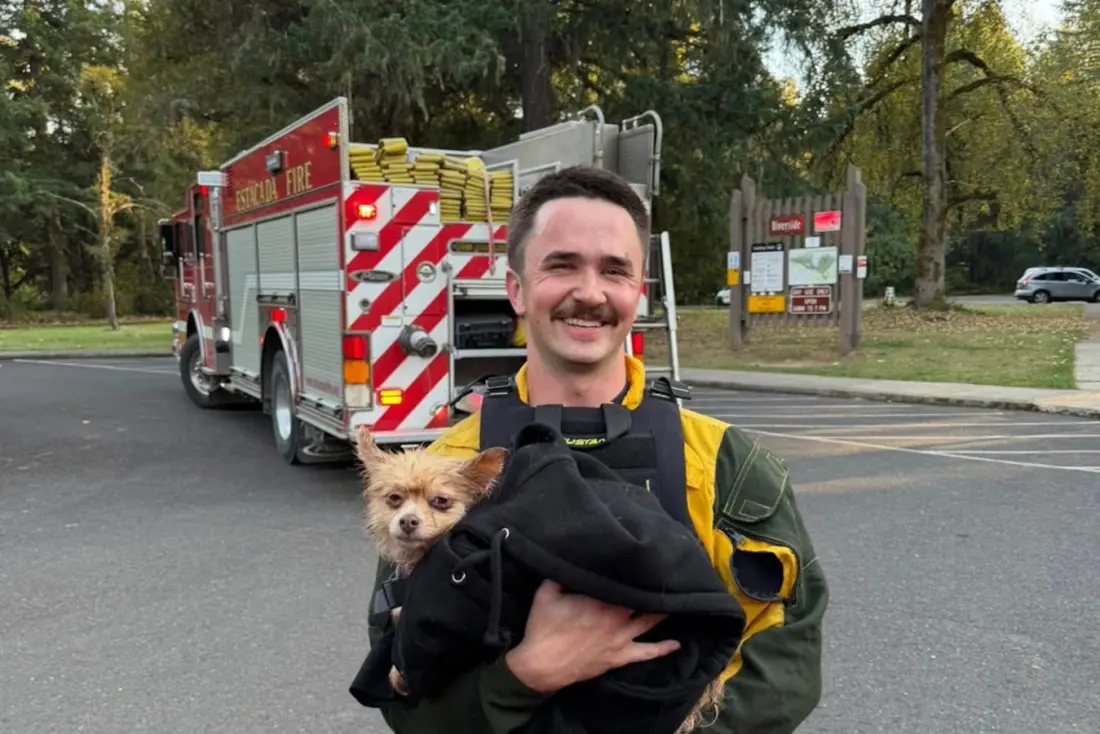
A fall paddle on Oregon's Clackamas River nearly ended badly on October 16, when a woman's kayak overturned within sight of the boat ramp near Milo McIver State Park, about 30 miles southeast of Portland. She was standing in waist-deep water next to a flooded boat, with water temperatures in the low 50s Fahrenheit and a current ready to carry anything — or anyone — downstream. The one family member properly equipped for it was Gizmo, her small dog, who was wearing a fitted canine life jacket with a rescue handle.
Firefighters from the Estacada Fire District reached the scene after the woman called her mother; her father then led crews down a trail that happened to open right where she was stranded. Rescuers set safety ropes downstream, waded in, and pulled out Gizmo first, then his owner and the swamped kayak. The whole rescue took about ten minutes, and neither required medical treatment. Gizmo, by one rescuer's account, was wide awake, shaking, cold and still sweet enough to accept a pet.
The lesson officials drew from it is blunt: cold mountain rivers catch paddlers off guard, especially on warm fall days. Portland hit 78°F that afternoon while the river sat at 53.6°F — a total of about 132 on the paddlers' Rule of 120 scale, but still cold enough for cold-water shock. Sudden immersion can trigger an involuntary gasp, and within minutes the chill robs your hands and arms of the muscle control needed to grip a boat or swim. That happens long before hypothermia enters the picture.
The legal side is looser than many assume. Oregon requires adult kayakers to carry a Coast Guard-approved life jacket, but wearing one is only mandatory on Class III or harder water. The State Marine Board recommends wearing one everywhere, and this incident shows why. As division chief Matt Aalto put it, without the jacket Gizmo likely would have drifted downstream — and whether he'd have been found is another matter.
For anyone paddling with a dog, the gear advice is specific. The BoatUS Foundation, which tests canine flotation devices, suggests looking for a sturdy rescue handle, wide padded belly straps and a secure but comfortable fit — note that dog jackets carry no official Coast Guard standard. The AKC recommends flotation for all dogs on the water, even confident swimmers, and advises against tethering a dog to the boat, since a capsize could trap it. Voice training matters too: a dog that responds to commands is far easier to manage in moving water.
Why should travellers care? Autumn paddling trips are popular precisely because of those deceptively mild days, and the Clackamas is a classic example of a snowmelt-fed river that stays frigid when the air feels summery. The woman in this story did everything right in the water and still got caught out — simply by forgetting her own jacket. Whether you're renting a kayak in Oregon or anywhere else with mountain-fed water, the takeaway travels well: dress for the water temperature, not the weather forecast, and that goes for your dog too.