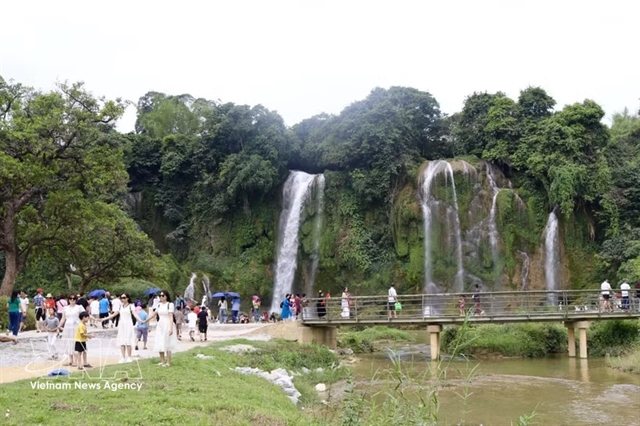
Đàm Thủy Commune in Vietnam's Cao Bằng Province and Daxin County in China's Guangxi region have agreed to jointly build a border marker square on the line that runs between the two countries. The site covers the area around former boundary Markers No. 53, No. 835 and No. 835/1 — and it sits squarely inside one of Southeast Asia's most striking natural sights: the Bản Giốc (Vietnam)–Detian (China) Waterfall Scenic Area.
The choice of location is no accident. The falls straddle the Vietnam–China border, with water cascading over a wide limestone curtain on both sides, and the boundary itself weaves through the tourist zone. For years, visitors have been able to stand at the falls and effectively be in two countries at once. A dedicated square around the old markers formalises that odd experience into a proper sight — a place to take photos with one foot in Vietnam and one in China, and a nod to how the two localities are working together on cross-border tourism.
For travellers, the practical upshot is that this remote corner of northeastern Vietnam is getting more infrastructure and more official backing. Cao Bằng remains one of the least-visited provinces in the country, which is part of its appeal: dramatic karst roads, Hmong and Tay villages, and the Quây Sơn River feeding the falls. The cross-border arrangement with Guangxi also matters because Chinese tour groups arrive at the same sight from the Daxin side, so expect the area to be busier as cooperation deepens.
If you're planning a trip, go for the falls themselves rather than the marker photo op — the square is a bonus. The waterfall is most powerful in the rainy months, when the twin cascades thunder side by side, while drier periods split the flow into separate streams. Boats take visitors close enough to feel the spray, and viewpoints on the Vietnamese side give the classic panorama.
Who is this for? Road-trippers doing the Ha Giang–Cao Bằng loop, travellers who like border towns with a story, and anyone who wants Vietnam's biggest waterfall before the tour coaches multiply. The joint square is a small piece of news, but it signals where this border zone is heading: easier access, more facilities, and a properly marked meeting point between two very different countries that happen to share one spectacular fall.
Original source: Vietnam News Life.