Switzerland's hottest summer on record has done something archaeologists could never arrange: it exposed the outlines of a lost Roman city. Around Avenches in the canton of Vaud, the site of Aventicum, parched fields gave up 'parch marks' — ghostly lines where vegetation above buried walls withered faster than the surrounding crops.
Aventicum was founded roughly 2,000 years ago as the capital of Roman Helvetia, after Julius Caesar subdued the local tribes. It later declined as Germanic incursions intensified from the third century onwards. Today it's one of Switzerland's most significant Roman sites, and this summer proved there is still plenty hidden under the alfalfa.
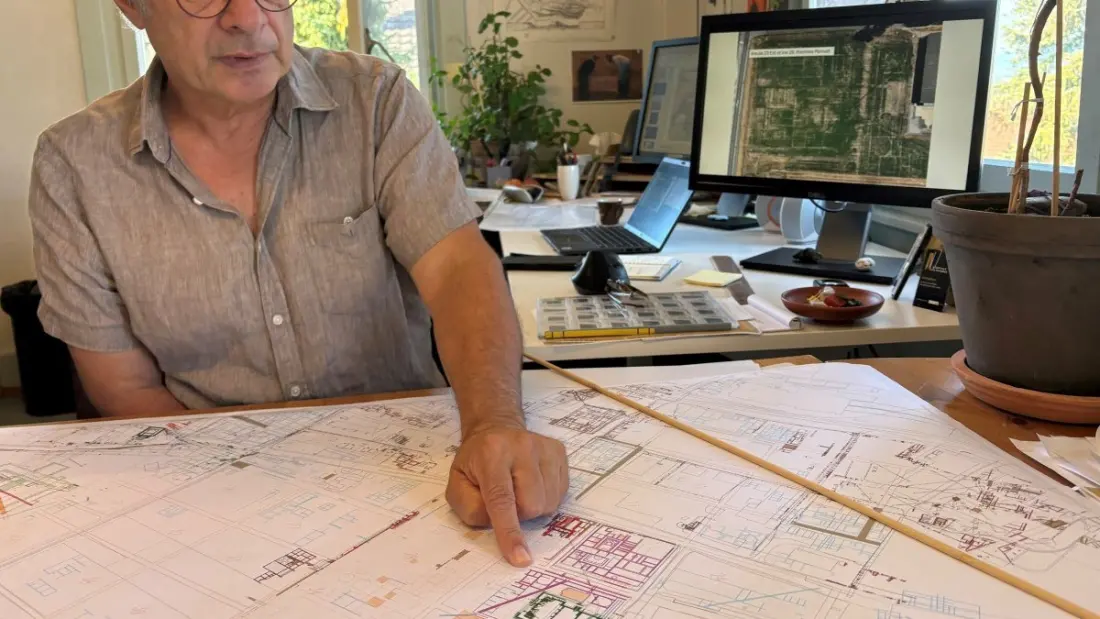
Prompted by a history enthusiast, a five-person archaeology team from Vaud flew a drone over the surrounding fields daily from June to August. The images revealed previously unknown or poorly understood traces of thermal baths, houses, roads and what may be a temple — including areas of the ancient city never excavated before. Jordan Anastassov, an archaeologist for Vaud, called these the richest discoveries at the site in at least two generations.
The team plotted the finds onto existing maps in purple, filling blank spaces and correcting earlier mistakes. Some of the faint traces disappeared after fields were mown and temperatures dropped, but the outline of a newly identified pool in the baths remained visible into September thanks to lingering warmth. The findings will be presented to other specialists, and targeted excavations may follow. As site director Pierre Blanc put it, nobody wishes for droughts — but while they last, the team intends to keep looking.
The phenomenon isn't unique to Switzerland: heat and drought elsewhere in Europe have surfaced everything from buried ruins to World War II wrecks on dried riverbeds. But isolated finds without dedicated researchers are often hard to interpret — the Avenches discoveries stand out because a full team was watching in real time.
For travellers, this is a rare moment to see archaeology in motion. Avenches, about an hour from Lausanne and Bern, already draws visitors for its Roman amphitheatre, which still hosts concerts and opera festivals in summer, plus a museum displaying Aventicum's famous gilded bronze bust of Marcus Aurelius. If the warm, dry pattern holds, you might even spot parch marks yourself in the fields ringing the old city — though you'd be wise to leave interpretation to the professionals. History lovers planning a Swiss itinerary focused on lakes and mountains could easily add an afternoon here, and the odds of new discoveries being announced make the coming seasons unusually interesting.