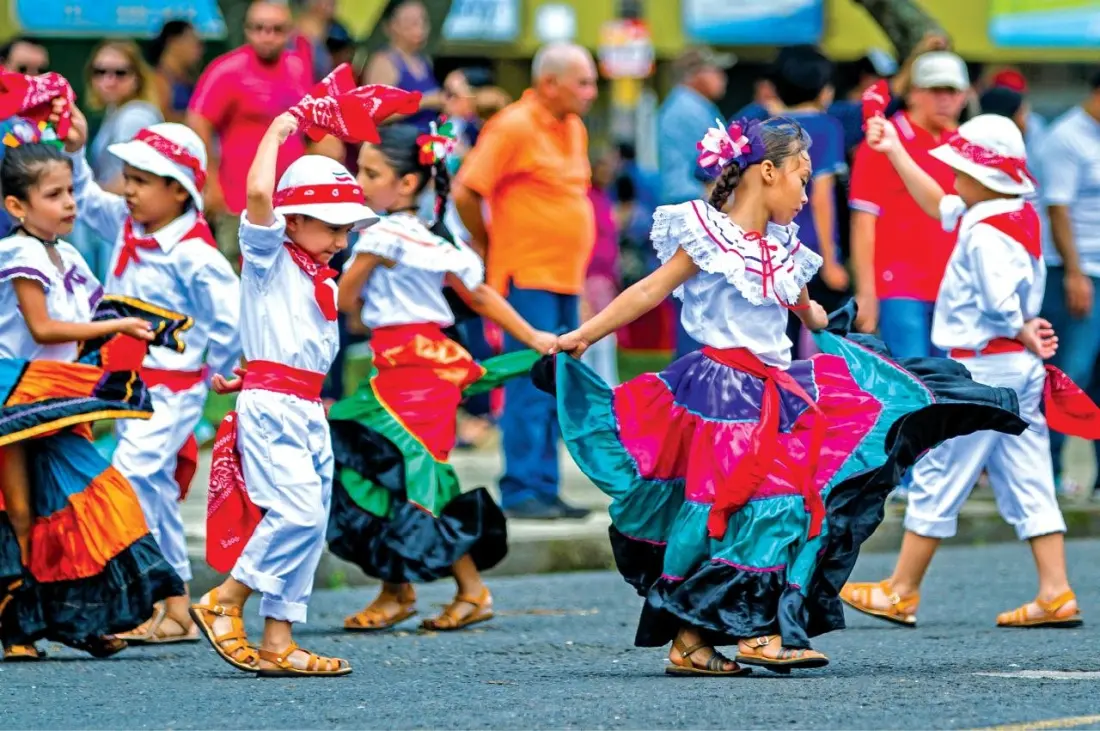
Every October 12, Costa Rica swaps the old Columbus narrative for something broader: Día de las Culturas, a national holiday celebrating the many peoples who built the country. If you happen to be travelling there in mid-October, it's one of the more rewarding times to see beyond the beaches.
The date itself has a history. For decades Costa Rica called October 12 'Día de la Raza' — Day of the Race, tied to Christopher Columbus's arrival in the Americas. In 1994, Law No. 7426 renamed it Día de las Culturas, reframing the day as a recognition of the country's pluricultural, multiethnic identity: Indigenous, European, African and Asian influences all in the mix. It's also an honest reckoning — schools and cultural institutions acknowledge the conquest, colonisation and disease that devastated Indigenous populations, not just the cultural exchange that followed.
So what does that diversity actually look like? Start with the Indigenous communities — the Bribri, Cabécar, Boruca and Ngäbe among them — whose languages, farming knowledge, medicinal plant traditions and ceremonies predate the Spanish by centuries. The Ministry of Culture has backed projects recording Indigenous songs about love, work and ceremony to keep them alive. Then there's Guanacaste, where marimba music, spinning-skirt traditional dances, 'bombas y retahílas' spoken verse and horse culture define a fiercely proud regional identity. These aren't tourist-only performances; they're community traditions passed down at home.
The painted ox cart, or 'carreta típica', is the country's signature folk-art symbol. Once a workhorse for hauling coffee over mountain terrain, it evolved into a canvas of vivid geometric patterns and now stars in parades and festivals nationwide.
And you can taste the story. Gallo pinto, casado, tamales, olla de carne and arroz con pollo anchor the national table, while the Caribbean coast serves rice and beans cooked in coconut milk — a legacy of the Afro-Caribbean communities, especially around Limón, whose influence on Costa Rican music and language runs deep.
On the day itself, expect cultural fairs, folkloric dance, concerts, art exhibitions and school programmes promoting intercultural dialogue. Communities in San José, Limón, Guanacaste and Puntarenas each mark it in their own way.
Why should a visitor care? Because October 12 is an open invitation to engage with the country beyond wildlife and surf. Visit a cultural museum, watch a marimba performance, take a detour to Limón or the Guanacaste countryside, and ask locals what the day means to them. Costa Rican culture, as the holiday makes clear, isn't one single thing — it's a mosaic, and every generation adds a piece. Showing up curious is the best way to see it firsthand.
Story via Howler Costa Rica.