Rukha, a village of just 21 households in Wangdue Phodrang's Athang Gewog, is about to get a very modern upgrade. A project called Digital Village is exploring how digital wallets and a community token could work in one of Bhutan's more remote corners, where aquaculture and livestock farming are still the main ways people earn a living.
The effort pulls together an unusual mix of partners: Qore3, a Singapore-based digital asset infrastructure firm, Bhutan's Gyalpozhing College of Information Technology (GCIT), the Tarayana Foundation, and Switzerland's Lucerne University of Applied Sciences and Arts. The idea is to design digital tools around what villagers actually need — easier access to services and more value circulating within the community — rather than dropping technology in for its own sake.
Don't expect quick results. The project is still in its research and planning phase, with full implementation projected to take around two years. Fieldwork began in August 2026, when researchers from GCIT and Tarayana, joined by GCIT President Audrey Low and Qore3's Head of Partnerships Jeffrey Cheong, visited Rukha to assess how the community lives and what it needs. The next step is a working prototype to show how the system might function in practice.
The village's local leader, Athang Gup Dawa Gyeltshen, has welcomed the initiative, noting that he regularly fields proposals from institutions keen to develop the area. He has long worked with the Tarayana Foundation, which has supported the village for years.
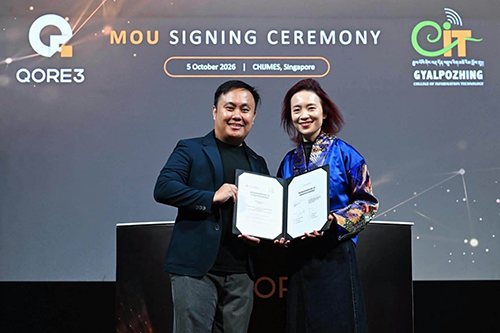
Behind the scenes, this is also an education story. Qore3 and GCIT formalised a long-term partnership in October 2026 during TOKEN2049 Week in Singapore, covering blockchain education, applied research and curriculum design. GCIT students are doing the early data collection and will help build and evaluate whatever system emerges. As Low puts it, the ambition is to make tech education and inclusion reachable even at the far edge of the digital economy.
So why should a traveller care? Bhutan has built its tourism brand on measured, community-first development, and Rukha is a window into that philosophy. The country famously pays for public services through a Sustainable Development Fee levied on visitors, and its approach to technology tends to follow the same deliberate path — think of the now-famous partnership between Bhutan and Binance that turned the nation into a talking point in crypto circles. Projects like Digital Village suggest rural Bhutan may look quite different by the time the next generation of travellers arrives. And for anyone already drawn to the valleys of Wangdue Phodrang, knowing that its villages are actively shaping their own digital future adds a layer to the trip beyond monasteries and mountain views.
Whether the 21 households of Rukha see real benefits will depend on how the final system is designed and rolled out. For now, it's one to watch — a small village with a very big experiment.