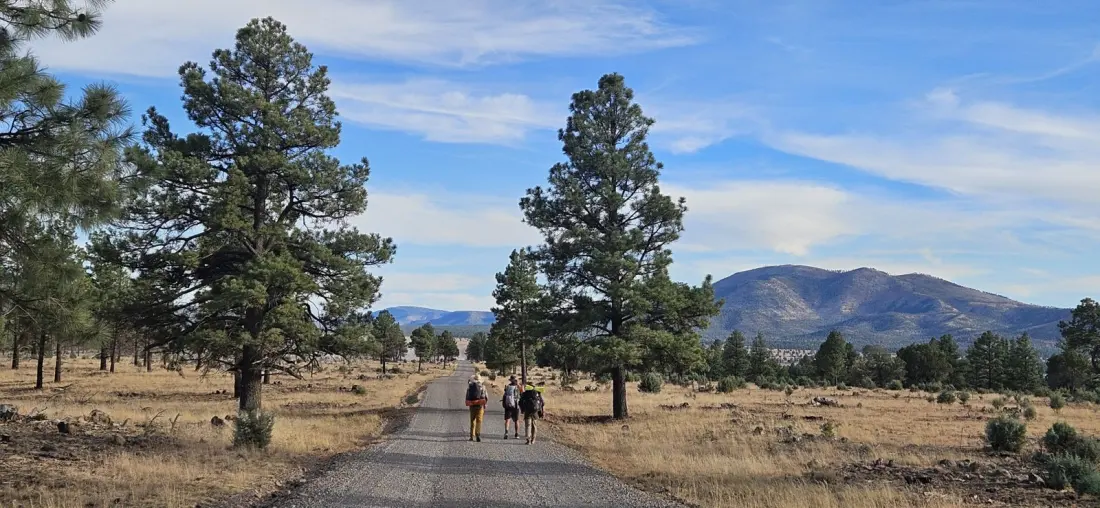
Some trail shortcuts trade scenery for speed. New Mexico's Gila Alternate does the opposite — it's both shorter and more beautiful than the official Continental Divide Trail route, which explains why nearly every thru-hiker takes it. The detour follows the river corridor through the Gila Wilderness, cutting roughly 70 miles off the redline route through the Black Range.
The Gila Wilderness carries serious history: it became the world's first officially designated wilderness area in 1924, pushed through by conservationist Aldo Leopold long before the Wilderness Act existed. The trail follows three forks of the Gila River through a deep, shaded canyon where golden eagles ride the thermals, deer graze on thick grass, and beavers are so numerous that their dams line the entire river section — hikers regularly hear the slap of a tail echoing off the water. A short detour takes you past the Gila Cliff Dwellings, stone homes built by the Mogollon people in the 1280s.
The route also threads together a string of small-town and trail legends that make it a rite of passage. Pie Town — yes, named for pie — is a classic resupply stop, and nearby Doc Campbell's at the Gila fork is a hiker institution: decent resupply, dogs to greet you, and no hot water heater because the natural hot springs do the job. Many hikers finish the day soaking at a nearby riverside hot springs campground, where the caretaker's home is a converted bus with a mannequin stationed permanently on the porch. Before the river section, ranchers kindly leave a water spigot on for hikers near their corrals, and a ranch outside Pie Town offers lean-tos for anyone caught out late.
It isn't all postcard material. The river route means repeated cold creek crossings, which can be brutal on damaged feet — one hiker in a recent account pushed through the canyon with an agonizing ingrown toenail, weighing a visit to a Silver City podiatrist before self-treating at Doc Campbell's. And the idyllic Toaster House, a legendary free hiker hostel in Pie Town fenced with donated toasters, has reportedly fallen into disrepair, so don't count on it as lodging.
For holidaymakers, the Gila section works as a stand-alone adventure without committing to a 3,000-mile trail. Day hikes or a multi-day riverside backpacking trip from the Gila Cliff Dwellings area deliver the canyon scenery, wildlife and hot springs, with Silver City as a comfortable base for food, lodging and any medical repairs. Anyone planning a CDT thru-hike should build the alternate into their itinerary — the mileage savings and the canyon experience make it near-universal.