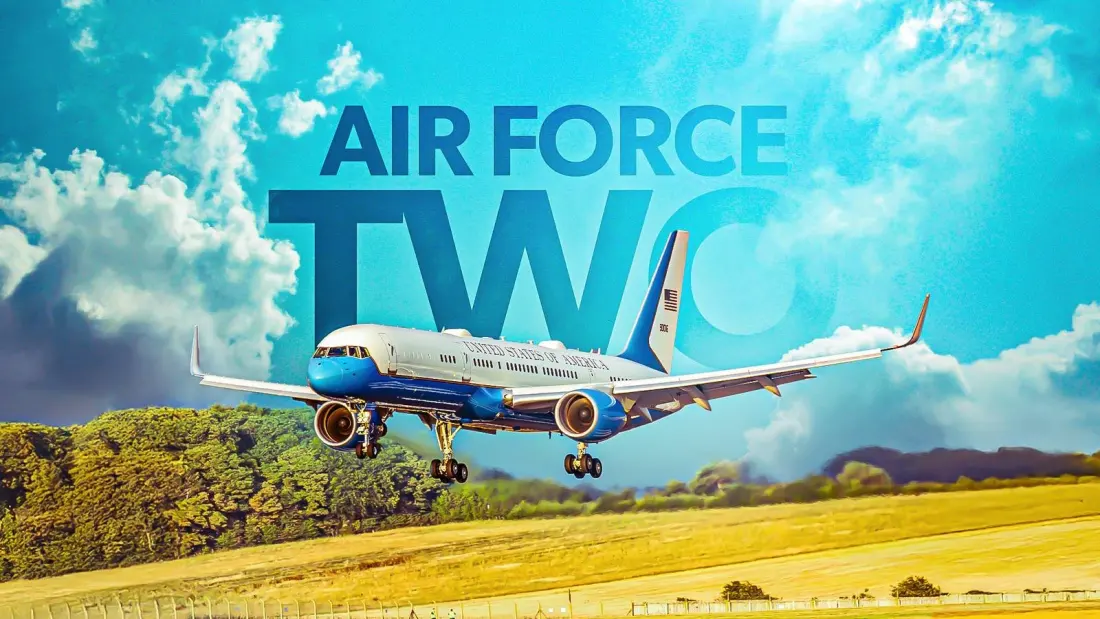
The plane that carries America's second-in-command isn't a jumbo jet. It's the C-32, a heavily modified Boeing 757-200 that flies under the 'Air Force Two' call sign whenever the Vice President is aboard — and the reasoning behind that choice says a lot about how modern diplomatic travel actually works.
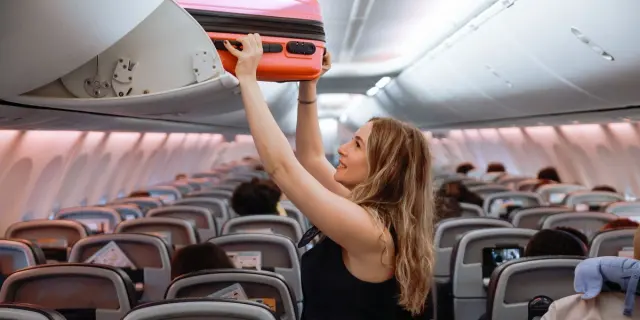
The C-32 is no ordinary narrowbody. Inside, it's fitted with a private stateroom, conference areas, secure communications gear and dedicated seating for staff and press. That setup matters because vice presidents now routinely lead delegations abroad, sit in on international summits and hold bilateral meetings with foreign leaders — all while staying in secure contact with Washington mid-flight. The aircraft is built around a compact working team, not the sprawling entourage that accompanies presidential trips.
Range is less of a limitation than you might think. The C-32 can cover roughly 5,500 nautical miles (10,186 km) on two Pratt & Whitney 2040 engines, cruising at 537 mph and reaching altitudes of 42,000 feet. That comfortably handles Washington to anywhere in Europe, and longer missions to Asia or the Middle East usually need just one refuelling stop — a non-issue when diplomatic itineraries tend to include stops anyway.
The real ace up the 757's sleeve is airport access. Because it operates from shorter runways and simpler facilities than a 747-derived widebody, the Vice President can land closer to secondary cities and regional capitals, cutting ground transfers and simplifying security. Add in faster turnarounds, lower fuel burn and lighter ground-support needs, and the C-32 suits a punishing schedule of back-to-back domestic tours and overseas summits far better than a bigger jet would.
The fleet itself has layers. The C-32A, based with the 89th Airlift Wing's 1st Airlift Squadron at Joint Base Andrews in Maryland, is the VVIP workhorse. The rarer C-32B 'Gatekeeper' — an all-white aircraft flown from Eglin Air Force Base in Florida and Joint Base McGuire-Dix-Lakehurst in New Jersey — handles discreet missions, from classified trips to crisis support. And the system is flexible in both directions: even the President has boarded a C-32 when a destination couldn't take something larger. 'Air Force Two', after all, is a call sign, not a specific airframe.
For aviation-curious travellers, the story is a neat reminder that the right aircraft isn't always the biggest one — a lesson that applies to route planning at every level. If you're plane-spotting near Washington, Joint Base Andrews is where these jets call home.