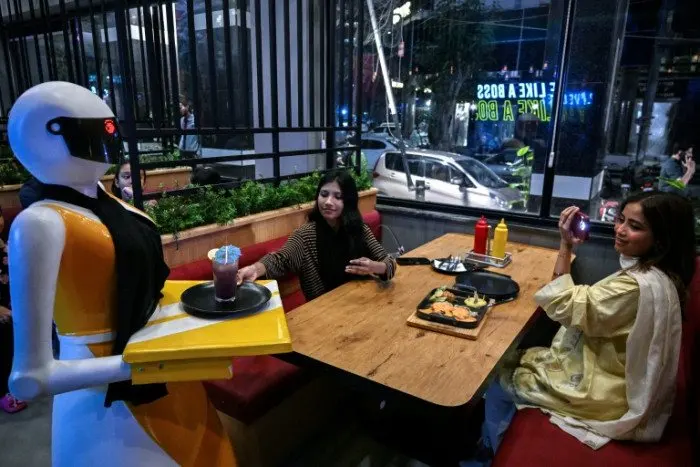
A robot named Robia glides between tables at The Sicilian restaurant in Karachi, announces herself in an electronic voice and delivers a pizza to a delighted family. With her spherical white head, dark visor and a dupatta-style black shawl around her neck, she looks like nothing else on Pakistan's dining scene — because, right now, she isn't.
Robia and her fellow server Jojo were built by Syed Osama Aziz, the engineer who also founded the restaurant, through his robotics company Cobot. Their circuit boards were designed and programmed in his own lab, with the workshop that manufactures them in Multan in central Punjab. Parts are hard to source in Pakistan, so the machines are largely made from locally produced components, topped up with some imported electronics.
The novelty is paying off. Staff report a surge in business, with diners travelling across the sprawling port city just to see the robots in action. Families pose for selfies while children reach out to touch the machines, and some guests say they enjoy being served by something that can't be having a bad day. One regular was particularly taken with the introduction routine — Robia greets you and talks you through the menu.
The service comes with a caveat: the robots deliver to your table, but you'll need to lift the food off the tray yourself, or flag down a human colleague to help. And while humanoids are becoming routine in restaurants across China and East Asia, this is still rare territory in South Asia, which is exactly why everyone wants a photo.
Aziz has bigger plans. He wants to add camera and image-processing features so the robots can recognise returning customers, remember their previous orders and suggest dishes accordingly — a step up from current delivery duty.
For travellers, this is a quirky, very Karachi reason to book a table: pizza and spectacle in one sitting, and a glimpse of home-grown Pakistani engineering that's drawing crowds in a way few restaurants manage.