Tonga's disaster authorities have told residents and visitors to start conserving water immediately, warning that the current El Niño drought is on track to become the strongest the country has experienced.
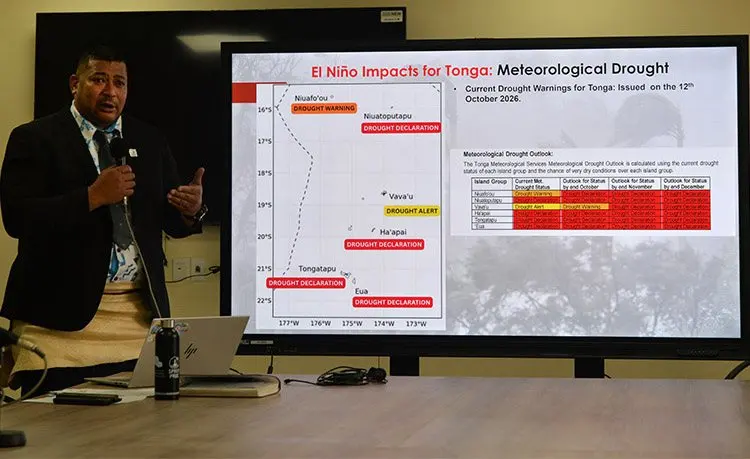
At a joint press conference in Nuku'alofa on 4 November, the Tonga Meteorological Services and the National Disaster Risk Management Office (NDRMO) laid out a sobering forecast. Drought conditions are expected to intensify, with the El Niño peak due in December 2026 and dry impacts lasting until June 2027. By the end of November, the entire country is expected to fall under a full drought declaration — the red zone. Tongatapu, 'Eua, Ha'apai and Niuatoputapu are already declared drought zones, while Vava'u and Niuafo'ou sit at warning and alert levels, with Niuafo'ou likely to be upgraded soon. Below-average rainfall is forecast from November through January.
"Water management is our only option now," said NDRMO deputy director Aisea Fungavai, urging people to reserve drinking water strictly for drinking. Response teams have been deployed across the island groups since mid-October, carrying water treatment systems and trucks that can deliver 8,000 to 10,000 litres per trip, with distributions reaching schools, churches and communities on Tongatapu. More teams are due in the Niua islands in late November for the duration of the drought. The government has also released a 1.8 million pa'anga package for agriculture, with district offices stocking water for farmers and livestock.
For travellers, the practical takeaway is that tap and rainwater supplies in Tonga may be stretched over the coming months. Anyone visiting should expect conservation measures at guesthouses and resorts, pack accordingly, and consider bringing purification tablets or a filter bottle to reduce demand on local supplies. The meteorological service is also warning of tropical cyclone risk during the 2026–2027 season, so it pays to follow official updates and keep some flexibility in island-hopping plans. Ferries and flights between the main groups and outer islands could be affected if logistics shift toward water distribution.
None of this cancels Tonga as a destination — whale swimming season, reef lagoons and village culture remain — but trips from November 2026 through mid-2027 call for extra preparation: confirmed accommodation with reliable water storage, travel insurance covering cyclone disruption, and a willingness to go easy on water use out of respect for local communities doing it tough.