Kazakhstan has something rare to celebrate: its snow leopard population has climbed from roughly 80-90 animals in the 1990s to an estimated 190-200 today, according to the country's Forestry and Wildlife Committee. For a species that spent decades on the brink, that is a serious turnaround.
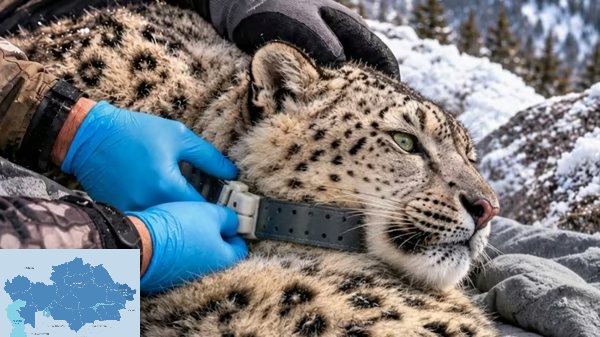
The milestone comes with a first. On October 19, scientists in Katon-Karagai State National Nature Park, in the East Kazakhstan Region, fitted a snow leopard with a satellite collar — the first time this has been done in the Southern Altai mountains. The cat was named Altai, and his movements will now show researchers where he roams, how far his home range stretches, and which routes matter most for protection. Because snow leopards live in remote, high-altitude terrain, GPS collars let scientists gather data without constantly traipsing through the animals' territory.
Why does this matter beyond the lab? Katon-Karagai sits inside a transboundary reserve, and its leopards cross national borders, so the tracking data feeds conservation work well beyond Kazakhstan. The country has now collared 16 snow leopards since 2021, and the information is actively shaping policy: several protected areas have already been expanded based on where the cats actually travel. Today, snow leopards live in nine specially protected natural areas, and about 70% of their range in Kazakhstan falls inside protected territory.
The results earned airtime on the world stage, too. At the COP17 biodiversity summit in Yerevan on October 16, President Kassym-Jomart Tokayev credited government agencies, scientists and international partners for the recovery. Committee chairman Daniyar Turgambayev also presented Kazakhstan's wider tracking experience, including its saiga antelope programme — the saiga population topped 4.6 million in a spring 2026 survey, and about 50 animals in the Ustyurt group recently received GPS ear tags to study how roads and railways cut through migration routes. Kazakhstan is pushing for animal movement data to be built into infrastructure planning from the start.
The news landed just ahead of International Snow Leopard Day on October 23, a date set up in 2013 when all 12 range countries — from Kazakhstan and Kyrgyzstan to India, Nepal and Russia — signed the Bishkek Declaration.
For travellers, this is a good moment to put eastern Kazakhstan on the map. Katon-Karagai National Park, sitting against the borders of Russia, China and Mongolia, is exactly the kind of place wildlife fans dream about: camera traps there captured rare footage of a snow leopard family as recently as August. Actually spotting one of the world's most elusive cats remains a long shot — they are solitary and range over huge territories at altitudes up to 5,000 metres — but the park's Altai peaks, glaciers and forests make the trip worthwhile regardless. The doubling of the population means every visit to protected areas like this now supports a conservation story that is genuinely working, not just hoping.
Story reported by The Astana Times.