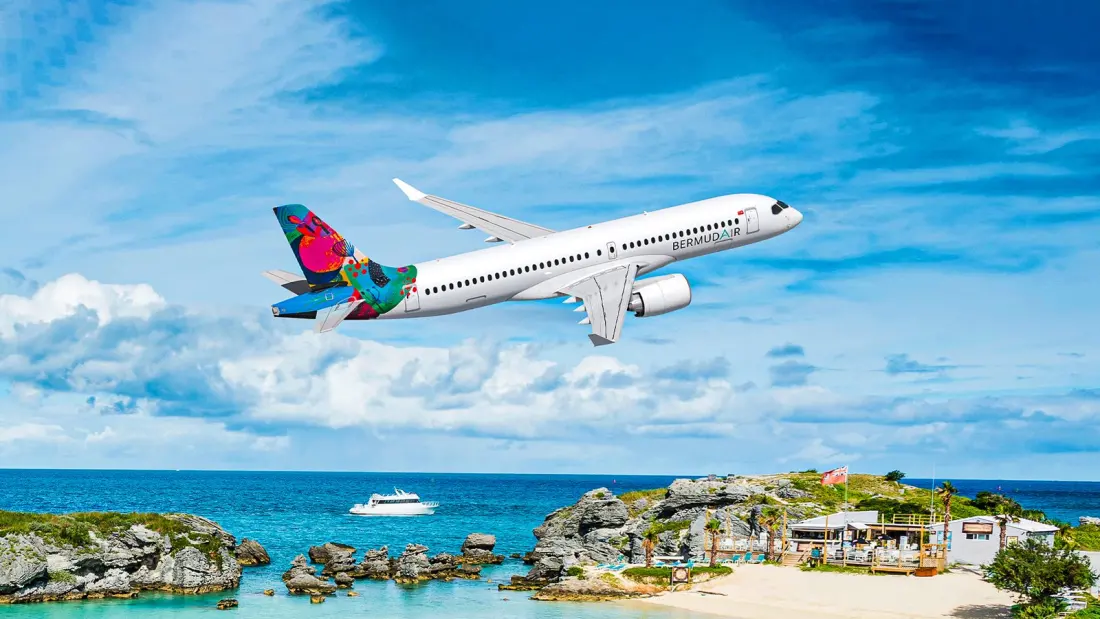
Airbus's smallest jet is about to feel a lot more like its biggest one. From this year, new A220 deliveries will carry the Airspace interior already familiar from the A350, A330neo and A320neo families, and from 2027 airlines will be able to order a denser A220-300 seating up to 160 passengers.
The headline changes are practical rather than glamorous. The new extra-large overhead bins are roughly 20% lighter than the current ones yet swallow more than 15% additional baggage, which should mean fewer gate-checked bags and speedier turnarounds. Full-spectrum LED mood lighting, adjustable across 16 million colours, lets airlines match cabin ambience to their brand and to different phases of the flight. Existing A220 operators will also be able to retrofit the Airspace kit, so the refresh isn't limited to brand-new deliveries.
The 160-seat high-density A220-300 is the other big lever. Ten extra seats per aircraft improves cost per seat and revenue without forcing airlines onto a bigger type — handy at slot-constrained airports or on routes where stepping up to an A320neo would hurt the economics. Notably, there's still no sign of the long-rumoured stretched A220-500; Airbus seems focused on squeezing more value from the current family first, likely as a precursor to any green light for a larger variant.
Some background for context: the A220 started life as Bombardier's CSeries, launching in 2008 and entering service with SWISS in 2016 before Airbus took a majority stake in 2018. It's assembled in Mirabel, Quebec, and since 2019 in Mobile, Alabama — the only Airbus commercial programme run entirely outside Europe. Powered by Pratt & Whitney geared turbofans with a composite wing and aluminium-lithium fuselage, the family flies 6,390-6,670 km, enough for most transcontinental US routes or longer thin routes in Europe. The -100 seats 108-133; the -300 seats 130-160. Delta is the largest customer, and the family has topped 1,100 orders with over 500 delivered, flying more than 100 million passengers so far.
So what does this mean if you're the one in the seat? The upsides are modest but real: nicer lighting, and with bigger bins you're more likely to stow your roller bag right above your own row rather than watching it disappear down the cabin. The trade-off comes with the 2027 high-density layout — more seats on the same aircraft almost always means slightly less room per passenger. If you're choosy about cabin feel, it's worth noting that airlines flying newer A220s from this year onward will have the freshest interiors, and retrofitted older frames will follow. On the flip side, denser configurations could mean more availability and potentially better fares on routes where the type operates.
The bottom line: the A220 remains one of the most passenger-friendly narrowbodies flying, with a five-abreast layout that avoids the dreaded middle-seat-squeezed-both-sides setup, and these upgrades should keep it that way — just with roomier bins and a sharper look.
Story via Simple Flying.