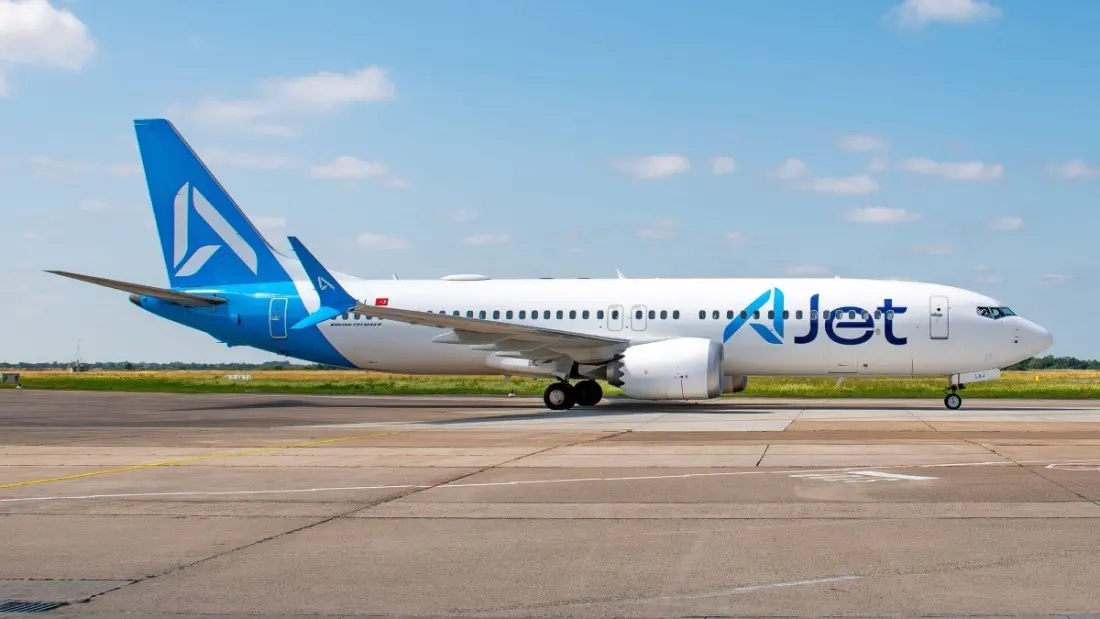
Turkish budget airline AJet is putting 26 new nonstop routes on sale between Germany and five cities in Anatolia, with the first flights taking off in April 2027 and the full network live by June, in time for peak summer.
The expansion links Çukurova, Samsun, Trabzon, Sivas and Gaziantep with six German cities — Berlin, Cologne, Düsseldorf, Frankfurt, Munich and Stuttgart — across 34 weekly round trips. Çukurova gets the densest service, with daily flights to Düsseldorf, Frankfurt, Munich and Stuttgart. Samsun and Trabzon together will see 24 weekly services spread across all six German destinations, while Sivas picks up two weekly flights to Cologne and Gaziantep one weekly service to Düsseldorf.
Tickets are already bookable. CEO Kerem Sarp announced the rollout on social media, framing it as both a diaspora play and a tourism one — cutting out transfers for the large Turkish community in Germany while opening up less-visited parts of Anatolia to international travellers.
The timing matters too. April sees the first departures from Çukurova, plus Samsun–Düsseldorf, Samsun–Munich, Trabzon–Frankfurt and Trabzon–Stuttgart; everything else follows in June. The move builds on an earlier announcement covering summer 2027 routes from the coastal resort hubs of Bodrum and Dalaman to five German cities (Düsseldorf, Frankfurt, Stuttgart, Hanover and Munich), so German-bound and Germany-based travellers will have a much wider map to choose from next summer.
Why should a holidaymaker care? If you've ever wanted to see eastern Türkiye without the usual Istanbul transfer, these flights change the maths. Trabzon is the natural gateway to the lush Black Sea coast and the Sumela Monastery region; Gaziantep is one of the country's great food cities and sits near the ancient mosaics of Zeugma; Sivas puts you in the heart of Central Anatolia. Direct access from major German hubs makes multi-stop Anatolian itineraries far more realistic — and, as a low-cost carrier, AJet's fares on these routes should be competitive once launched.
For the Turkish diaspora in Germany, it means fewer connections when heading home for summer visits. For everyone else, it's a rare chance to fly straight into regions most foreign visitors skip.