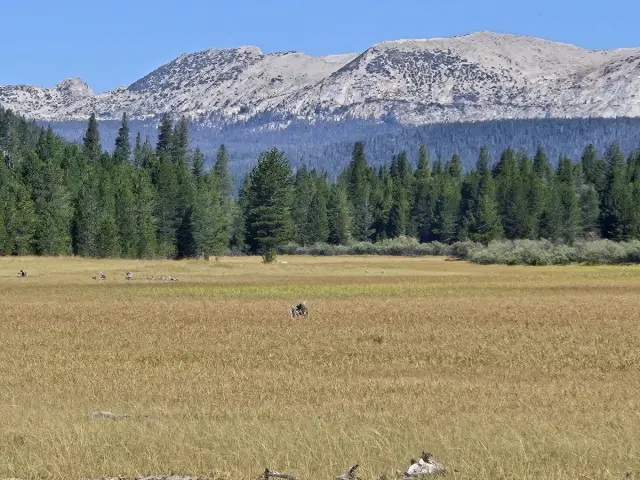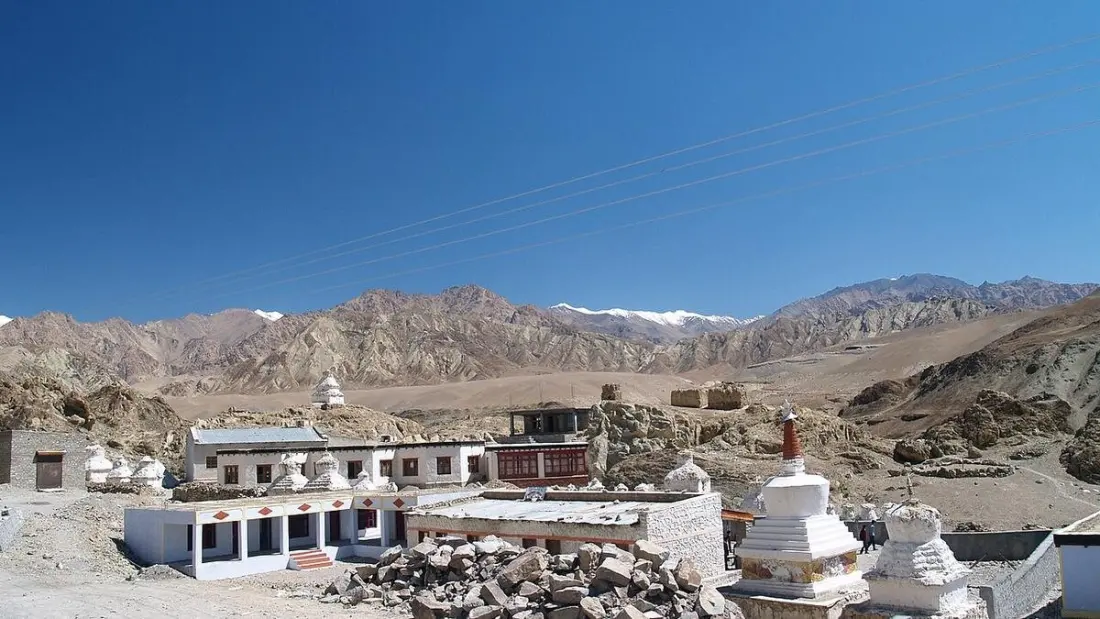
Ask most people to picture Ladakh and they imagine bare, moon-like valleys and wind-scoured passes. Alchi, a small village on the banks of the Indus River about 10,200 feet above sea level, breaks that image entirely. This is a leafy pocket of poplars and willows, with orchard trees weighed down by apricots and apples, wedged between the Ladakh and Zanskar mountain ranges.
The reason travellers make the trip is Alchi Chökhor, a historic monastic complex counted among the oldest and most significant centres of Buddhist art in the Indian Himalayas. Its standout buildings are the Dukhang, the main assembly hall, and the Sumstek, a three-tiered temple — both celebrated for interiors that few other sites in the region can match. The complex sits alongside ancient stupas, and the setting itself is part of the experience: walk in from the village lanes past strings of fluttering prayer flags and the low, continuous spin of prayer wheels, and the pace of everything drops a gear.
What makes Alchi genuinely fascinating is how much it reflects cultural exchange rather than isolation. The art housed in its temples is famous for showing influences that travelled the old trade routes — Kashmiri, Tibetan and Central Asian styles blended into something unique to this corner of Ladakh. It's effectively a surviving gallery of medieval Himalayan painting and sculpture, and scholars have long treated it as a key reference point for how Buddhism spread and absorbed local aesthetics across the region.
The village around the monastery is worth slowing down for too. Residents, many of them elderly, go about their days in traditional dress — sulmas for women and kantop caps — moving unhurriedly through lanes lined with orchards. Unlike Ladakh's busier monastic stops, Alchi has no resident monastic community in the traditional sense; it's preserved largely as a heritage site, which gives it an unusually quiet, lived-in feel compared with the spectacle of places like Thiksey or Hemis.
Practically, Alchi sits on the well-travelled road between Leh and Lamayuru, so it slots easily into a Ladakh itinerary — typically a day trip from Leh or an overnight stop if you'd rather experience the village after the day visitors leave. Come in summer for access and greenery, acclimatise in Leh first given the altitude, and remember that photography inside the temples is restricted to protect the centuries-old paintings. If you want Ladakh's monasteries without the crowds, this is the one to build your route around.
Story sourced from The Hindu Travel.