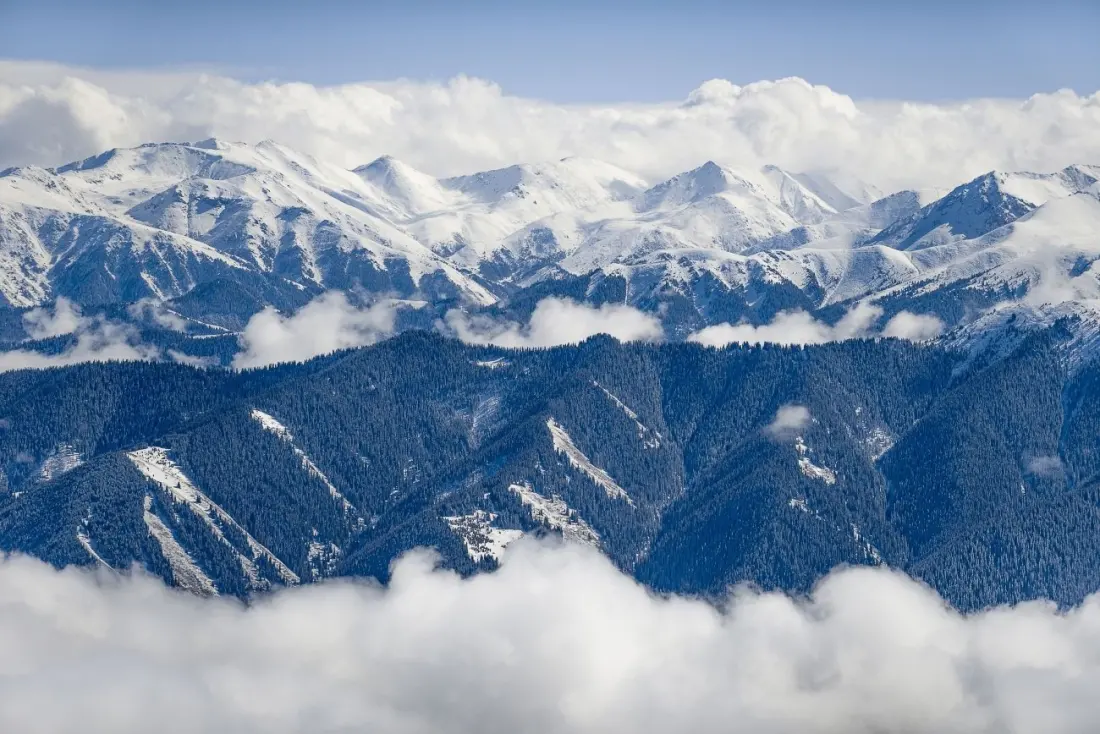
Kazakhstan's mountains have quietly done the country a favour for centuries: snow piles up in winter, glaciers hold water as ice, and everything melts just in time for the dry summer months. That natural calendar is now falling out of sync, and the numbers behind the shift are striking.
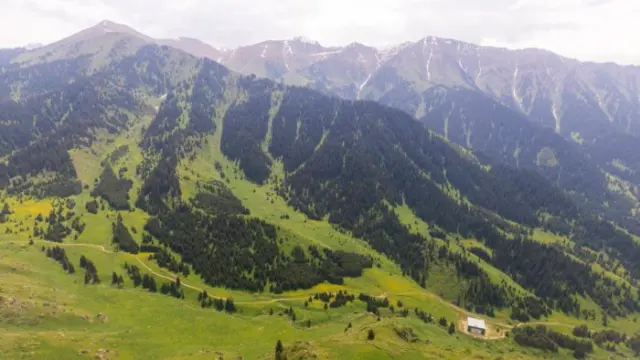
A study published in Environmental Research Letters found that Central Asia's glaciers lost an estimated 30 cubic kilometres of ice in 2025 — their worst year on record, and nearly 2% of everything the region has left. Kazakhstan itself has more than 2,400 glaciers covering around 930 square kilometres, and in the Ile Alatau range above Almaty, glacierised area has fallen by 47.4% since 1955.
The tricky part is not just how much water exists, but when it shows up. According to Tomas Saks, a researcher at the University of Fribourg, snow cover drives 70-80% of river runoff in Central Asia, while glaciers chip in 6-10% in a typical year — but up to 80% during dry summer months, when the snow is long gone. As winters warm, snowmelt peaks are sliding earlier. Saks expects the Syr Darya's high-water point to move from July-August towards May-June, with summer flows shrinking as glaciers fade. For farmers, hydropower and anyone relying on late-summer river levels, that reshuffling is the real story.
Kazakhstan is responding on several fronts. A new Water Code adopted in 2025 bakes climate adaptation into water management, and eight basin-level plans are due by the end of this year, covering the most climate-stressed catchments such as Balkhash-Alakol, Aral-Syr Darya and Shu-Talas. On the ground, the country wants 42 new reservoirs adding 2.6 billion cubic metres of storage, plus a serious overhaul of irrigation: more than 4,600 kilometres of canals are slated for reconstruction, with 962 kilometres upgraded this year alone, benefiting around 200,000 hectares of farmland.
There's a data play too — a National Information System of Water Resources is being built to track water bodies, infrastructure and availability, because good forecasts of when water will actually arrive are becoming as valuable as the water itself.
None of this happens in isolation. Much of the region's water originates in Kyrgyzstan and Tajikistan, while the biggest demand sits downstream in Kazakhstan, Uzbekistan and Turkmenistan — so cross-border cooperation and data-sharing will decide how well the system copes.
Why should travellers care? If you're heading to Kazakhstan's mountains — the glacier-carved valleys of Ile Alatau, the trekking routes around Almaty, or Big Almaty Lake — the scenery is changing in real time, and hiking seasons may shift as snowmelt arrives earlier. More broadly, water is the quiet force shaping Central Asia's future: farming, food prices and even which towns thrive. A trip to Kazakhstan today offers a front-row look at a country reworking its relationship with water, one reservoir and canal at a time.
The Astana Times