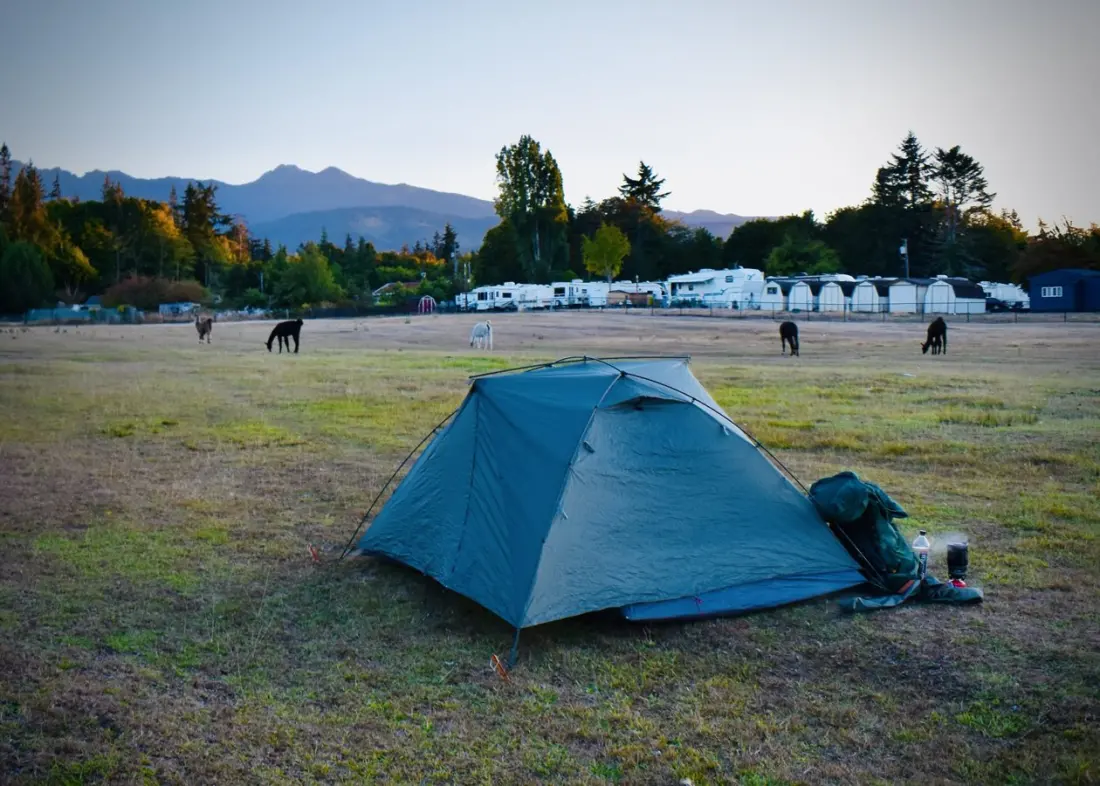
A Washington campsite comes with plenty of unexpected neighbours, but few hikers expect a herd of alpacas. Writer and backpacking guide Brandy Sales opened his Olympic National Park trip by pitching a tent at an alpaca rescue farm near Port Angeles, where about two dozen curious, opinionated fleece-balls wandered over to inspect his pack and bear can before letting him be. One of them earned the name Bob Jones. Once negotiations concluded peacefully, the evening settled into the surreal calm of alpacas drifting past the tent with mountains behind them.
The next morning delivered the park's signature magic at Hurricane Ridge. For anyone who has never been, this is the stretch that makes Olympic unusual: it is one of the few places in the United States where you can stand in alpine terrain and see snow-covered peaks in one direction and the Pacific Ocean in the other. Sales had Sunrise Point nearly to himself for half an hour — a good reminder that even the park's most popular viewpoints can be quiet early or off-peak — before dropping back down to stroll the waterfront in Port Angeles.
Then came the real trip. After collecting permits, he drove roughly two hours west to Lake Ozette, the jumping-off point for the Olympic Coast, and found a campsite right on the water. Light changed over the lake, and a conversation with one stranger, a woman named Pamela, grew into a six-person campfire gathering of people from entirely unrelated lives. It is the kind of evening solo backpackers know well: you set out wanting independence, and the trail hands you connection anyway.
The piece is framed as a letter from the hiker's future self, weaving the wildlife encounter and the scenery into a bigger reflection on balancing solitude with staying open to people. That tension is exactly what draws a lot of travellers to long trails in the first place, and Olympic delivers both in spades — black bears on trail (Sales had just seen his first, with sixteen more to come that guiding season), quiet ridgelines, and strangers who stop being strangers by dark.
Why should a regular traveller care? Because Olympic rewards more than one style of trip. You can do the drive-up tourist loop — Hurricane Ridge, the Port Angeles waterfront — in a day, or pair it with the lake and coastal routes for a proper multi-day wilderness trip. The first 18 hours here, as this story shows, can hold an animal encounter, a mountain panorama, an ocean walk and a lakeside campfire, all within a short drive of each other.
The hiker planned to hit the trail at 9am the next day for the Olympic Coast section, one of the wildest, most memorable stretches of shoreline in the Lower 48. If that combination of rainforest, beach and alpaca-adjacent lodging sounds like your kind of trip, Port Angeles makes a practical base to start planning from.