The deadliest Ebola epidemic in the Democratic Republic of the Congo's history keeps growing. The country's National Institute of Public Health reported 11,042 confirmed infections and 5,387 deaths as of November 9, with a case fatality rate of nearly 49% among confirmed cases. Caused by the Bundibugyo species of the virus, it is now the second-largest Ebola outbreak ever recorded, behind only the 2014-2016 West African epidemic.
The geography matters for anyone watching the region. Cases have appeared in 67 health zones across eight of the country's 26 provinces, with Ituri carrying the heaviest burden at roughly 70% of confirmed cases, followed by North Kivu. Both are in the east, where armed conflict, rough roads and attacks on health workers have hampered the response. Contact tracing is running below the 95% target the CDC considers necessary to break transmission chains, and a worrying share of deaths — 19 of 33 on November 9 alone — are happening in communities rather than treatment centres, meaning infected people may be passing the virus to family members before anyone identifies them.
There are faint signs of stabilization: the daily count on November 9 was below the previous week's average of 62 new cases, and no new health zone has been affected since late October. But the CDC's November 2 assessment projects a large, sustained epidemic continuing into January 2027, with no indicators pointing to rapid control. Health authorities also caution that global risk assessments are being revised as the situation evolves.
The virus has already crossed borders. An imported case from DR Congo triggered a nine-case cluster in Kenya — its last patient was discharged on November 11, starting the 42-day countdown before the country can be declared Ebola-free. Uganda, France and Nigeria have all reported cases tied to the outbreak but have contained them. For the Americas, the Pan American Health Organization rated the regional risk as low with high confidence in June, and Colombia's health ministry reported no domestic cases — though those assessments predate the outbreak's later expansion.
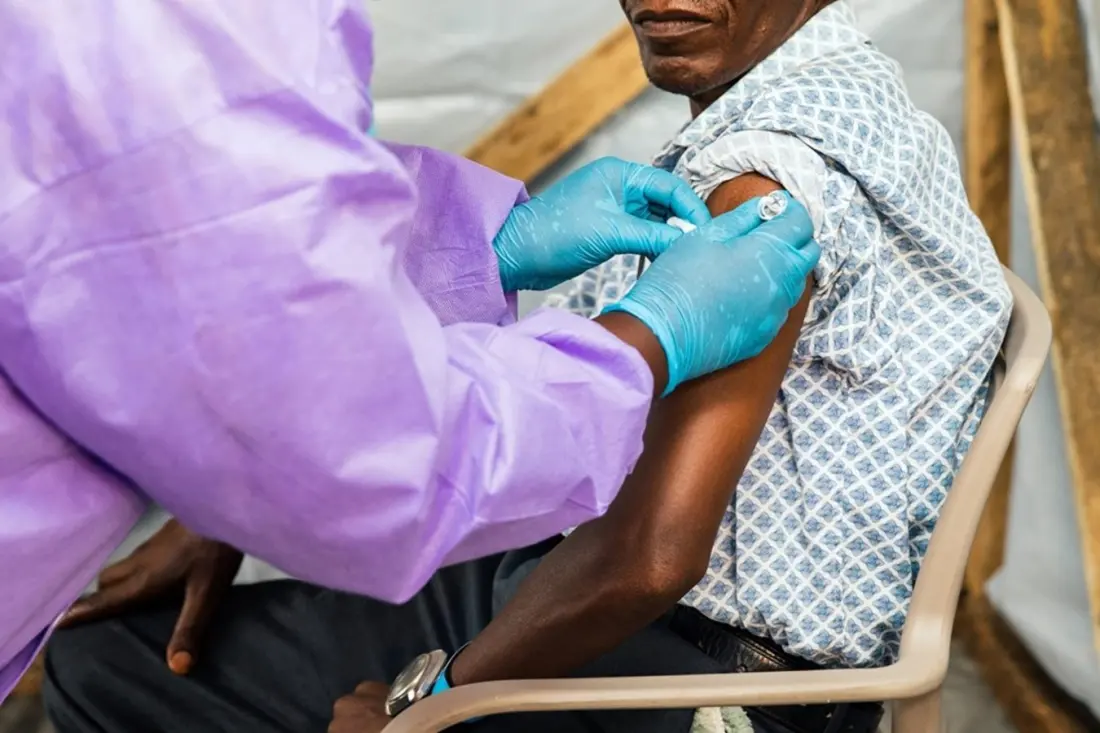
Science may change the picture soon. The WHO's Tumaini trial, launched October 23, is testing vaccines against Bundibugyo virus using a ring-vaccination strategy around confirmed cases. Ervebo, licensed for a different Ebola species, is the first candidate under evaluation, and the WHO has recommended adding Oxford's ChAdOx1 and Moderna's mRNA-1469 to the trial. A separate treatment study, launched in July, is testing experimental medicines for infected patients, with early results expected within months and vaccine data in early 2027.
For travellers, the practical takeaway is straightforward: this is a serious regional health emergency, not a reason to cancel trips to unaffected areas, but anyone heading to eastern DR Congo or its neighbours should monitor official advisories, know the symptoms, and remember that Ebola only spreads through direct contact with a symptomatic person's bodily fluids — not through the air or casual contact.