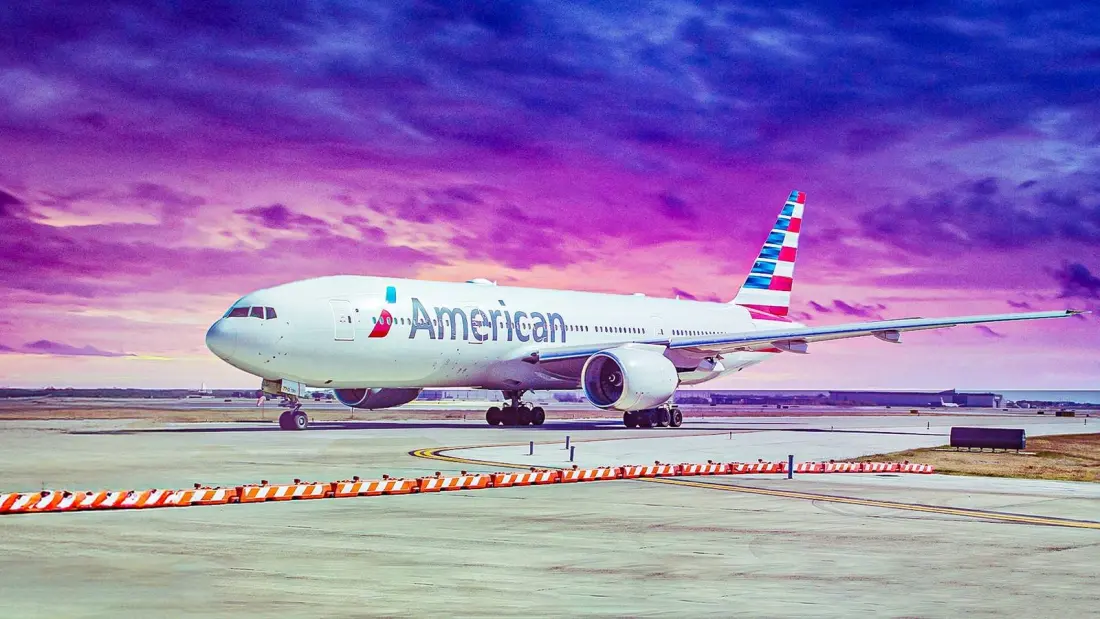
An American Airlines Boeing 777 flying from Madrid to Dallas turned around over the Atlantic and landed in New York this week after almost all of its toilets packed in. Flight AA37 left Madrid Barajas at about 10:26 AM on October 6, a route that normally takes close to 11 hours. Around seven hours in, with 287 people aboard, the crew reported that only two of the aircraft's eight lavatories were still working.
The pilots declared a pan-pan — an urgent, non-life-threatening distress call — on approach to New York JFK, telling controllers plainly that they had "only two potties" for the plane. The 777-200ER touched down safely at 12:27 PM. Because it still carried more than four hours of fuel, reports suggest it landed above its maximum landing weight, an "overweight landing" that can overheat the brakes and triggers a mandatory inspection before the aircraft can fly again.
Two working loos for a full widebody is not a situation an airline can ride out. Regulators do allow flights with some lavatories out of service under minimum equipment rules, but losing three-quarters of them with hours still to go creates queue problems in the aisles and genuine hygiene concerns. American knows this first hand: on a Dallas to London flight on Christmas Day 2018, a 777-300ER diverted to JFK after losing four of twelve toilets, with the crew citing the crowd of passengers gathered around the remaining ones as a security issue.
This time the jet, registered N772AN and delivered back in 1999, spent just under four hours on the ground at JFK. It departed at 3:56 PM and reached Dallas at 6:13 PM local time — roughly 15 hours after leaving Madrid. American confirmed a maintenance inspection took place but has not said what knocked out six lavatories at once, or whether they were all fixed before the onward leg.
There is a silver lining for the passengers. Because the flight departed from Spain, it falls under EU261 rules, which can entitle long-haul travellers to up to €600 (about $670) in compensation depending on the delay and whether the cause counts as extraordinary. A mechanical failure like this generally does not qualify as extraordinary, so affected passengers may have a solid claim — worth pursuing if you were on board.
The story is a useful reminder for anyone flying long-haul: a diversion isn't always about engines or weather. Cabin systems matter too, and a plane full of people with nowhere to go is treated as a genuine safety concern. If your transatlantic flight is delayed or cut short by something like this, keep your boarding pass and receipts, and check whether EU261 applies — it often does when the trip started in Europe, regardless of the airline.