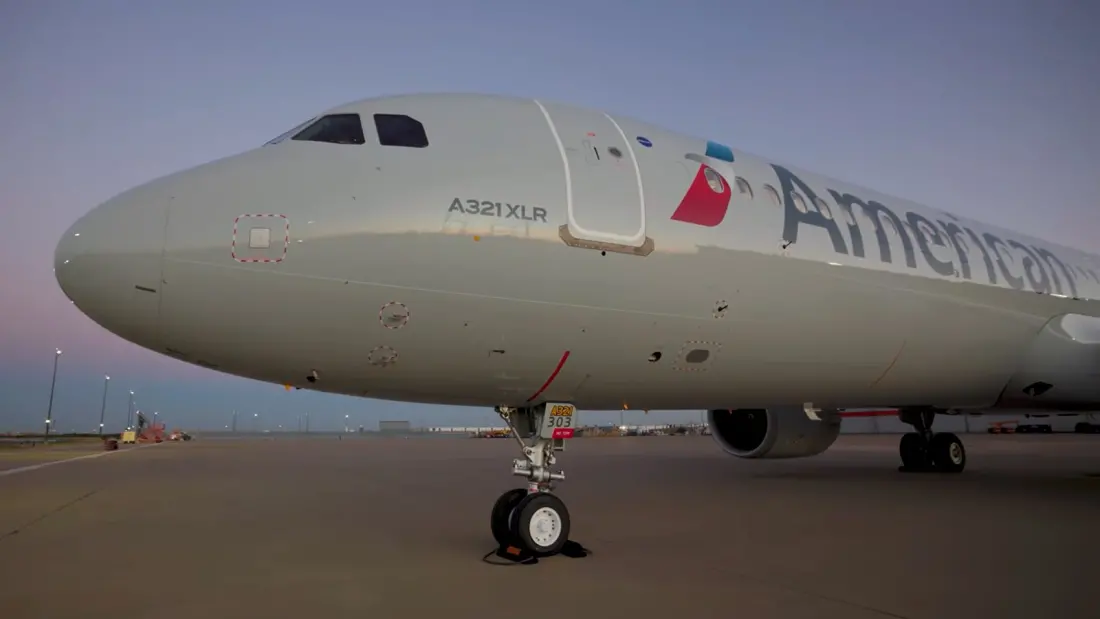
American Airlines has quietly been building one of the more interesting fleets in the sky. On September 26, 2026, it took delivery of an A321XLR registered N307NY, fresh from Airbus' Hamburg Finkenwerder plant in Germany. That came just three days after sister ship N308NY touched down at Dallas/Fort Worth. Add in N315XR, delivered August 28 and flying since September 10, and the carrier now has 10 of the long-range narrowbodies, with a dozen expected in service by the end of the year.
Why should a traveller care about an aircraft type? Because this one changes what you can fly nonstop, and in what seat. The A321XLR carries just 155 passengers in American's configuration: 20 business class seats with the airline's Flagship Suites, complete with lie-flat beds and privacy doors, plus 12 Premium Economy and 123 standard economy seats. Compare that with a 250-plus-seat 787, and you can see the appeal. American gets a long-haul cabin on routes that can't fill a widebody, filling a gap left by the retired Boeing 757, which once worked these thinner routes.
So far the XLR has been flying premium domestic routes out of New York JFK and Boston, linking both cities with Los Angeles and San Francisco. But the international network is expanding fast. For summer 2027, American has already announced four European routes on the type: JFK to Amsterdam and Nice, plus Philadelphia to Porto and Vienna. Expect more transatlantic cities and thin long-haul routes across the Americas as deliveries continue toward a planned fleet of 40.
For passengers, the practical upshot is this: if you're flying American between the US coasts, you might get a lie-flat seat in a private suite on a single-aisle jet — a rare treat on a three-hour domestic hop. And on the new European routes, you'll get a proper long-haul business product on an aircraft small enough to serve cities that a jumbo would never justify. Booking-wise, the Flagship Suite seats are the ones to target if your budget allows; Premium Economy is a solid middle option. As the fleet grows from 10 toward 40, expect the type to appear on more and more routes, so it's worth checking the equipment when you book a transcon or transatlantic American flight.