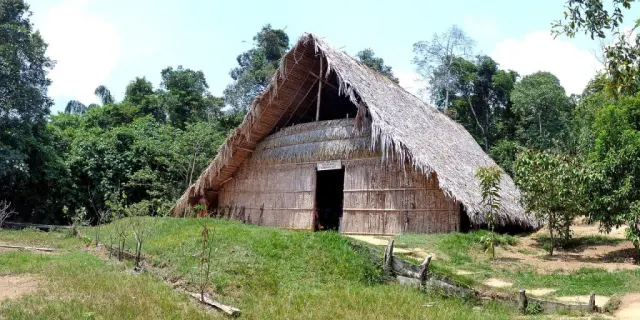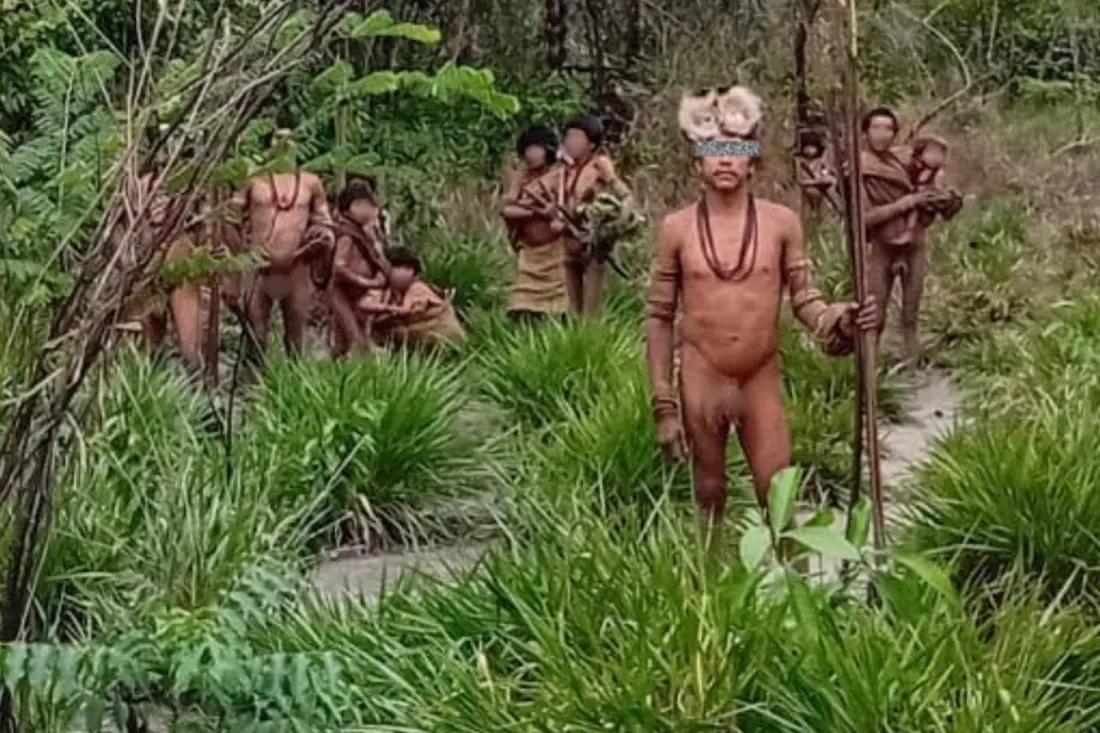
Something unusual happened in Brazil's Maranhão state on 16 November 2026. Around 20 members of the Awa Indigenous people — including men, women and children who live in voluntary isolation — walked out of the forest and approached a government post on the edge of the Arariboia Indigenous Territory. They asked for food and carried yams back with them into the trees. Footage recorded by the neighbouring Guajajara community and released by Survival International shows what the organisation calls a historic encounter, the first approach of its kind in decades.
Why would people who deliberately avoid outsiders walk up to a government station? Survival International believes growing pressure from illegal loggers, hunters and cattle ranchers may be squeezing the Awa's food supply. These are hunter-gatherers whose survival depends directly on intact rainforest — and that forest is under strain from deforestation, fires and encroachment. Brazil's Indigenous affairs agency, Funai, has activated a contingency plan in response, sticking firmly to its policy of non-contact, because isolated populations often lack immunity to common illnesses like influenza and measles, which historically have proved devastating.
The Guajajara know these pressures firsthand. Their Forest Guardians have spent years patrolling Arariboia against illegal activity, at a heavy price — several members have been killed defending the territory. They're now calling on Brazilian authorities to strengthen protection of the area.
The Awa's situation echoes a darker story from Colombia. The Nukak-Maku, nomadic hunter-gatherers from the forests between the Guaviare and Inírida rivers, began sustained contact with outsiders in 1988. More than half their population died in the following years, largely from respiratory disease, while loggers, coca growers and armed groups overran their land. A reserve covering nearly one million hectares was created in the 1990s, but invasions continued, and much of it is now contaminated with landmines. Fewer than 1,000 Nukak remain, many living displaced around San José del Guaviare. Colombia's Constitutional Court, in a March 2026 ruling, found their conditions violate fundamental rights and pushed the government on relocation and reparation plans.
The two cases differ — the Awa can still choose isolation; the Nukak lost that choice — but they point to the same lesson. Indigenous communities across the Amazon can only keep control of their lives and cultures when the forests they depend on are actually protected.
For travellers, this is worth understanding before booking any Amazon trip. Tours into or near Indigenous territories should only involve communities that have chosen to engage with tourism, and reputable operators stay well clear of areas home to peoples in voluntary isolation. Even visiting frontier towns like San José del Guaviare — where guided trips to Nukak-influenced areas have been marketed — raises ethical questions while displacement remains unresolved. The most responsible stance is simple: support conservation, respect the boundary of voluntary isolation, and don't treat first contact as an attraction.