
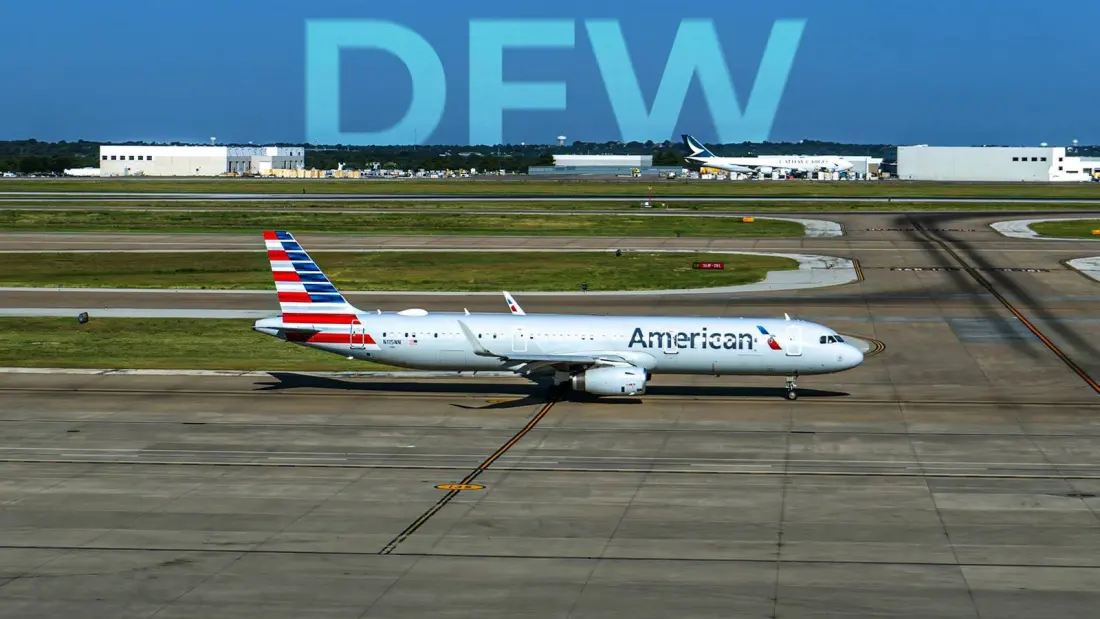
American Airlines is pouring roughly $4 billion into an expanded Terminal F at Dallas/Fort Worth International Airport, doubling the planned gates from 15 to 31 with all of them operated by American. Yet at the same time, the airline is deliberately loosening the way the hub runs. It sounds contradictory, but the logic is simple: a bigger hub has to behave like a smaller one if it wants to stay reliable.
For years, American scheduled DFW around nine big "banks" — concentrated waves of arrivals and departures that let passengers connect quickly between flights. The problem is scale. With more than 930 peak daily departures and around 100,000 passengers passing through on a busy day, each bank averaged roughly 103 departures. That meant a single thunderstorm could trigger a domino effect across the whole network, and DFW matters enormously here: over 30% of American's daily connecting passengers and checked bags move through this one airport.
The fix is to spread the same volume across 13 banks instead of nine, cutting the average departures per wave to about 72 — roughly a 30% reduction in peak intensity. American says the new structure keeps nearly all existing connection opportunities, adds better early-morning departure options, and started paying off almost immediately: two weeks in, on-time arrivals had improved noticeably and baggage performance hit its best of the year.
The second bet is extra block time — the scheduled window between pushing back and arriving at the gate. By padding published flight times to match reality, American is trading a few minutes on paper for fewer missed connections and cascading delays. It is also spending millions on remote deplaning kit: buses, equipment and staffing so an arriving aircraft can unload away from a conventional gate. That keeps planes and crews at DFW during weather disruptions instead of diverting them, which would wreck the aircraft's next flight and clog another airport.
So why expand the terminal at all? Because the strategy isn't retreat — it's preparation. The reworked Terminal F plan, announced in May 2025, targets around 2030 and includes international and Customs facilities, widebody capability, extra lounge and premium space, a new lobby check-in, a dedicated parking garage and a centralized Skylink station. American also opened a new nine-gate Terminal C pier in 2026 as part of a multibillion-dollar hub transformation. Meanwhile, Chicago O'Hare is getting the aggressive-growth treatment instead, with 100 extra daily departures planned for spring 2026 — a 30% spring increase.
For travellers, this mostly means schedules that look a little longer but hold up better in bad weather, plus more connection options throughout the day at DFW. If you're connecting through Texas — or planning to use the shiny new Terminal F once it opens — the hub is being rebuilt to make your bags and your onward flight more likely to arrive together.