
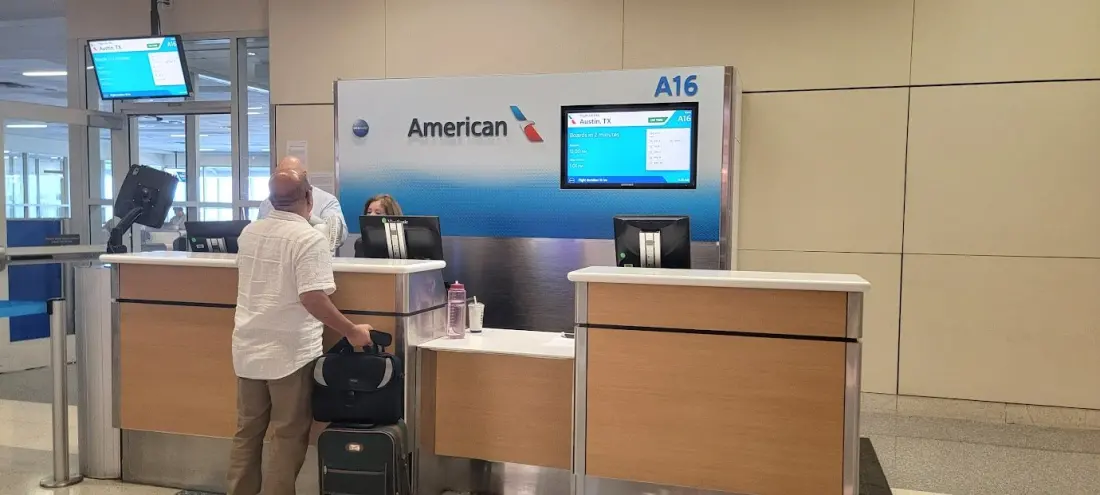
Few airline annoyances are as grinding as the rolling delay: your flight still shows on time, the app says board at 5:40, and yet the aircraft that's supposed to carry you hasn't even landed yet. You either camp at the gate on blind faith or keep refreshing a flight-tracking site to figure out what the airline won't tell you.
American Airlines is now trialling a fix, beginning at its Charlotte hub (CLT). Instead of keeping a departure listed as on-time regardless of reality, the airline will estimate boarding times based on when the inbound aircraft actually arrives. In other words, the schedule will finally reflect the plane you'll actually fly on — something passengers have been doing for themselves on Flightradar24 for years.
The frustration is well documented. Travellers have reported flights displayed as on-time while the inbound aircraft was still hundreds of miles away — one passenger on a Charlotte–New York JFK route said they ended up showing the gate agent a flight-tracking app just to make their case. Another, flying from Dallas–Fort Worth to Washington National in April 2025, described being strung along with ten-minute delays announced every 30 to 45 minutes, never enough information to decide whether to wait it out or ask for a rebooking.
There's nuance here. Delays are genuinely fluid: a quick repair can turn into a bigger one, an air traffic restriction can lift, and at a big hub the airline can swap in a different plane or crew. Airlines want passengers nearby so a sudden departure is still possible. But that's not the same as leaving a departure time unchanged when there's physically no aircraft to fly it — a gap American has been criticised over for more than a decade.
Why should you care? Because knowing a realistic boarding time changes what you do with a delay. If you know your 5:40 departure really boards at 7:15, you can finish lunch, answer emails in the lounge, or proactively ask about alternatives instead of standing at C23 watching an empty stand. It also matters for connections — an honest estimate gives you time to flag a tight onward flight to staff before it becomes a missed link.
The programme is small for now, piloted in Charlotte, with the hope it rolls out across American's network if it works. Charlotte is the right test bed: it's one of American's largest hubs, where rolling delays are a near-daily feature of hub operations. If you're connecting through CLT in the coming months, you may notice the app and gate screens being a little more honest than usual. For an airline trying to convince passengers to pay up for premium travel, respecting people's time is arguably the cheapest upgrade available — no new seats or lounges required.
If the pilot sticks, the biggest winners are anyone who's ever cut short a meal or abandoned a work call because a screen said 'on time' while the plane was still parked in another city.