
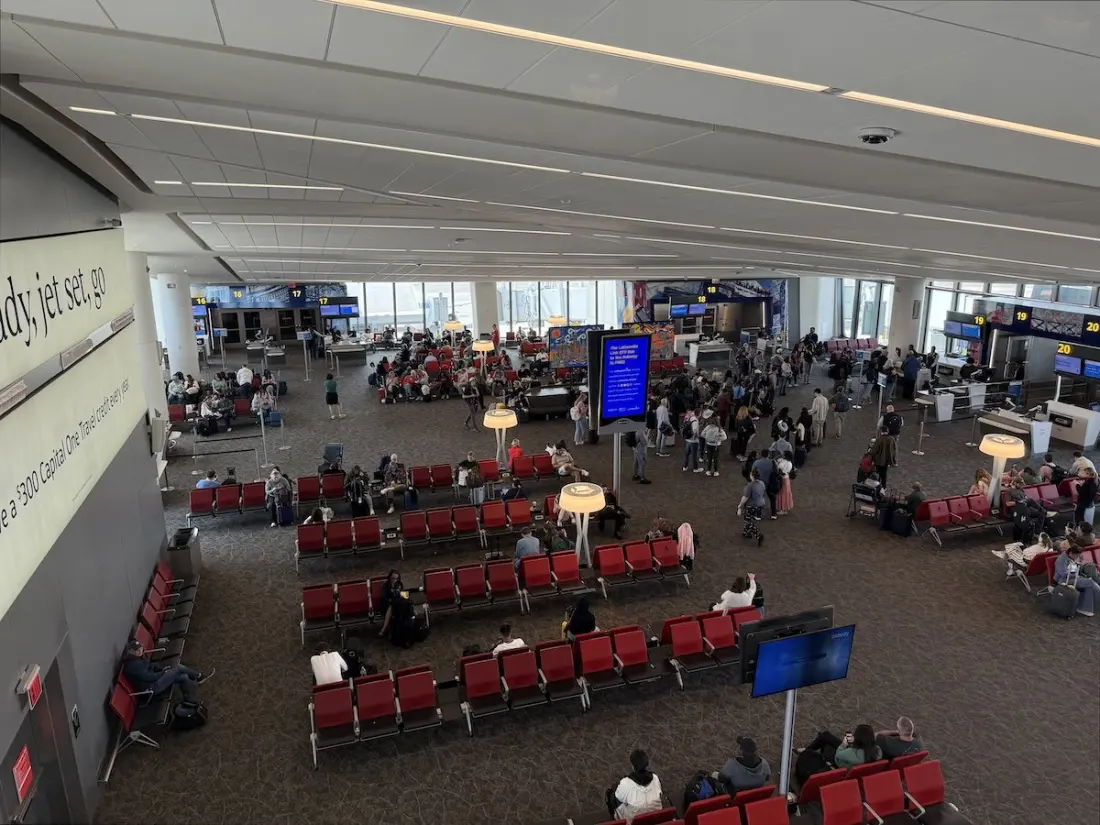
American Airlines is finally doing something about one of air travel's most irritating rituals: the rolling delay. You know the drill — the departure screen keeps slipping in 20-minute increments, the gate agents shrug, and meanwhile you can see on Flightradar24 that the inbound aircraft hasn't even landed yet, so the posted time was never realistic to begin with.
According to reports shared by aviation watcher JonNYC, American now has a programme in the works to give passengers more honest, realistic estimates of when a delayed flight will actually depart. The trial will reportedly kick off at Charlotte Douglas International (CLT), one of American's biggest hubs, before rolling out across the network if it works. The goal is simple: stop feeding travellers a drip-feed of fictional departure times and instead give them information they can actually plan around.
It's worth noting that American has already been catching up on the wider delay-experience front. Its app and website now explain why a flight is delayed, and self-service rebooking has improved, letting passengers switch flights themselves instead of queuing at a packed gate. Realistic rolling-delay communication was the glaring gap left — and it's the one that arguably wastes the most of travellers' time, since you can't decide to grab food, work elsewhere in the terminal, or proactively rebook if you have no idea whether you're leaving in 20 minutes or two hours.
The reaction from frequent flyers has been equal parts relief and exasperation. American's delay handling has been a running complaint for years, and rivals have offered clearer disruption communication for a long time. The counterpoint: American does seem to be narrowing the gap, which matters if you're booked on the airline, because a carrier that respects your time during disruption is worth something on any long-haul or connecting itinerary.
For travellers, the practical takeaway is straightforward. If you're flying American through Charlotte in particular, keep an eye on how delay information is displayed — this is where the pilot programme lands first. And regardless of the airline, the old tricks still work: check the inbound aircraft's status yourself, since boarding can't start until it lands, and use the app to rebook early when a delay looks serious rather than waiting for the gate to make the call.
It's a small operational fix, not a revolution. But if you've ever spent an afternoon hostage to a departure board that kept lying to you, you'll know why it counts.