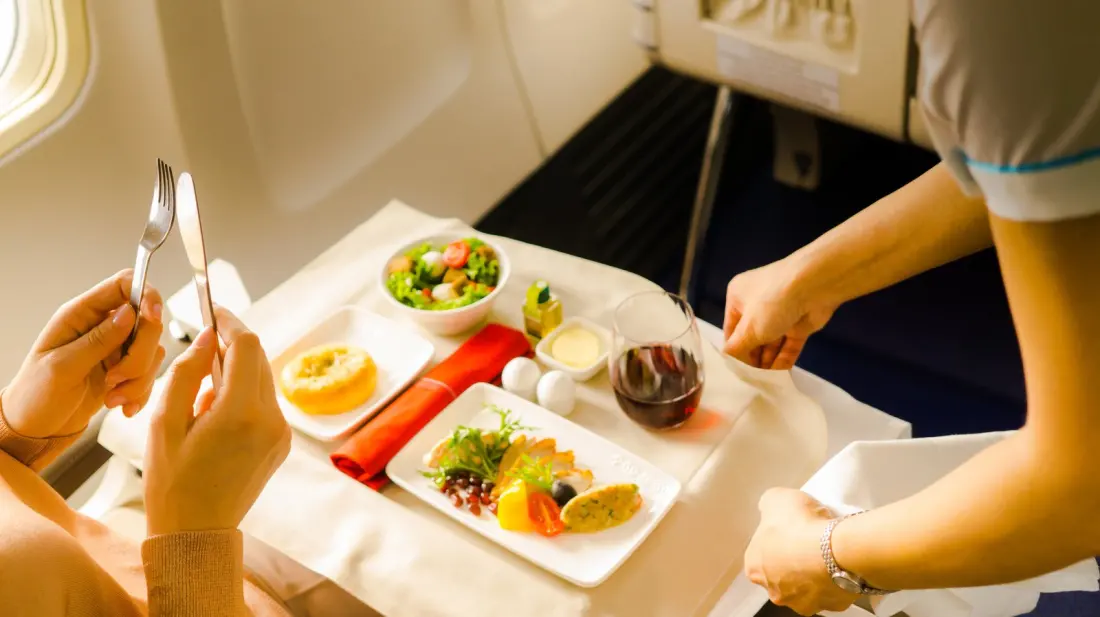
There's one request that seems harmless but lands badly with cabin crew: asking for a meal once service has wrapped up. If you slept through the food run or weren't hungry when the cart came past, it's tempting to flag someone down later for your dinner. Crew members say this quietly disrupts their entire post-service routine — they have to dig out a meal, heat it if needed, and time it around their own limited rest windows on long flights.
The logic is fairly simple once you see it from the other side of the galley curtain. Meal service on a full flight is choreographed around service times, catering quantities and crew breaks. One flight attendant put it bluntly online: with roughly 300 passengers on board, why not just behave like everyone else? Crews are also specifically instructed not to wake sleeping passengers, which means if you dozed off when food arrived, the crew made a deliberate choice to let you rest — chasing them for that missed tray later undoes that goodwill.
There are easy ways around the problem, though. If you plan to sleep through most of a long-haul flight but still want to eat, tell a crew member before takeoff that you're happy to be woken for meals. Some carriers already have systems for this — Emirates uses seat stickers passengers can place to signal whether they want to sleep or be woken for food and drinks. You can also bring your own solution: eye masks printed with "do not disturb" or "wake me up for food and drinks" do the job on any airline.
The broader takeaway is that a bit of preparation prevents most in-flight friction. Pack your own snacks and a filled water bottle so a missed meal doesn't become a mini-crisis at 35,000 feet. It also helps to know when you're likely to be fed — on overnight flights, meal service usually starts soon after reaching cruise altitude, so time your nap accordingly if food matters to you.
None of this is about scolding travellers. Most people who miss a meal do it innocently, and crews genuinely don't mind reasonable requests when there's a real need. But small courtesies — letting crew know your preferences upfront, boarding with snacks, respecting the rhythm of service — make the flight smoother for everyone, including the people who'll be looking after you for the next ten hours. Frequent flyers, especially those on long-haul overnight routes, are the ones who'll get the most out of this: a word to the crew before you doze off is all it takes to keep yourself fed and in the crew's good books.