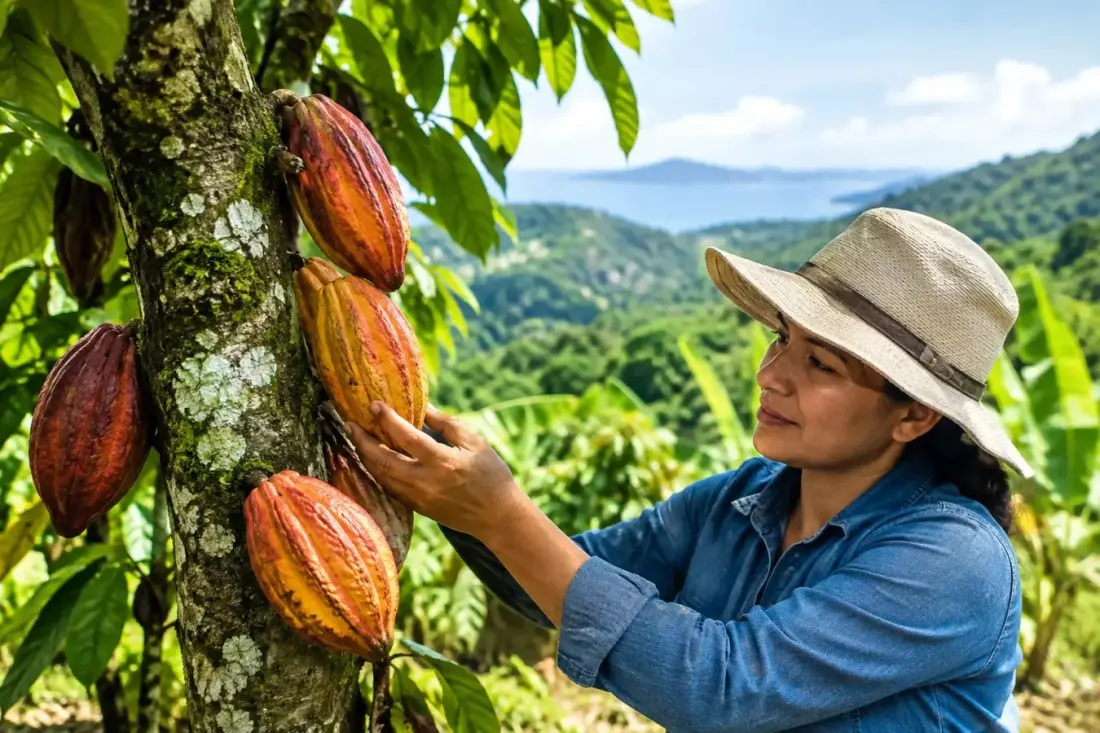
Cacao pods hang off tree trunks in shades of gold, crimson and green, and in Costa Rica's Caribbean lowlands they're more than a photo opportunity. Around Puerto Viejo, Bribri, Cahuita and the Talamanca foothills, small farms have grown cacao for generations, and a growing number now welcome visitors who want to see where chocolate starts.
For Bribri and Cabécar families, cacao has ceremonial, culinary and economic roots that long predate the bean-to-bar trend. Tasting freshly ground cacao in an Indigenous community means encountering knowledge passed down through generations: when to harvest, how to ferment, which plants belong alongside the trees.
A well-run cacao farm looks less like a plantation and more like a young forest. Banana, plantain, inga, hardwoods and fruit trees share space with the cacao, creating shade that cools and moistens the soil while giving farmers extra crops to fall back on when cacao prices dip. Shade isn't just scenery, though. Too much of it cuts flowering and encourages fungus in wet conditions; too little stresses the trees. Good farmers manage that balance constantly.
Sustainability, in other words, is a set of working decisions, not a sign at the farm gate. It shows up in cacao husks returned to the ground as mulch, in compost and ground cover, in clean fermentation areas with proper drainage. Fermentation is where chocolate flavour is actually made, and a tidy, well-explained process says a lot about an operation. Certification can help, but a smallholder doing careful low-input farming may simply lack the paperwork and budget for an organic seal — asking how fertility, pests and wastewater are handled often tells you more than a label.
There are real pressures behind the romance. Black pod disease and monilia (frosty pod rot) demand constant monitoring and pruning. Shifting rainfall patterns make harvests less predictable. And around popular coastal zones, rising land values tempt farmers to sell or convert farmland. Farms that diversify, process locally or sell through cooperatives and direct trade keep more of the chocolate's final price at home — which is why a farm tour or a direct purchase genuinely matters.
For travellers, the practical move is simple: book tours led by people with a direct connection to the crop. Listen for whether the guide can tell you where the beans are grown, how farmers are paid and which shade trees surround them. And don't expect polish. Mud, insects and imperfect fruit are normal on a working farm — an honest conversation about crop disease or market uncertainty is often the most reassuring sign of all.
The takeaway stretches past chocolate. Costa Rica's cacao revival shows conservation isn't only about untouched land; it can also be about land tended well enough, and earning enough, to stay standing as a farm. Buy the bar where it's made, ask a couple of questions, and your souvenir becomes something closer to support.