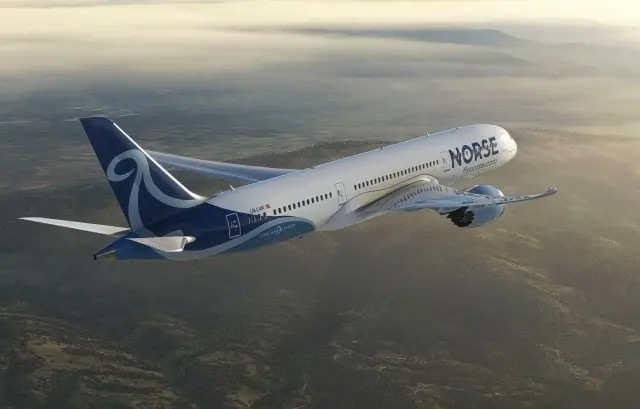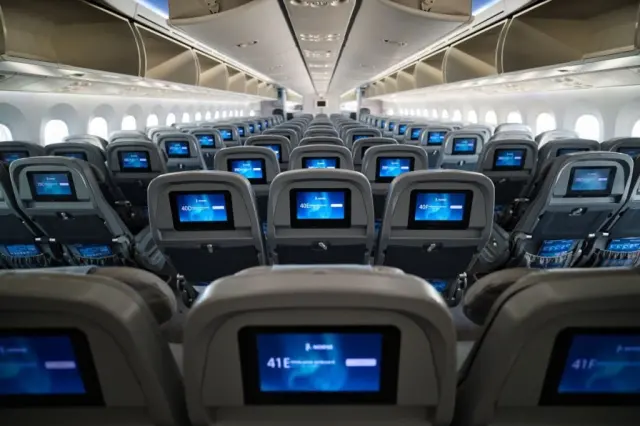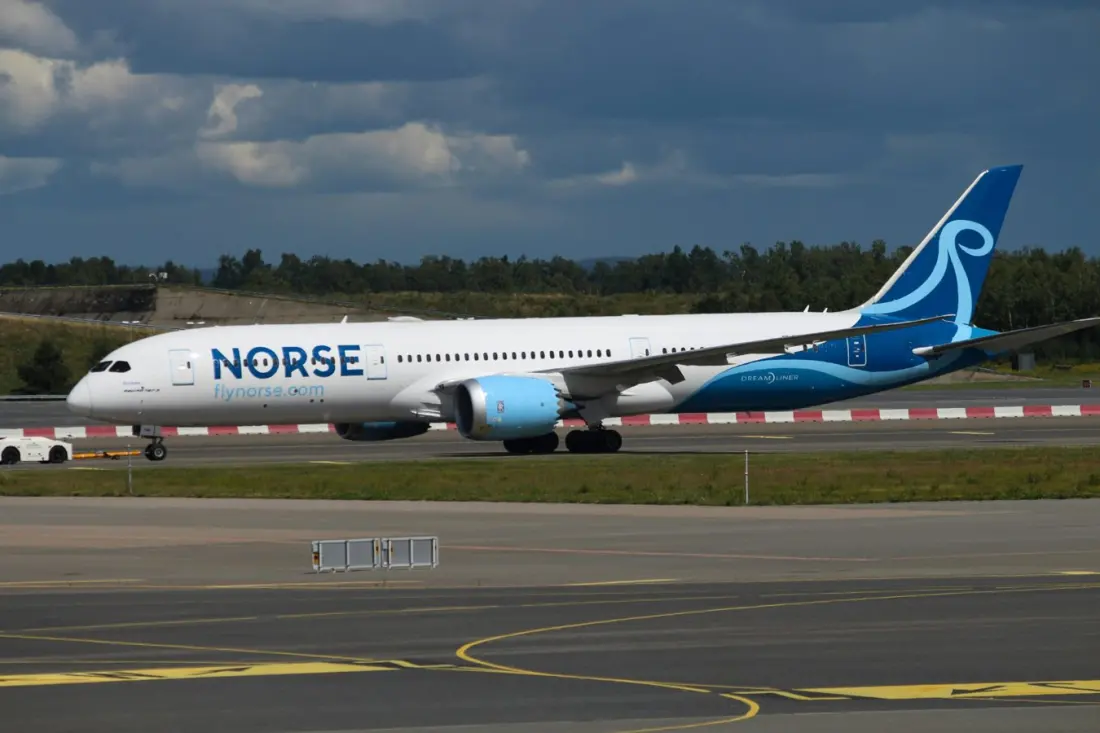
Norse Atlantic Airways has gone from scrappy long-haul challenger to the edge of bankruptcy in a matter of days. The Norwegian budget airline suspended all flights, and now the owners of every one of its 12 Boeing 787s have served notice to terminate the leases — a move the airline formally disputed on Friday 27 November.
The situation is dire by any measure. Norse's board said it intends to file for bankruptcy unless emergency funding arrives, and shares collapsed 85 per cent on Wednesday after the company called its finances "critical". A further 45 per cent drop on Friday took the year's losses to 99.6 per cent, according to Reuters. Management is in talks with potential investors about a takeover that could keep planes flying, but the outcome is described as uncertain. The company has also met bondholders over a $52 million bond.
Passengers have been caught in the middle. Friday's cancellations included Oslo to Phuket, Stockholm to Bangkok, London Gatwick to Cape Town and Manchester to Barbados, and by Friday morning the airline had still not said when normal service would return. Chief executive Eivind Roald told Finansavisen that all aircraft are back at bases in Norway, Sweden and the UK.
The trouble spread beyond Norse's own network. Pakistan International Airlines had been leasing two 787-9s from Norse, complete with crews and maintenance, under a deal signed in October. PIA says the arrangement was halted without warning, forcing it to cancel London–Islamabad and Manchester–Lahore flights and scramble its own 777s back onto UK routes.
Why did a young airline fold so fast? Fuel. Prices for jet fuel in Europe more than doubled in March after the war in Iran disrupted supply, and Norse — flying fuel-hungry long-haul routes with no hedging contracts in place — had no protection. It had been shrinking its schedule for months and quietly pivoting towards charter work and leasing planes to other airlines to make ends meet.
Founded in 2021 by entrepreneur Bjørn Tore Larsen to fill the gap left when Norwegian Air abandoned long-haul flying, Norse promised cheap transatlantic fares on second-hand Dreamliners flown by ex-Norwegian crew. The model always had a weak point: with no regional feeder network, filling a widebody was a constant struggle.
For travellers, the practical takeaway is simple: anyone holding a Norse booking, or booked on a route that relied on its leased aircraft, should assume nothing until the airline confirms it, keep an eye on alternative carriers on the same routes, and check whether their card provider or travel insurance covers airline failure. Whether the takeover talks save the airline or the bankruptcy filing goes ahead, the era of Norse as a cheap way across the Atlantic looks close to over.