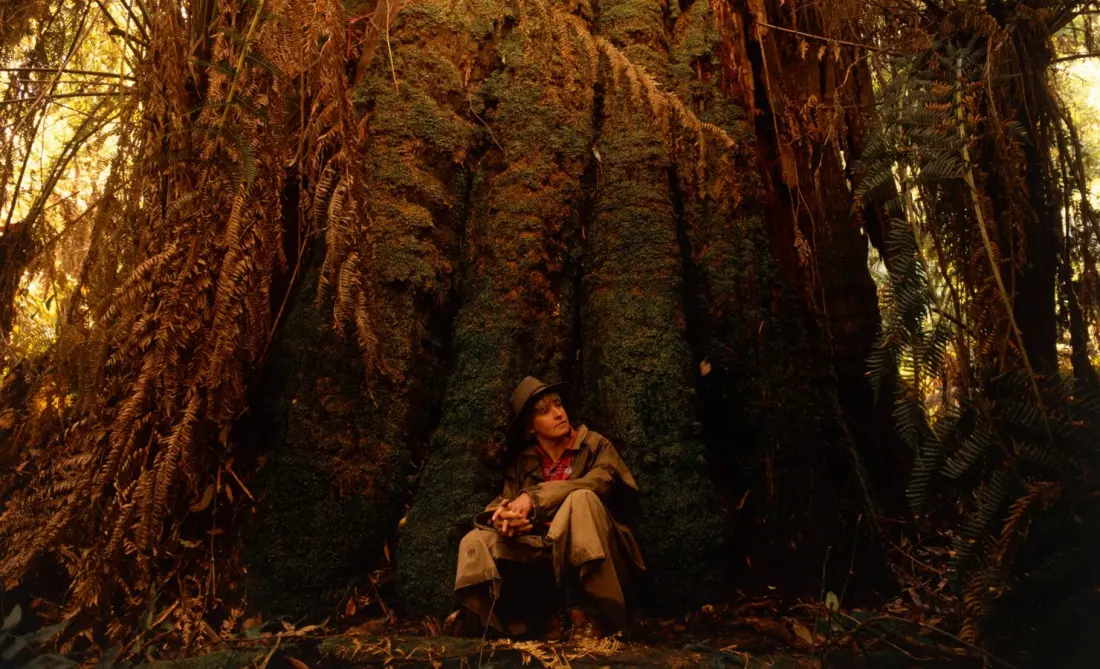
Some trees carry more history than most buildings. Nearly three decades after photographer and author first tracked down Australia's most meaningful trees for the 1999 book Tree Stories, a return trip reveals what's become of them — and the results run from loss to quiet triumph.
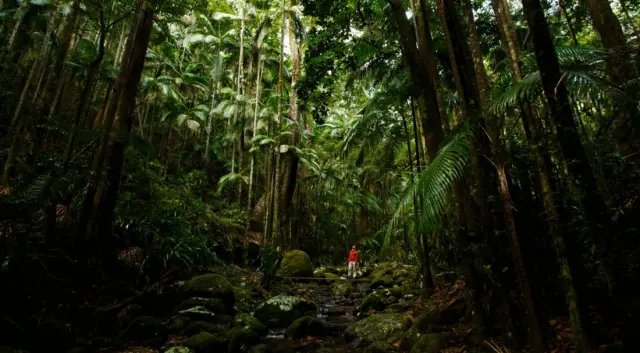
The Touchwood Tree, a 400-year-old messmate stringybark in Victoria's East Gippsland, was named by botanist David Bellamy in 1997 as activists fought logging in the Ellery Creek catchment. Forest campaigner Jill Redwood became its guardian, photographed beneath it at the time. The tree fell later that year, and when the author went back in 2025 hoping to find its remains, a bushfire and regrowth had swallowed the site entirely. But the bigger story endures: Redwood and her fellow campaigners kept fighting, and commercial logging in Victoria's state forests ended in January 2024. On nearby Brown Mountain, the same portrait was retaken beneath a towering, now-protected shining gum.
In Barcaldine, Central West Queensland, the Tree of Knowledge — a 200-year-old ghost gum on Iningai land — was where shearers gathered during the 1891 shearers' strike, the seed of the Australian Labor Party. It was poisoned with herbicide and declared dead in 2006, robbing the town of a drawcard that brought 30,000–40,000 visitors a year. The response was bold: a $5 million memorial by m3architecture and Brian Hooper Architect, opening in May 2009, hangs 3,600 recycled power poles above the preserved trunk, forming an inverted canopy sculpture lit at night. Locals call it the world's biggest wind chime; tourists have returned in droves.
On the Gove Peninsula in Arnhem Land, a sacred banyan tree survived a bauxite mine because Mungarrawuy Yunupingu stood in front of it armed with a knife and an axe when the bulldozers came — and the plant was redesigned around it. With mining now winding down and rehabilitation ahead, his sons GY and Djawa Yunupingu say the tree remains a living anchor of Yolngu culture.
And in Dharug National Park north of Sydney, a bodhi tree — the species under which the Buddha attained enlightenment — thrives at the Wat Buddha Dhamma forest monastery despite frosts, bushfires and hungry possums, watered by hand twice a week by the monks.
Why it matters for travellers: these aren't just botanical landmarks, they're entry points into Australian history — labour politics, land rights, environmental campaigns and Buddhist practice. The Tree of Knowledge memorial alone justifies a stop on an outback Queensland drive through Barcaldine, while East Gippsland's old-growth forests and the Hawkesbury's Dharug National Park reward travellers who like their scenery with a side of story.
Story credit: Australian Geographic