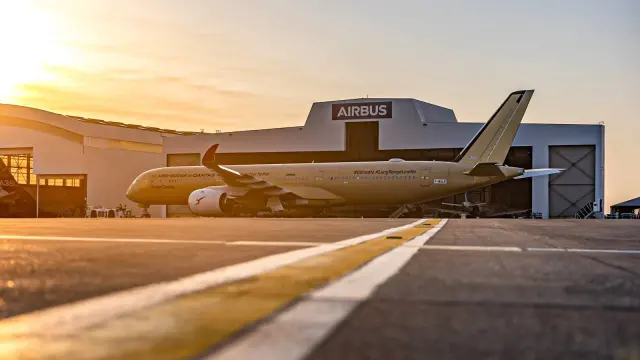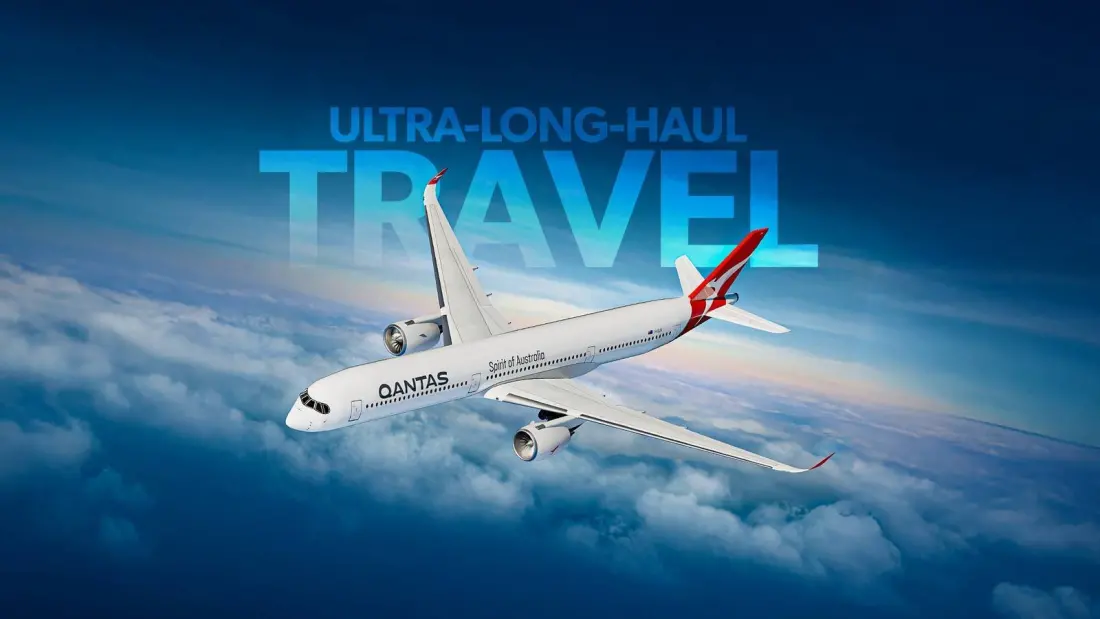
When Qantas launches Project Sunrise in October 2027, Sydney to London will become the longest scheduled passenger flight in the world — roughly 9,200 nautical miles with no stops, ending the Kangaroo Route's reliance on intermediate airports for the first time since 1947. Flying it will take 18 crew members per flight: four pilots and 14 flight attendants serving just 238 passengers aboard a specially modified Airbus A350-1000ULR.
The pilot count is deliberate. Most ultra-long-haul flights get by with three pilots, but Qantas and its pilots' union agreed on four — two captains and two first officers, all fully qualified, with no junior crew. The logic is fatigue maths: on a 22-hour flight, a three-pilot roster means fragmented catnaps, and if one pilot falls ill late in the trip, the remaining two would have to fly on with no rest at all. Four pilots split cleanly into two teams who alternate between the cockpit and a ceiling-mounted rest pod with two full-length lie-flat beds.
Cabin crew get their own quarters too, with eight bunks, privacy curtains, noise insulation and dimmable lighting to help them fall asleep fast. And Qantas has built 60-hour layovers into the schedule so crews are sharp for the return leg — one reason tickets won't come cheap, with fares expected to carry a roughly 20% premium over one-stop options.
The cabin itself is unusual. A standard A350-1000 seats up to 410 people; Qantas has stripped that back to 238 to save weight for fuel. Over 40% of the space goes to premium seating: six first-class suites, 52 business seats and 40 premium economy.
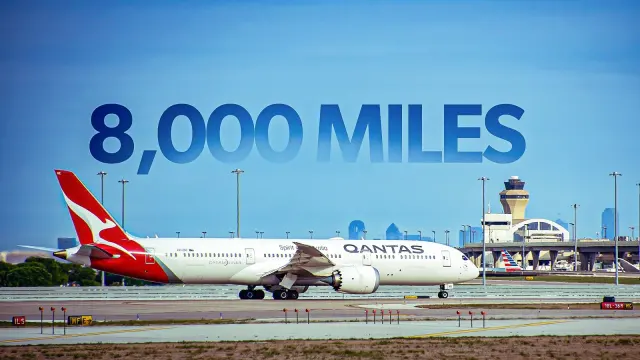
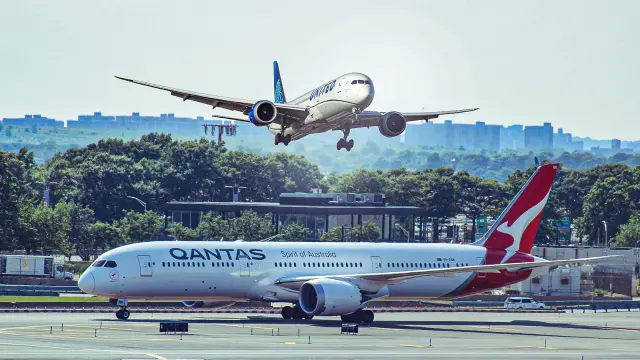
The science behind it is real. Researchers from Monash University and the University of Sydney's Charles Perkins Centre ran trial flights on Qantas 787-9s, tracking pilot brainwaves and passenger jet lag via wearables and melatonin monitoring. Adjusted cabin lighting, shifted meal times and protein-rich meals timed to the destination clock measurably improved recovery, and test passengers stressed the need to move around. In July, a prototype A350 completed a 24-hour, 23-minute test leg from Melbourne back to Toulouse carrying five tonnes of instrumentation, validating the extra 20,000-litre fuel tank that makes the range possible.
The rollout is tight, though. First delivery of the jet nicknamed 'Vega' is expected in April 2027, followed by proving flights with Australia's regulator before October service begins. Tickets are slated to go on sale around February 2027. Sydney–London is confirmed at launch; Sydney–New York follows in mid-2028, and Melbourne and Brisbane direct services have quietly dropped off the near-term plan.
For travellers, this is the first realistic chance to fly Australia to Europe without a stop — skipping hubs like Singapore or Dubai saves up to four hours. Watch for the February ticket window if the record-breaker is on your list, and book early: with one aircraft type and one route at launch, seats will be scarce.