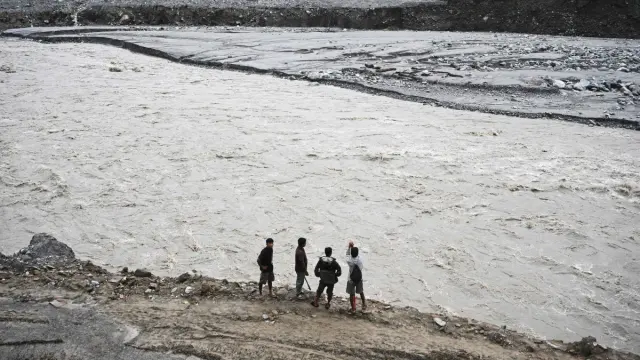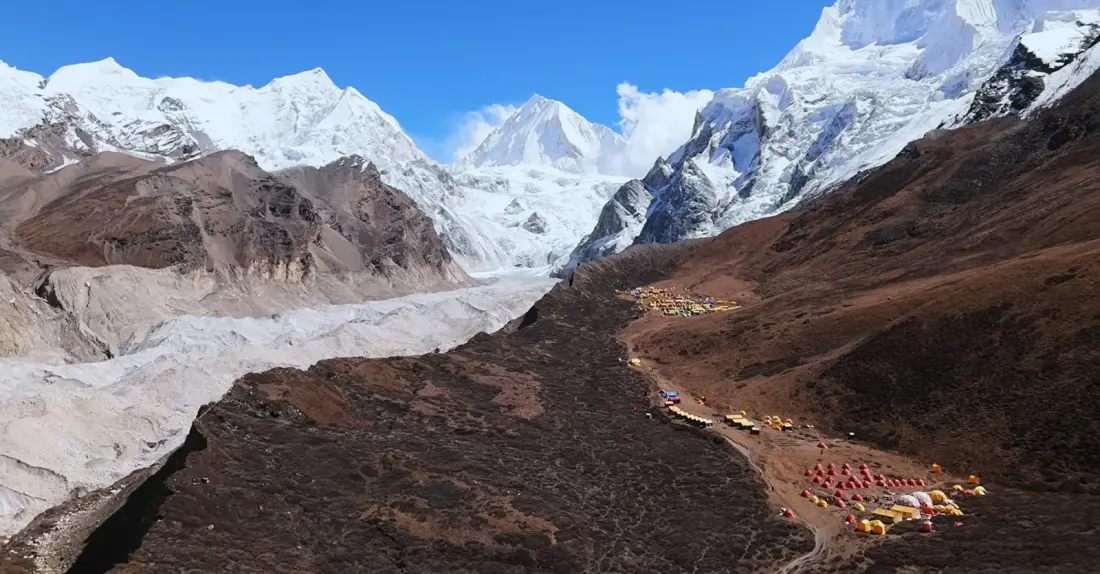
An avalanche has swept through base camp on Himlung, a 7,126m peak in Nepal's Nar-Phu Valley near the Tibetan border, leaving 14 Nepalese workers missing. The victims are all local staff who had been setting up camp ahead of the autumn climbing season — two working for Imagine Nepal and eight for Himalayan Holidays Nepal, according to the Expedition Outfitters Association of Nepal, with later updates raising the total to 14.
Rescue efforts are stalling. Heavy snowfall tied to a storm system that brewed in the Bay of Bengal has grounded helicopters, and volunteers on foot haven't been able to reach the site. Notably, no foreign climbers are on the mountain — Nepal's Department of Tourism hasn't issued permits yet and the route isn't fixed — so the people caught at camp were almost certainly advance staff preparing things for incoming teams.
Avalanches at base camp height are unusual here. The camp typically sits on flat ground, well away from the mountain's flanks, and last year it stood on completely dry ground. The sheer volume of snow from this storm has changed the equation across the Nepalese Himalaya. The Manaslu climbing season has effectively been called off, though a small group of climbers and guides are still holding out in Samagaon or Pokhara hoping for a weather window. Six climbers remain at Dhaulagiri Base Camp, shovelling snow but reported safe. In the Manaslu area, a landslide above a village near Samagaon triggered a thunderous roar at 3am on Sunday, sending locals and trekkers fleeing their rooms — no casualties reported so far.
Why is Himlung suddenly busy? A proposed tourism law would require foreign climbers to summit a 7,000m Nepalese peak before attempting Everest, and outfitters like Imagine Nepal market the mountain as the perfect stepping stone for those with 6,000m experience. That growing appeal means more staff moving onto the mountain early — and more people exposed when the weather turns. The accident also echoes last year's storm-related death on Himlung, when 49-year-old Australian climber Chin Tark Chan fell ill near the summit; a disputed insurance claim and helicopter altitude limits delayed his descent, and he died at Camp 3.
For travellers, the wider context matters: Nepal's authorities, still shaken by deadly floods the previous month, issued extensive warnings — closing the Annapurna Conservation Area for the weekend and urging trekkers away from high passes, avalanche zones, rivers and low slopes. Yet a significant number of staff apparently stayed at Himlung's base camp anyway. Anyone planning an autumn trek or climb in Nepal should expect disruption during major storms and take official closures seriously, even when locals on the ground press ahead.