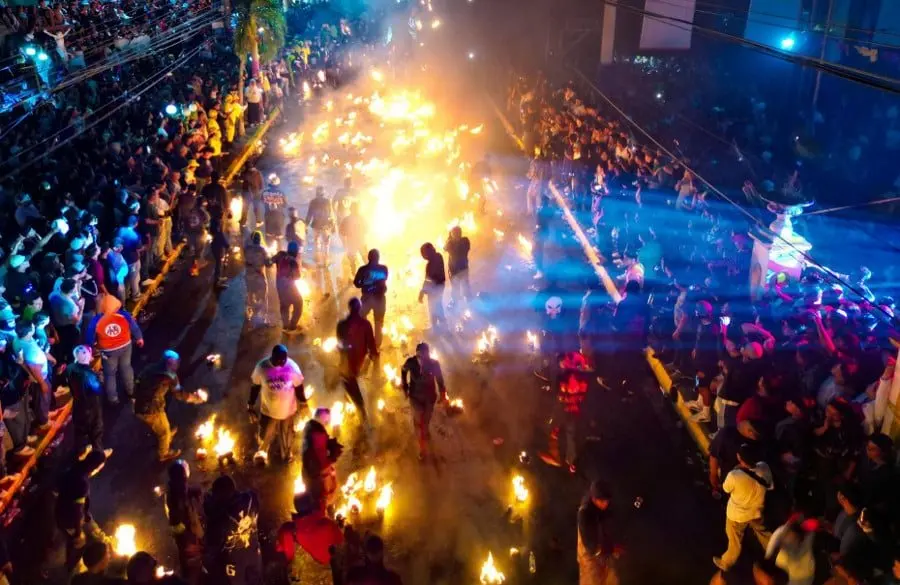
Every August 31, the small town of Nejapa, just north of San Salvador, hosts one of the strangest spectacles in Central America: a pitch battle where two teams hurl burning, kerosene-soaked fireballs at each other through the night streets. Locals call it Bolas de Fuego, and it's been a fixture of the town's calendar for a century.
Imagine a snowball fight, but the projectiles are fabric balls doused in fuel and set alight. Participants cover up in long clothing, gloves and face protection — some add painted faces or theatrical costumes — while crowds watch from zones the organisers mark out with safety boundaries. The main battle happens after dark, and the surrounding festivities typically include music, food stalls and family gatherings.
The origins mix geology and religion. Local tradition traces the story back to 1658, when the El Playón volcano, near the San Salvador volcano, erupted and forced residents of the old village of Nixapa to abandon their homes and resettle where Nejapa stands today. The fireballs are read as a memory of that eruption.
There's a parallel religious version: Nejapa's patron saint, San Jerónimo (Saint Jerome), is said to have battled the devil with fireballs as lava flowed into the village, so the fight reenacts good versus evil. Historians debate the details, but the organised fireball throwing itself is generally dated to 1922, and the event has grown into Nejapa's defining cultural expression.
For travellers, the appeal is obvious — this is nothing like a parade or a folkloric dance festival. It's loud, hot, physically intense and deeply local. It's also genuinely risky: open flames, large crowds and flying fire mean spectators should stay behind barriers, follow organisers' instructions and never wander into the active throwing area. Arriving early helps you scout a safe viewing spot before the streets fill up.
Nejapa sits within easy reach of the capital, reached by road — drive yourself or hire a local transport service — though expect crowds and possible road restrictions on festival day. Pairing the festival with time in San Salvador makes for an easy trip, and El Salvador's other attractions are close enough to build into the same itinerary.
If your idea of a cultural experience involves a bit of adrenaline, put the last day of August in your calendar. Few celebrations anywhere show a community's history and identity quite this dramatically.