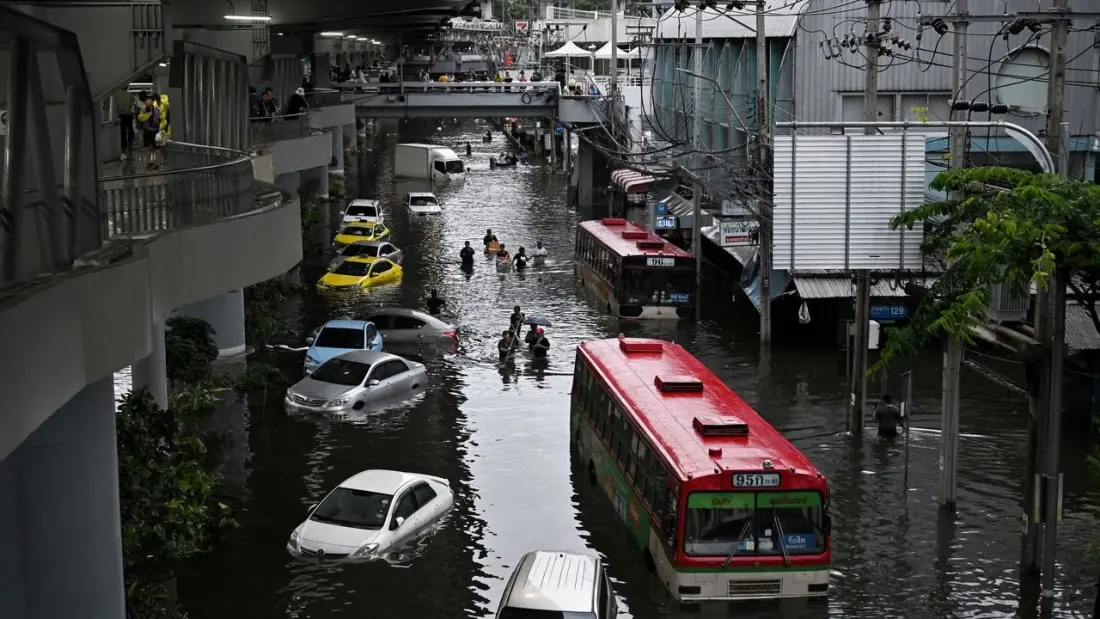
Heavy monsoon rain has pushed Bangkok into crisis mode, with the Thai capital now declared a disaster-affected zone across all 50 of its districts. More than 30 centimetres of rain has fallen in parts of the country, flooding roads and canals and sending water into some major tourist sites. The government has also declared 28 and 29 September 2026 as special public holidays for affected areas, including Bangkok, and Governor Chadchart Sittipunt has asked residents and visitors alike to skip any unnecessary travel.
If you have a trip booked, the good news is that the city's two main airports — Suvarnabhumi (BKK) and Don Mueang (DMK) — are still open. The bigger problem is getting to them: flooded roads are causing significant delays, so airlines are telling passengers to leave far more time than usual for the journey and to check their flight status before heading out.
Most of the big carriers serving Thailand have stepped up with flexible booking policies. Thai Airways, AirAsia, Thai Vietjet, Nok Air and Thai Lion Air are all offering impacted travellers a single free flight change, credit, or refund for disruptions between late September and mid-October 2026. If your dates fall in that window, it's worth contacting your airline directly rather than waiting to see how conditions develop.
Ground transport is patchier. Bangkok's urban rail network is coping well — the MRT Blue, Purple, Yellow and Pink lines are running normally, and some stations have even opened their doors to shelter flood victims. On the national rail side, the State Railway of Thailand reports normal service on the Southern and Northeastern lines, but the Eastern and Northern lines have flooded tracks and are operating with safety adjustments, so expect changes if you were planning to travel out of the capital by train in those directions.
For anyone already in Bangkok, the practical advice is simple: stick to the elevated train lines where possible, keep an eye on official announcements, and avoid low-lying neighbourhoods and riverside areas where water levels can change quickly. If you haven't travelled yet and your trip is non-essential in the coming weeks, it may be worth postponing until the waters recede — your airline's waiver policy gives you a low-cost way to do that.