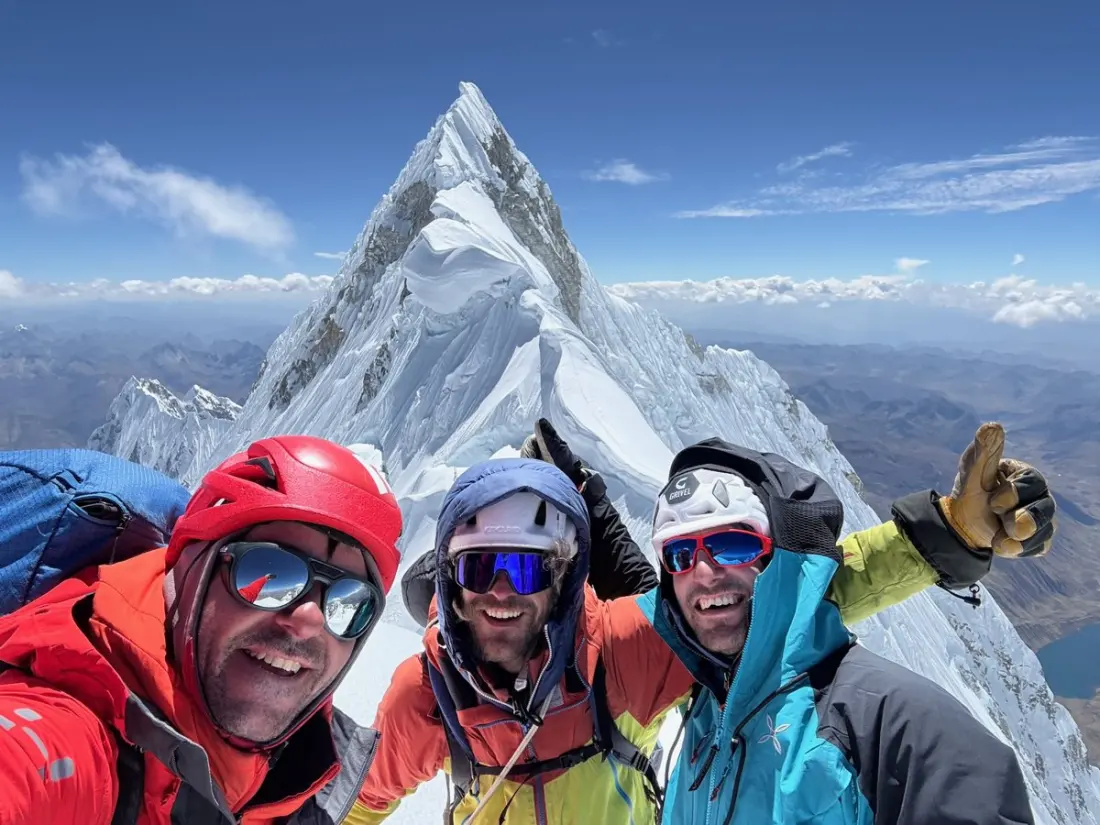
A Spanish trio just won a Piolet d'Or for a new route on Yerupaja Grande (6,634m), the highest summit in Peru's Huayhuash range. Marc Toralles, Ruben Sanmartin and Bru Busson told ExplorersWeb the ascent went ahead only after careful risk assessment — and their advice doubles as a useful briefing for anyone eyeing Peru's high mountains.
The big theme is change. Warming temperatures are destabilising the huge snow formations — cornices, seracs and the famous summit "mushrooms" — that cap Andean peaks. Toralles watched a snowfield on Siula Grande vanish mid-season: there on the walk in, gone on the way back. Even normal routes are drier and trickier now, and some climbers are switching from glacier routes to ridges that hold better conditions. The lesson: treat old guidebook descriptions as historical documents, and judge the mountain as you find it.
What makes the range appealing is accessibility. From Lima you can reach Huaraz by plane, bus or car, spend a few days acclimatising, then be climbing within a three-to-four-day window — a fraction of the time a Himalayan trip demands. There are no peak permits; instead you pay a small fee to cross local community lands, and you can hire arrieros with mules to haul gear to base camp. The team kept logistics minimal — essentially just a roomier base camp tent — though on popular approaches it's wise to have someone watch camp while you're up high.
Huayhuash remains quieter than the neighbouring Cordillera Blanca, mostly because its peaks are harder. But the climbers say crowds are building fast on both climbing and trekking routes. Weather is on your side, though: stable windows of five to six days are common, and the team simply had friends relay free online forecasts to their InReach. The season runs July, August and the first half of September.
For aspiring mountaineers, the trio's practical takeaways go beyond route choice. Loose, foamy snow is now standard — they rigged "alitas" (little wings) on their ice axes and carried small snowshoes. And decision-making matters as much as technical skill: commit only to lines you genuinely want, weigh objective hazards against subjective drive, and accept that retreat is the right call for injury, impassable terrain or violent weather. They named their route Essence of Commitment for a reason.
For trekkers who'd rather not dangle off a 6,000m face, the Huayhuash Circuit remains one of South America's great multi-day walks, passing beneath those same photogenic peaks with none of the commitment. And while the climbers doubt the Andes will ever rival the Himalaya for crowds — no refuges or helicopters here — they see enormous potential. If a quieter, rawer high-altitude experience appeals, go before more people catch on.