Suvarnabhumi Airport stayed open through Thailand's late-September flooding — one traveller reported just a 10-minute delay — yet the system around it buckled. Thai Airways flagged delays and a mounting baggage backlog after floodwater disrupted ground operations, and on 29 September The Nation reported selected cancellations linking Bangkok with Phuket, Khon Kaen, Hanoi and Singapore. Bags from 52 flights that operated on 26 and 27 September were still being sorted days later.
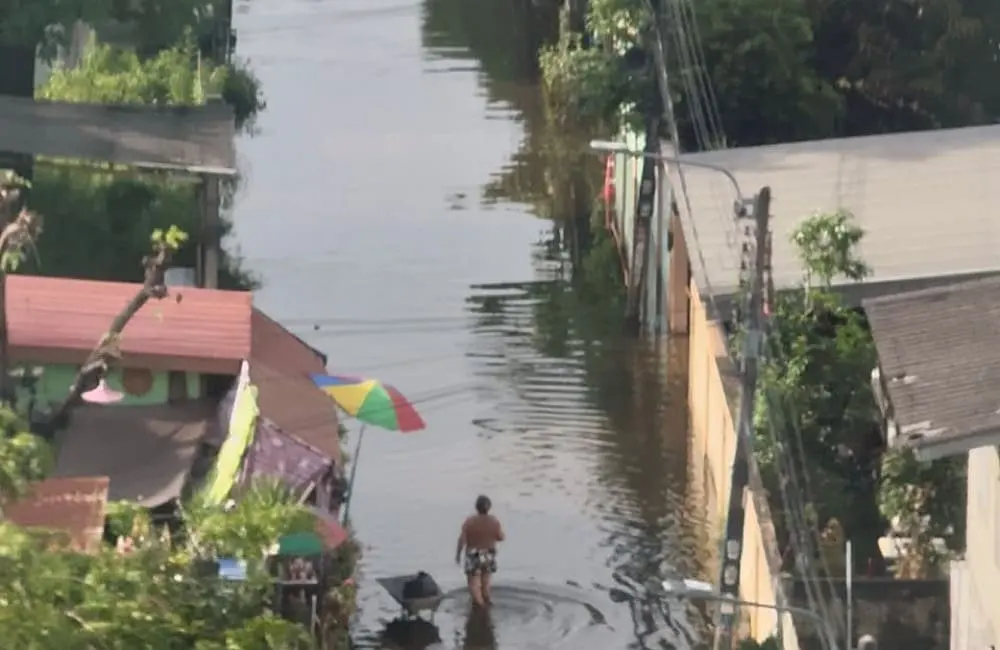
The cause wasn't the airport itself but its people. Staff couldn't get to work because their neighbourhoods were underwater, prompting Thai Airways to seek military transport simply to move employees to the terminal. Bangkok declared all 50 districts disaster-affected after torrential rain, with northern and eastern areas and canal-side communities hit hardest. By 28 September conditions had eased in places, but transport disruption lingered.
The gap between tourist and local experience was stark. Hannah Brerley, a Linton Travel advisor from Victoria who arrived in Bangkok on 28 September, described the city centre's tourist zones as dry and business as usual — while the train ride from the airport showed homes and streets submerged. She had already passed through floodwater in Cambodia earlier in the trip, an inconvenience for passengers in a vehicle but a threat to livelihoods for those living beside the road.
For travellers, the practical lesson is that a functioning airport doesn't guarantee a functioning trip. Regional hub disruption ripples outward — the late-September cancellations hit international routes to Hanoi and Singapore as well as domestic ones — and recovery continues after the rain stops, as damaged access roads and lost income take months to work through. The story also makes a case for checking how well a hotel or operator plans for extreme weather: protecting a building matters little if staff can't reach it.
There's a longer arc, too. The IPCC has found that human-caused climate change has likely intensified heavy rainfall across Asia, and the World Bank lists flooding as a significant economic risk to Thai tourism. Recent attribution research on Nepal's deadly floods estimated warming made that extreme rainfall roughly 10% more intense and 70% more likely, though with wide uncertainty. For Thailand, a low-lying country with subsiding coastal land, the pressure isn't going away.
The human takeaway: where destinations are open and businesses are ready, travelling anyway helps sustain local incomes; where access is genuinely compromised, flexibility beats insisting on the original itinerary. Your flight may leave on time. The people serving your breakfast may still be pumping water out of their homes.