Kazakhstan has quietly built one of the more interesting auteur film movements of the past decade, and film scholar Gulnara Abikeeva has a name for the people behind it: the Children of Independence. Born in the last years of the USSR but raised entirely in a free Kazakhstan, directors like Emir Baigazin and Adilkhan Yerzhanov have brought the country's stories to Berlin, Cannes and Venice — often by asking uncomfortable questions about police abuse, corruption and violence that older generations feared would get banned.
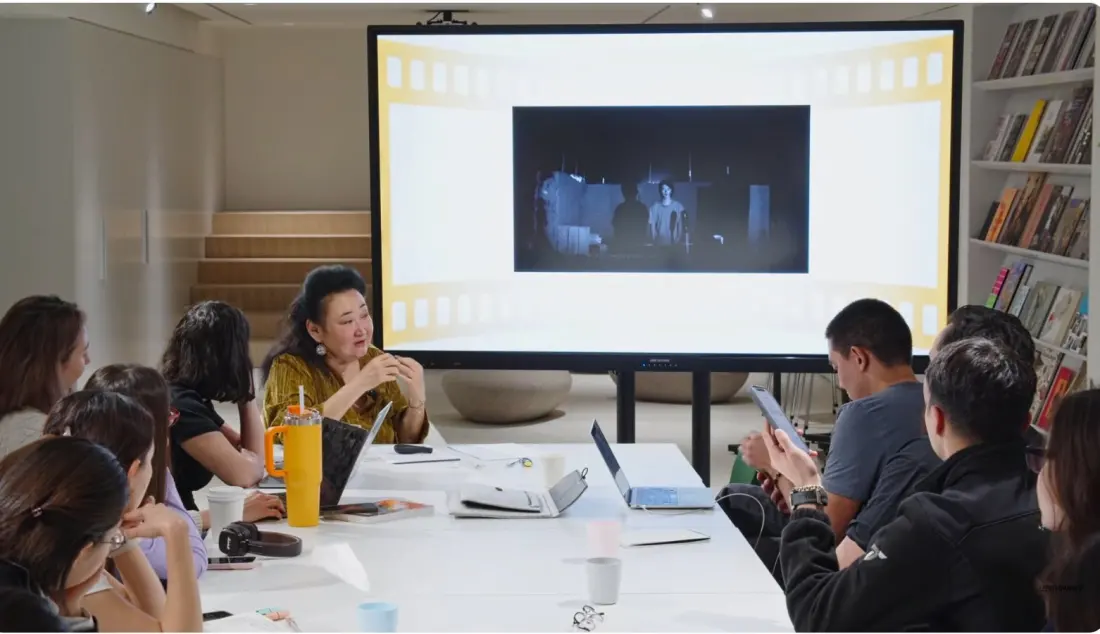
Abikeeva, author of 12 books on cinema, laid out her thinking in a lecture at Almaty's Tselinny Center of Contemporary Culture on Nov. 9. Her first reaction to these films, she admitted, was fear — they critiqued authority so directly she expected them to be censored. They weren't. A generation raised without Soviet-era censorship simply didn't know it was supposed to self-edit.
The awards followed quickly. Baigazin's debut "Harmony Lessons," about a 13-year-old boy pulled into a rural school's brutal culture of bullying and extortion, premiered in competition at the 2013 Berlinale and won a Silver Bear for cinematographer Aziz Zhambakiyev. His 2018 film "The River" took the Orizzonti Award for Best Director in Venice. Yerzhanov, born in Zhezkazgan in 1982, has been even more prolific on the festival circuit: "The Owners" screened at Cannes in 2014, "The Gentle Indifference of the World" in Cannes' Un Certain Regard in 2018, "Yellow Cat" in Venice's Orizzonti in 2020, and he picked up an Asia Pacific Screen Award for directing "A Dark, Dark Man" in 2019.
What makes this cinema distinct, Abikeeva argues, is what it refuses to do. Where Soviet film offered grand narratives — ideology, progress, a brighter tomorrow — these directors tell small, unresolved, private stories. In "Realtor" (2011), a young man selling his parents' village house to Chinese buyers casually offers to remove an ancient balbal stone monument, then slips into an imagined past where Kazakhs defend their land. The question of owning a home becomes a metaphor for whether a generation feels at home in its own country.
For travellers, this is a genuinely good reason to look beyond Almaty's mountains and Astana's futuristic skyline. Kazakhstan's recent cinema is a window into how a young post-Soviet nation actually sees itself — messy, contradictory and honest in a way no guidebook captures. If your trip includes an arts cinema or a film festival screening, tracking down Baigazin or Yerzhanov beforehand will change how you read the streets, the steppe villages and the Soviet-era apartment blocks around you.
Abikeeva's takeaway is broader than film criticism: a country confident enough to produce artists who look at it without flattery, and audiences willing to sit with what they see, is showing a kind of independence no official narrative can match. That's worth remembering the next time someone tells you Kazakhstan is just a stop on the Silk Road itinerary.