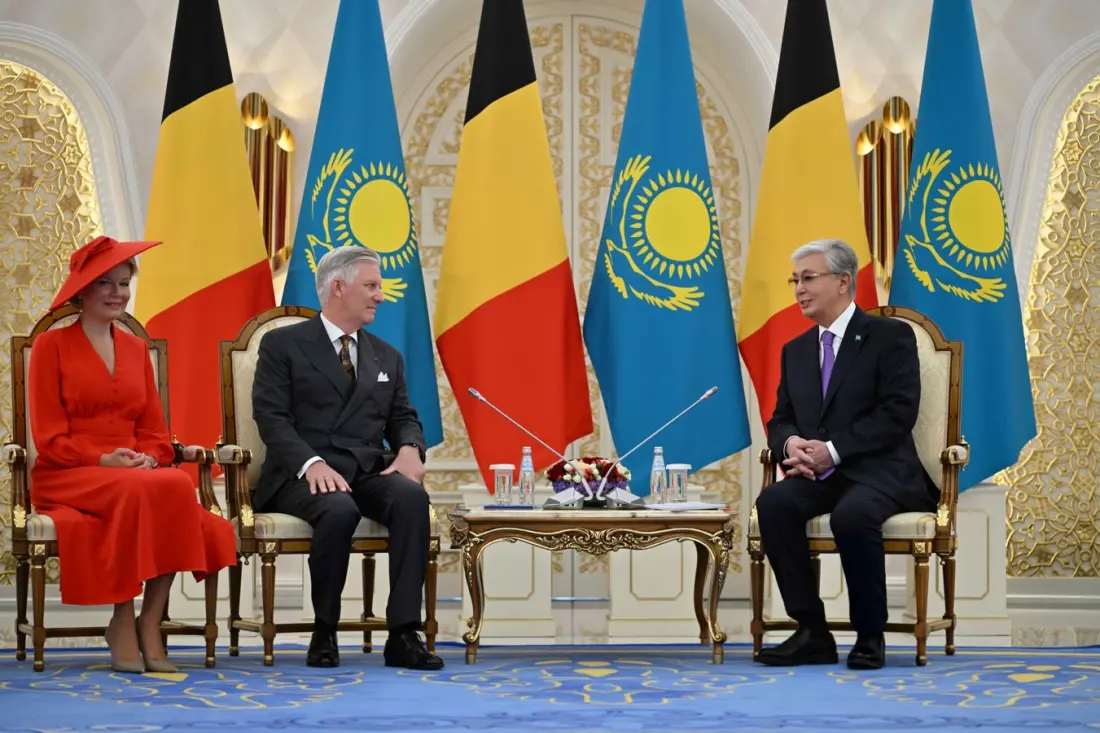
Kazakhstan rarely tops European holiday wishlists, but that could slowly change. In mid-October, King Philippe and Queen Mathilde paid a state visit to Kazakhstan — the Belgian king's first — running from 11 to 14 October and wrapping up with a joint statement signed with President Kassym-Jomart Tokayev on 12 October. Beneath the diplomacy, there are genuine signals for anyone curious about Central Asia.
The headline item is transport. Both countries threw their weight behind the Trans-Caspian International Transport Route, better known as the Middle Corridor — the rail and shipping link running from China through Kazakhstan, across the Caspian Sea, the Caucasus and on to Europe. Both governments framed it as a reliable bridge between Asia and Europe, and growing investment in the route means better connections through a region that has long been a blind spot on most travellers' maps.
Culture featured prominently too, and this is where holidaymakers benefit most directly. Tokayev highlighted an exhibition of works by Belgian symbolist painter James Ensor at Kazakhstan's National Museum in Astana, plus a new partnership between the Almaty Museum of Arts and Brussels' KANAL-Center Pompidou. For art lovers, that means European-calibre shows increasingly pairing with Kazakhstan's own young museum scene.
On the practical side, a protocol has entered into force amending the visa exemption agreement between Kazakhstan and the Benelux countries for holders of service passports, and the two sides committed to more agreements marking 35 years of diplomatic relations in 2027. Regular passport holders from many European countries, including Belgium, can already enter Kazakhstan visa-free for short stays — and easier diplomatic channels tend to precede smoother tourist flows.
The visit was heavy on economics — Belgium has invested more than $15 billion in Kazakhstan since 2005, with critical minerals, AI and renewables on the table, and Tokayev and the King discussed cooperation around Astana's Alem.AI innovation centre. That tech-driven development push matters for visitors too: Astana's futuristic skyline, growing hotel stock and improving connectivity are all products of the same modernisation drive. Education links via a universities' forum and healthcare cooperation rooted in the 1978 Alma-Ata Declaration round out the agenda.
Who should care? Adventurous travellers eyeing the Silk Road cities of Turkestan and Samarkand-adjacent routes, rail enthusiasts tempted by the Middle Corridor's growing network, and design and art fans who want to catch the Ensor show or the Pompidou tie-up in Almaty. Kazakhstan remains a niche pick — vast, spread out and better suited to a two-week trip than a weekend — but with Europeanroyalty stopping by and billions flowing into infrastructure, the country is quietly positioning itself as Central Asia's most accessible gateway. The Astana Times