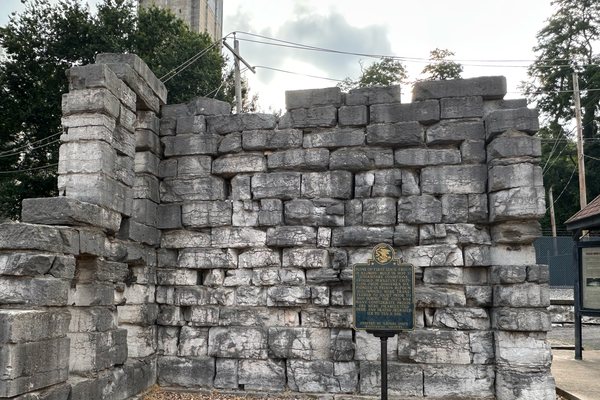
On a bend of the Mississippi River in Alton, Illinois, a pair of weathered stone walls is all that remains of one of the Midwest's most consequential — and grim — landmarks. This was the site of the Alton State Penitentiary, Illinois' first state prison, opened in 1833, later converted into a Civil War military prison that held more than 11,000 Confederate soldiers.
The prison's origins were troubled from the start. In an era when inmates were often hired out for labour with little oversight, conditions drew fierce criticism. Among the most prominent voices for change was Dorothea Dix, the reformer whose national campaign against cruel and unregulated treatment of prisoners helped reshape American institutions. Her criticism of the Alton facility fed into broader reform efforts in Illinois, which eventually led to a new, more humane prison opening in Joliet in 1858.
The site's darkest chapter came during the Civil War. Repurposed as the Alton Military Prison, it confined thousands of Confederate prisoners of war in overcrowded, unsanitary conditions typical of wartime prisons on both sides. By the time it closed, more than 11,000 Southern soldiers had passed through its gates.
Most of the complex was torn down in the early 1870s, but two walls were deliberately preserved as a memorial — both to the city's role in the Civil War and to the longer struggle for humane treatment of the incarcerated. Today the site is a quiet, low-key stop in Alton's historic riverfront district, and it pairs naturally with the town's other attractions: antique shops, cliffside river views, and the nearby National Great Rivers Museum at the Melvin Price Locks and Dam.
Why go? Alton sits just 25 miles upriver from St. Louis, making it an easy half-day or weekend trip for history-minded travellers. The prison walls themselves take minutes to visit, but the context is rewarding — this is a place where prison reform, Civil War history and small-town Americana intersect. History buffs can also seek out the Alton Confederate Cemetery, where many prisoners who died in the prison were buried, and the town's wealth of 19th-century architecture. If you're touring Civil War sites in the region, Alton deserves a slot alongside St. Louis' better-known attractions.
Story credit: Atlas Obscura.