Rome has the ruins, Paris has the boulevards — but neither tops the list when it comes to how attractive travellers actually find a city. That honour goes to Osaka, according to a 2026 ranking by Yanolja Research, a Korean tourism institute that teamed up with Purdue University and Kyung Hee University for the study.
The methodology is a sign of the times: researchers analysed social media posts about 261 cities worldwide, then used AI to score sentiment in each one. The positive ratio was weighed against buzz volume across four categories — urban aesthetics and natural scenery (30%), culture and history (30%), experiential tourism content (30%), and hospitality (10%). Osaka came out on top, with Kyoto second, New York third, Paris fifth and Rome seventh. Tellingly, the Japanese city's strongest suits were experiential content and hospitality: shopping, nightlife, accommodation, and a food culture that has earned it the nickname "Japan's kitchen."
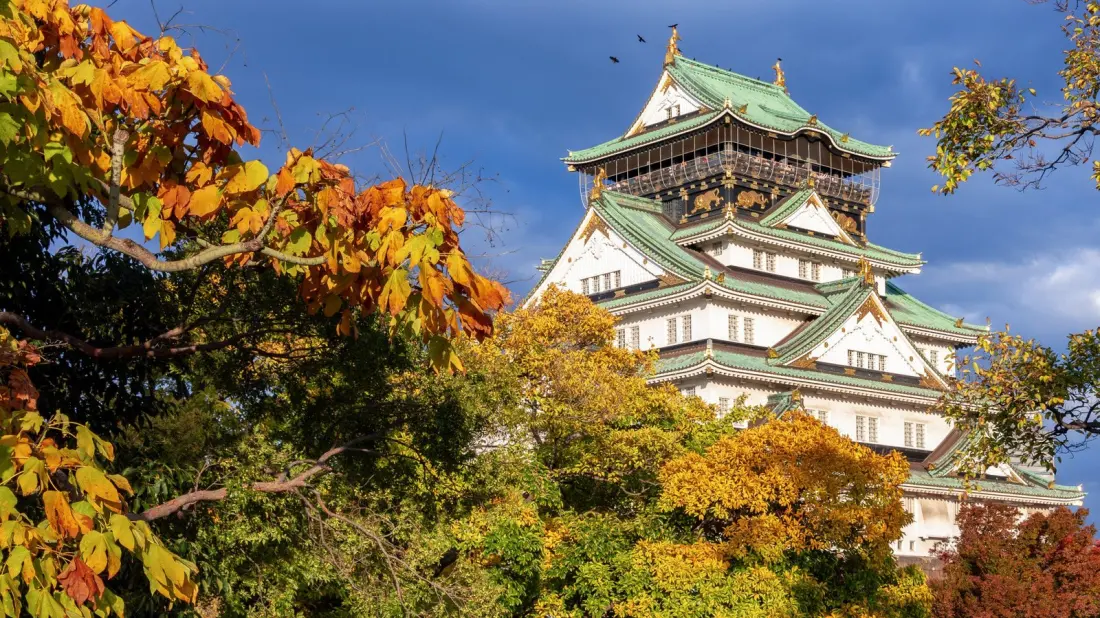
So what does an attractive Osaka actually look like? Start with the classics. Osaka Castle, with its tiered white-and-gold keep above stone walls, is at its best in late March and early April, when the surrounding park fills with cherry blossoms. On the waterfront side of town, the Dotonbori Canal is pure sensory overload — neon signs reflected in the water, giant crab and octopus sculptures looming over ten bridges, cooking smells and bar music spilling into the streets.
A few steps away, Hozenji Yokocho Alley offers the opposite mood: a cobbled lane roughly ten feet wide, strung with muted red lanterns, lined with small bars and long-running restaurants serving everything from traditional kappo dining to fried kushikatsu skewers.
Beyond the commercial core, two neighbourhoods show a quieter side. Nakazakicho, under a 20-minute walk from Umeda, survived WWII largely intact, so its narrow streets of weathered machiya houses now hold cafés and galleries without the tour groups. Further out, about 40 minutes by metro, Nagai centres on a park with a botanical garden wrapped around a pond — and after dark, the teamLab Botanical Garden Osaka turns the grounds into an outdoor installation of light and sound.
Why it matters: this ranking reflects how real travellers feel after visiting, not just postcard appeal, and Osaka wins precisely on the things you can taste, hear and do. For anyone planning a first Japan trip, it also pairs neatly with Kyoto — just 30 minutes away by train — while Kansai International Airport offers a striking arrival point in its own right.