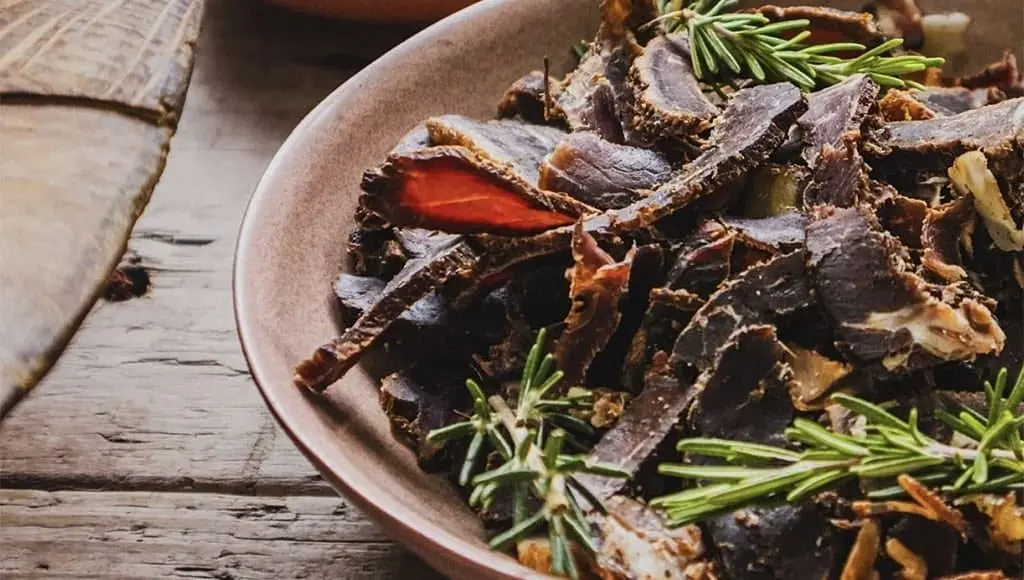
Biltong - South Africa's salted, spiced, air-dried beef - is the food expats apparently miss more than the weather, the beaches and sometimes the people. And it has now officially turned up in one of Portugal's least likely corners: the misty hills of Sintra.
The backstory starts with South Africa's small but growing community in Portugal, now estimated at 10,000 to 12,500 people. They cluster around Lisbon, Cascais, the Sintra corridor and pockets of the Algarve, drawn by safety, climate, a stronger passport and a slower pace than Johannesburg or Cape Town currently offer. It's a compact diaspora, but a tightly networked one - and one of its first collective questions is always where to find proper biltong.
The snack itself dates back centuries. Dutch and French Huguenot settlers, trekking by ox wagon long before refrigeration, preserved beef strips with vinegar, salt, coriander and black pepper, hanging them to cure in open air. The result is dense, dark and intensely savoury - less a snack than a portable piece of cultural memory. Ask any South African abroad and it tends to top the nostalgia list.
Enter Raw Sintra, a small producer founded by chef Sérgio Graçioso - a Sintra culinary fixture who has appeared on Portuguese television - and Anthony Day, an Ireland-born long-time resident with a track record of starting podcasts and businesses. They hand-cut and air-dry biltong the traditional way, but source the beef from Portuguese cattle, an easy local swap. The flavour range does the cultural blending for them: lean, garlic, and a piri-piri version that winks at Portugal's own spice heritage in much the same way Nando's did with its South African roots.
The operation has even become the official biltong partner of several Portuguese rugby clubs, which feels fitting given the meat's Springbok associations.
Why should a traveller care? Because Sintra deserves more than a day-trip sprint to Pena Palace anyway, and this is a genuinely local food story happening off the usual pastel-de-nata trail. Byron called the town a "glorious Eden"; the UNESCO-listed hills hold the fairytale Pena Palace, the crumbling Moorish Castle and Quinta da Regaleira's mysterious initiation well. Now they also hold one of Europe's more unexpected diaspora food stories - a cured South African classic made with Portuguese beef in a Atlantic-misted workshop. If you're passing through Sintra and spot it, a bag of piri-piri biltong makes a better souvenir than most castle fridge magnets.
Story via Portugal Resident.