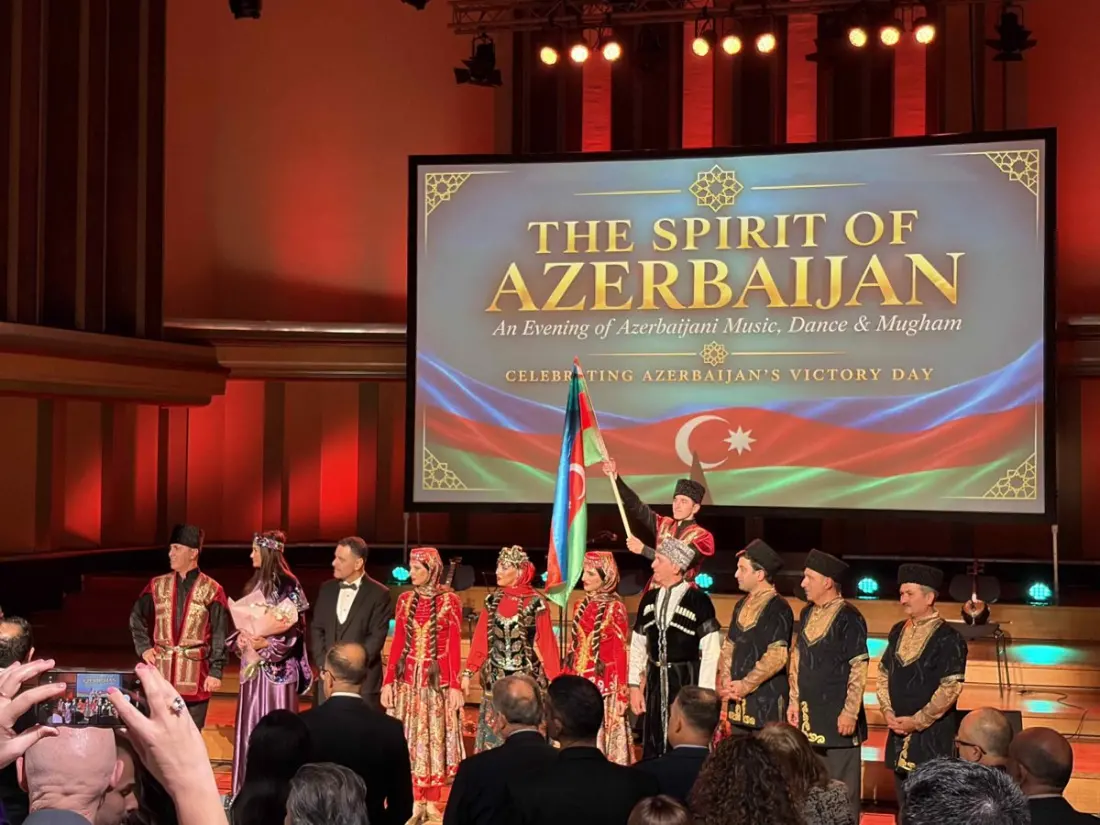
Brussels got a taste of Azerbaijani culture on 4 November, when the Azerbaijan State Song and Dance Ensemble named after Fikret Amirov performed 'The Spirit of Azerbaijan' at Flagey, one of the city's best-known concert venues. The evening mixed mugham — the country's signature improvisational vocal art — with folk songs and energetic group dances from Karabakh and Eastern Zangezur, all backed by a screen showing landscapes and reconstruction footage from across the country.
The concert, organised with Azerbaijan's Embassy in Belgium and its EU and NATO missions, doubled as a commemoration of the sixth anniversary of Victory Day. The opening piece was telling: Bayati-Shiraz, one of mugham's seven principal modes, chosen to echo its performance at the 2021 Kharibulbul Music Festival in Shusha, the historic mugham heartland that hosted the festival again after nearly thirty years. Ambassador Mammad Ahmadzada framed the piece as the voice of the nation's loss and its hope for reconciliation.
So what exactly is mugham? Think of it as a structured framework with huge room for improvisation — a singer (the khanende) performs with the tar, a long-necked lute, the kamancha, a spiked fiddle, and the daf frame drum. Because the form is passed down master-to-student and interpretation is personal, no two performances are alike. The seven main modes — Rast, Shur, Segah, Shushtar, Chargah, Bayati-Shiraz and Humayun — each carry their own emotional register. UNESCO added mugham to its Intangible Cultural Heritage list in 2008, and an Azerbaijani recording even rides aboard NASA's Voyager Golden Record.
The ensemble itself has serious pedigree. It was founded in 1938 by Uzeyir Hajibeyov, considered the father of Azerbaijani classical music, and later took the name of Fikret Amirov, who brought mugham into symphonic form. In Brussels the dancers worked through precise, colourful choreography while vocalists handled the demanding mugham passages; a buffet of Azerbaijani specialities sent everyone home happy.
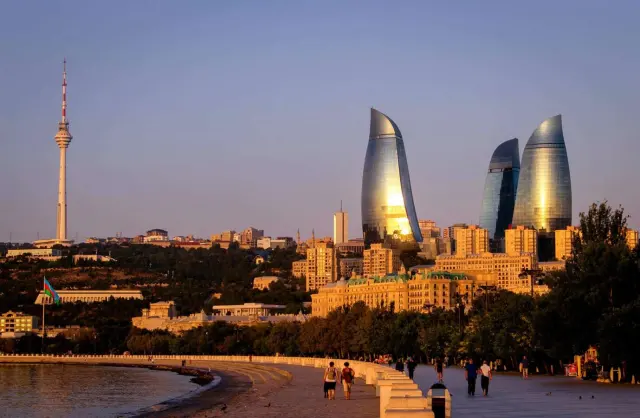
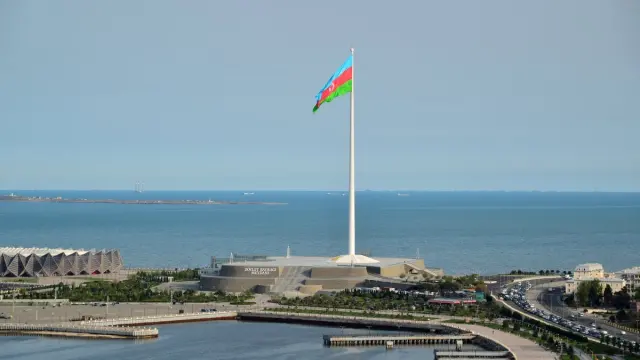
Why should a traveller care? If this concert piqued your curiosity, the real thing awaits in Azerbaijan itself — and Baku makes an accessible base. The Mugham Center on the seafront hosts regular performances, and the annual Kharibulbul Festival in Shusha remains the tradition's showcase event, named after the flower that symbolises the city. Between concerts you get a country where Silk Road architecture, Caspian beaches and Caucasus mountain villages sit within a few hours of each other, plus a food culture of saffron pilaf, kebabs and black tea served in armudu glasses. Evenings like the one at Flagey are a trailer; the full feature plays in Baku and Shusha.