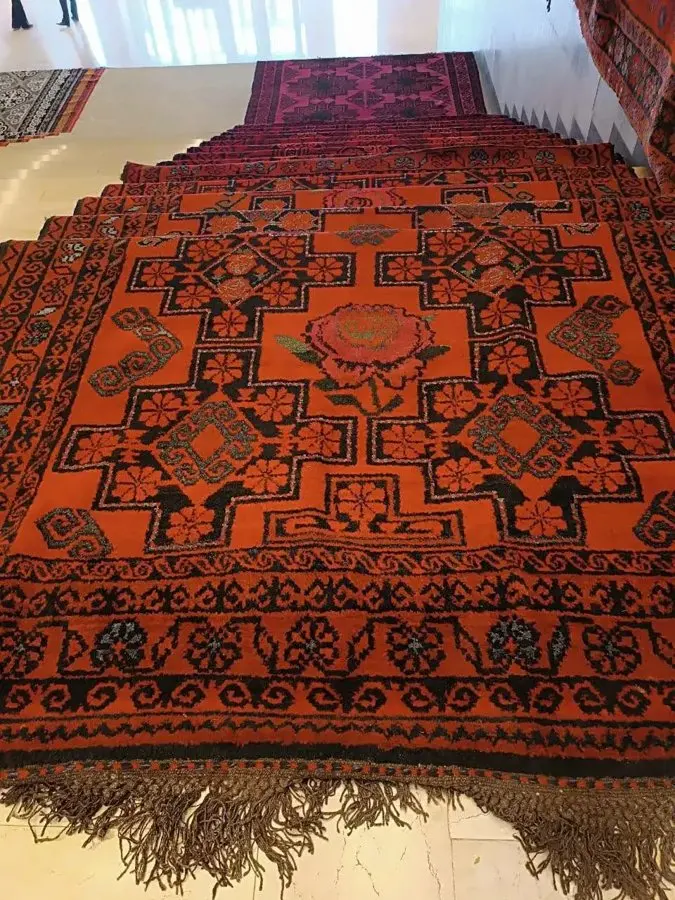
If you happen to be in Bishkek in mid-November 2026, there's a good reason to carve out an hour or two at the National History Museum. From November 16 to 26, the museum will run "Leilek Carpets", an exhibition and sale devoted to the handwoven wool carpets of the Leilek district, a rural corner of Kyrgyzstan's southern Batken region near the Tajik border.
Everything on show comes from women artisans working in Leilek, and — importantly for travellers who like their souvenirs to have a story — the pieces are for sale, not just for looking. The carpets are made from natural wool and carry the geometric patterns and motifs that have been passed down through generations of Kyrgyz weavers. In a country where felt and wool crafts sit at the heart of nomadic heritage, these textiles are less decorative knick-knacks and more portable pieces of cultural history.
The event was initiated by Kamila Talieva, a member of the Zhogorku Kenesh, Kyrgyzstan's parliament. The stated goals are straightforward: give craftswomen in a remote region a direct route to buyers, keep traditional weaving skills alive for the next generation, and raise the profile of Kyrgyz folk art more broadly. For the artisans, an event at the country's flagship museum in the capital is a rare shot at selling outside local markets, where middlemen usually eat into margins.
For visitors, the appeal is twofold. First, you get a concentrated look at a regional weaving tradition that rarely travels beyond Batken — the kind of thing you'd normally only stumble across in a village home. Second, buying on the spot means your money goes straight to the women who made the carpet, and you're taking home something genuinely handmade rather than a factory-made imitation sold in tourist shops.
Timing-wise, the exhibition also slots neatly into a Kyrgyzstan trip. November is low season, Bishkek is quiet and easy to get around, and the History Museum sits centrally on Ala-Too Square, so you can pair it with the city's bazaars and the surrounding Tian Shan foothills. The timing is worth double-checking closer to the date, though: the museum has been undergoing renovation in recent years, and event schedules in Kyrgyzstan can shift. Note the dates fall in 2026 — easy to misread as this year at a glance.
Who is this for? Anyone planning a cultural trip to Central Asia, textile and craft enthusiasts, and travellers who would rather spend their money on artisan work than mass-produced keepsakes. Even if you're not buying, the exhibition doubles as a crash course in Kyrgyz carpet motifs and the role of women in keeping nomadic craft traditions going.
And if you miss it, the broader takeaway stands: Kyrgyzstan remains one of the most affordable and rewarding places in Central Asia to buy authentic handmade textiles directly from their makers, whether at capital-city exhibitions like this one or at the country's well-stocked craft markets.