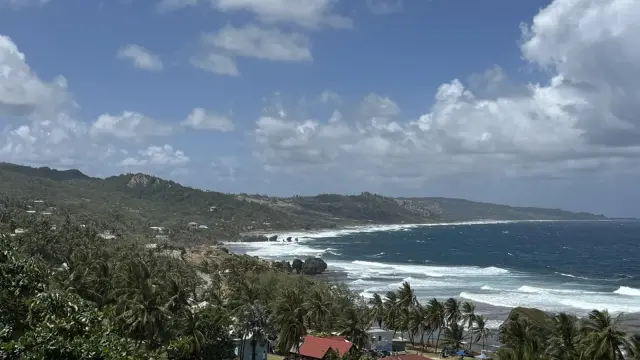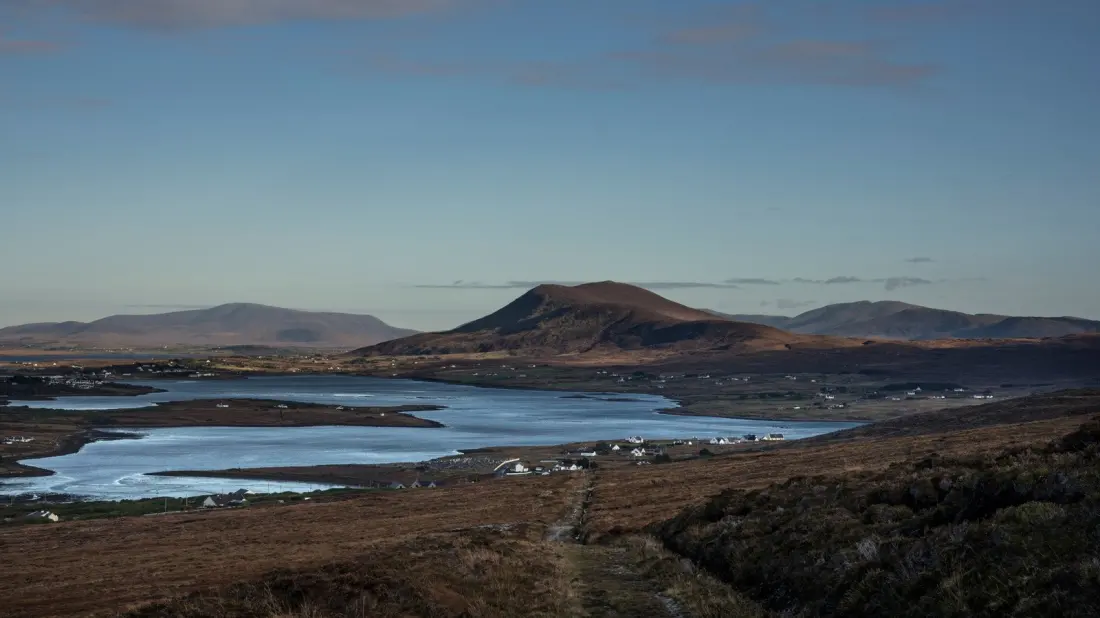
Blacksod doesn't make a fuss about itself. This small fishing village sits at the bottom of the Mullet Peninsula in County Mayo, at the end of the crooked, 1,600-mile Wild Atlantic Way, and it looks exactly like the Ireland of the films: waves hammering a rocky shoreline, hills of wild grass, grazing animals, and ruined islands scattered offshore.
Its headline landmark is the 19th-century Blacksod Lighthouse, and it's an oddity. Most lighthouses taper like cylinders, but Blacksod is square — one of only two in Ireland built that way, according to The Irish Times. It also has a remarkable backstory. In the early hours of 3 June 1944, lighthouse keeper Maureen Sweeney reported deteriorating weather from Blacksod. Allied meteorologists passed the warning up the chain, General Eisenhower pushed the Normandy landings back 24 hours, and D-Day went ahead under better conditions. Guided tours of the lighthouse cover the full story.
Right beside the tower is the Blacksod Memorial Garden, created in 2013 for the 130th anniversary of the first ship to sail from Blacksod to North America. The stone memorial is shaped like a boat pointing west, split into 15 sections — one for each ship that carried emigrants out of this corner of Mayo, including some 3,300 people who left in the 1880s. Their names are inscribed in the stone.
The water is the real draw, though. Blacksod Bay is one of the better places in Ireland to see marine life. Blacksod Sea Safari & Island Tours runs trips for seal and seabird colonies, Atlantic gamefishing, and visits to abandoned villages, a defunct whaling station, and sea arches; depending on the season you might cross paths with minke whales, porpoises, or even orcas. Bellmullet Boat Charters runs a two-hour ferry loop of the bay past Duvilluan Island's basking sharks, dolphins, and grey seals, with views of the lighthouse and Blacksod Quarry — its rare reddish granite ended up in local buildings and, remarkably, the Houses of Parliament in London. A longer 3.5-hour tour reaches the Inishkea Islands, with their crumbling stone buildings, old folktales, and regular appearances from bottlenose dolphins and humpback whales.
Timing matters if wildlife is the goal. Dolphins are best from February to August, whales from March to July, and seals from June to October — with low tide the best moment, when they haul out on the rocks. Handy overlap: those windows line up with Ireland's shoulder seasons (April-May and September-October), so you can dodge the summer crowds at the same time.
Who is this for? Travellers road-tripping the Mayo stretch of the Wild Atlantic Way who want the scenery and stories without the tour-bus crowds. It's genuinely rural — Galway, the nearest city, is about three hours away by car — but there are hotels, guesthouses, and rentals within 10 miles of the village. If your idea of a good holiday is a boat ride with humpback whales, a strange square lighthouse with a World War II plot twist, and a quiet memorial to emigrants who sailed west, Blacksod belongs on the itinerary.