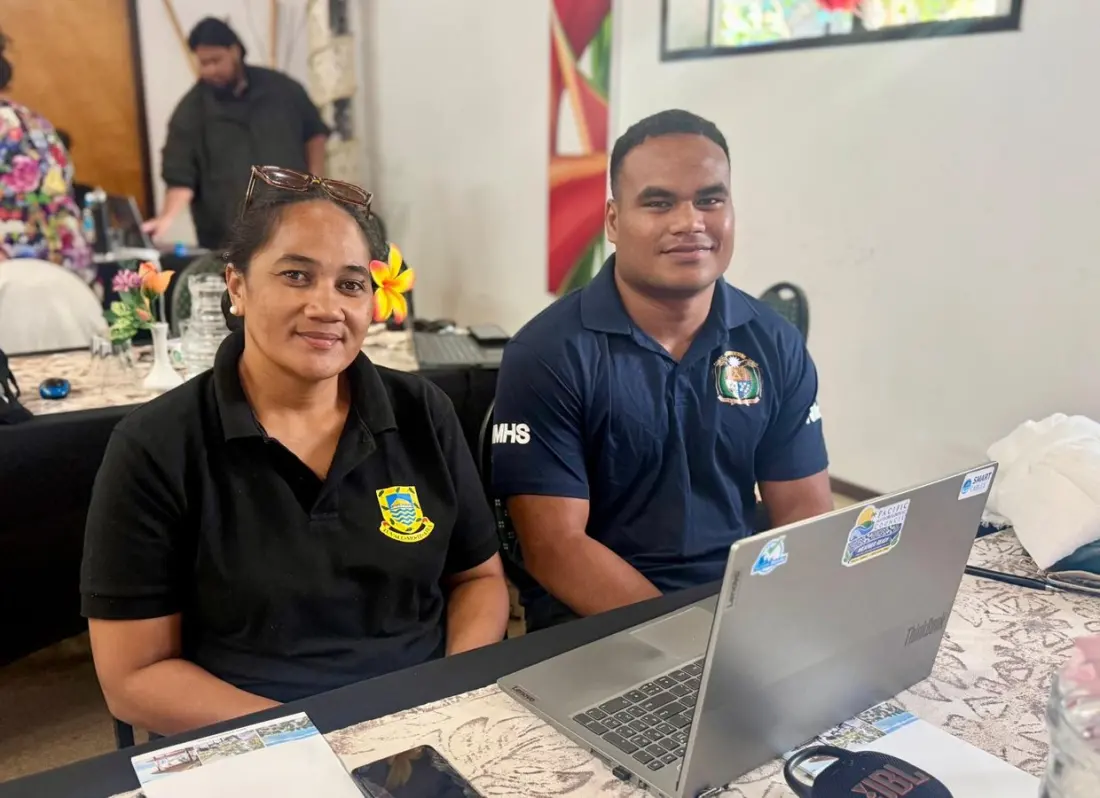
When a cyclone or tsunami warning is issued in a country of tiny scattered islands, the forecast is only half the job. The other half is making sure someone on an outer island with no internet actually hears it. That was the focus when communications staff from Tuvalu and Naoero (Nauru) gathered at a Polynesian Sub-Regional Knowledge Brokers Training, hosted by SPREP in the Cook Islands, to compare notes on getting weather information to every community.
For Tuvalu, the fix has been a mix of languages and backup channels. The Tuvalu Meteorological Service created a dedicated communications officer role in 2021, and officer Simoea Tiute says the office can now push out warnings immediately during cyclones and tsunami events. Statements go to stakeholders in Tuvaluan, social media runs in both Tuvaluan and English, and email carries information to outer islands. Where an island has no meteorological station at all, satellite phones and radio are used to reach a local Kaupule secretary, who passes the message on to the community in person. The one weak link? Even timely broadcasts via the country's single broadcaster don't always land — residents still report they never received a warning.
Naoero's challenges look a bit different. Climatology manager Ricky Joram, the department's sole communications officer, says the country is currently in an El Niño phase bringing heavier rain and a longer wet season — exactly the kind of thing people need plain-language warning about. Public feedback has been largely positive but blunt on one point: bulletins are too technical. Internet outages are another headache, so the service bought Starlink as a backup connection when the island's main link drops.
Both officers picked up practical tools at the training, notably a one-page Canva template for condensing those two- or three-page climate documents into something a member of the public will actually read. Joram also took away lessons on reaching people with disabilities, and his department is working with the Department of Culture to produce materials in localised Naoeroan — a response to a generation that hasn't learned to read the traditional written form. Traditional knowledge is slowly being folded in too. His stated goal: get the message to reach the last person on the last mile.
Why should a traveller care? If you're heading to Tuvalu or Naoero, your safety in a cyclone or tsunami depends on exactly these systems. It's a useful nudge to check how your accommodation receives warnings, keep a satellite or offline means of getting alerts, and take El Niño-season rain forecasts seriously. It's also a small window into how these two of the world's least-visited countries actually operate — where a single communications officer, a radio call and a village secretary can be the difference between a warning heard and a warning missed.
Islands Business