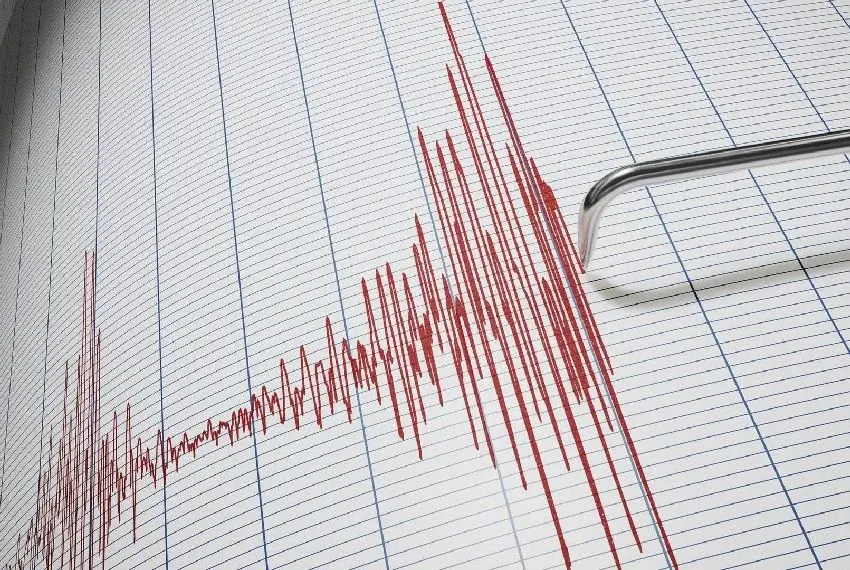
An earthquake of roughly magnitude 3.5 rattled Kyrgyzstan in the early hours of Sunday, November 8, according to the country's Institute of Seismology. The tremor struck at 5:14 a.m., with its epicentre about five kilometres southeast of Bor-Debe village, on Kyrgyz territory. Residents of Bor-Debe felt it as a magnitude 3 shudder — enough to notice, not enough to cause damage.
There is no suggestion of casualties or destruction, and for a country sitting in one of Central Asia's most active seismic zones, an event this size barely registers in daily life. Kyrgyzstan lies where the Indian plate keeps pushing into the Eurasian plate, folding up the Tian Shan mountains that make the country so attractive to hikers, horse trekkers and road-trippers in the first place. Small quakes like this one are routine — the seismology institute logs them regularly, and most are felt only near the epicentre.
So why flag it at all? Because if you're planning a trip to Kyrgyzstan — and the country's alpine lakes, yurt camps and Silk Road history have made it one of Central Asia's fastest-growing destinations — a little seismic literacy goes a long way. The practical takeaway isn't to cancel anything. It's to know that earthquakes here are usually minor, that the authorities monitor and report them promptly through the National Academy of Sciences, and that buildings in Bishkek and other cities are generally engineered with seismic risk in mind.
If you're heading into remote areas — say, trekking around Song-Kul, camping near Ala-Archa, or touring the south around Osh — it's worth a quick check of local news or your accommodation's advice on what to do if the ground moves. The basics are the same anywhere: get to open ground or a sturdy doorway, avoid mountain gorges and loose slopes during and after any significant shake, and expect aftershocks. Village guesthouses are typically simple single-storey structures, which keeps risk low in rural spots like Bor-Debe.
November is also shoulder-to-low season in Kyrgyzstan. The high mountain passes that define summer travel are cooling down, and winter sports around Karakol start ramping up in the coming weeks. Most visitors in November are in the cities or lower valleys, well away from the kind of terrain where a minor quake would matter at all.
Bottom line: this was a footnote-sized event, the kind that happens quietly a few times a year in a mountain country. Travellers should read it not as a warning, but as a reminder that Kyrgyzstan is a genuinely wild, geologically young place — and that a couple of minutes of preparation is a sensible addition to any itinerary here.