
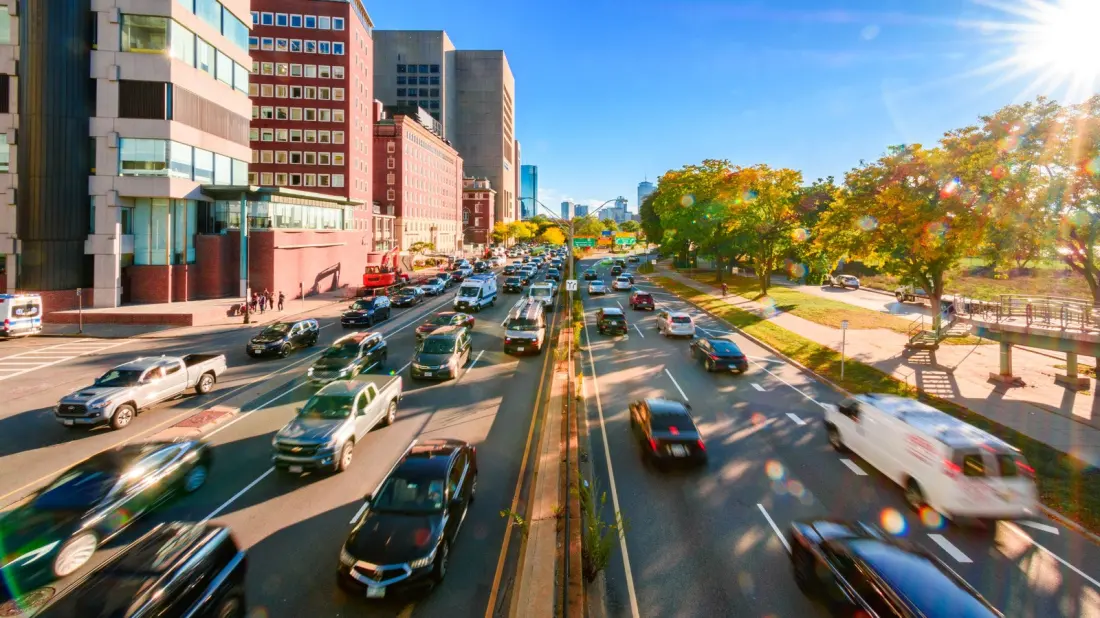
Boston has officially earned its reputation. Allstate's 2026 America's Best Drivers Report, which ranks the 200 largest US cities on insurance claims and driving behaviour like speeding, hard braking and phone use, names Boston the most collision-prone city in the country. The average Boston driver goes just 3.76 years between crashes, and drivers there are 189% more likely to have a collision than the national average. For contrast, in Brownsville, Texas — America's safest driving city — drivers go nearly 15 years between crashes.
This isn't a fluke. Boston also topped the 2015 edition of the same report, and 2026 could mark the 11th straight year at the bottom. The Northeast dominates the risky end of the list overall: after Boston come Washington, D.C., Baltimore, and fellow Massachusetts cities Worcester and Springfield.
The reasons are baked into the city itself. Boston's street layout is famously illogical. While parts of the city, like Back Bay and South Boston, do have grids, they don't line up with each other, and plenty of streets meander with no clear direction — urban planning researcher Geoff Boeing told the Boston Globe that the competing orientations make it genuinely hard to know where you're heading. Add the 2022 Inrix scorecard ranking Boston's congestion as the fourth worst in the world, behind only London, Chicago and Paris, plus heavy New England snow in winter, and conditions get dicey fast. Locals often drive anyway because the MBTA subway isn't dependable, which keeps more stressed drivers on the road.
Then there's the culture. Boston University transportation lecturer Terry Regan put it bluntly in the Boston Globe: people in Massachusetts 'didn't get termed Massholes for no reason' — they tailgate and push through yellow lights. When Boston.com asked readers to describe local drivers in 2023, many wore the aggression as a badge of honour, blaming chaotic roads and claiming out-of-towners simply can't keep up.
For visitors, the takeaway is practical: renting a car in central Boston is more stress than it's worth. The core of the city — the Freedom Trail, Fenway Park, the North End, the waterfront — is compact and very walkable, and the T, plus rideshares, will get you most other places. If you're road-tripping in New England, pick up the car on your way out of the city rather than driving in it, and give yourself extra time and patience if you must navigate Boston's streets, especially in winter.