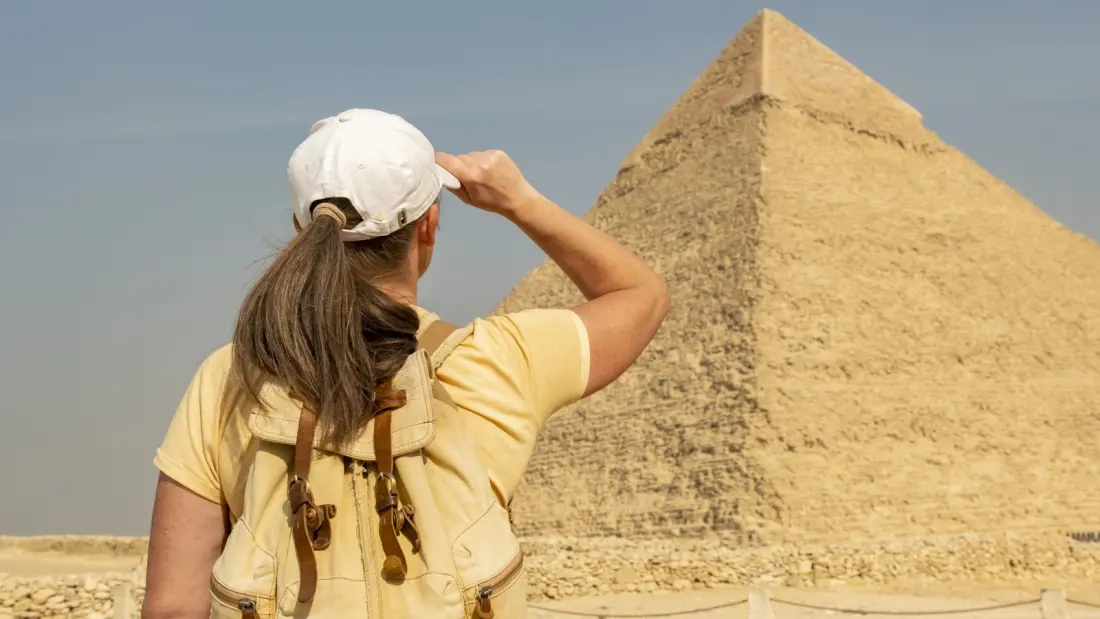
Egypt has more than 100 surviving pyramids, some dating back over 4,000 years, and millions of visitors show up each year to see them — with the Great Pyramid of Giza standing as the last surviving Wonder of the Ancient World. But plenty of those visitors break local rules within minutes of arriving, often without realizing it.
The most serious rule: don't climb the pyramids. Egypt's parliament criminalized scaling antiquities in 2019, with penalties including imprisonment or fines approaching $2,000. Beyond the legal risk, it's genuinely dangerous — the Great Pyramid tops out around 450 feet — and human contact, sweat and even breath emissions contribute to degrading the 4,500-year-old stone.
Ticketing also trips people up. A single ticket does not grant access to everything. At Giza, general entry costs EGP 700 (about $12.50) and covers exterior views of the three big pyramids and the Sphinx, but going inside any of them costs extra. Saqqara's general ticket, roughly EGP 600 (about $11.26), includes the Step Pyramid exteriors and the Imhotep Museum, while the nearby Grand Egyptian Museum starts at around EGP 1,830 (about $32.50) — though that ticket includes hop-on, hop-off shuttle buses. Access inside monuments shifts with maintenance schedules, too; the Pyramid of Khafre has opened and closed repeatedly over the years, so sticking to marked routes matters.
Dress modestly — shoulders and knees covered — even though there's no formal dress code. Loose linen and cotton keep you presentable by local standards and shield you from brutal desert sun. Bring a hat or scarf, sunglasses, and comfortable walking shoes.
Pack for a full day: water, snacks, electrolytes, and sunscreen reapplied every few hours, since on-site food and drink prices run high. Tickets at Giza are card-only now, but vendors and tip-giving still run on cash, so carry Egyptian pounds in small denominations, plus a passport copy, wipes and a power bank.
Watch for scams. Self-appointed "helpers" flock to arrivals near Giza, steering tourists toward commission-paying shops or fake entrances. Camels may be walked into your photo then billed to you; "gifts" placed in your hand come with an invoice. Pushy or uncredentialed guides are red flags.
Photography has limits. Personal photos are fine, but drones are effectively illegal for tourists — permits are nearly impossible to get — and commercial gear like tripods and lighting rigs requires authorization. Flash may be restricted inside the tombs, and always ask before photographing locals.
Finally, think twice before booking a camel ride. Ethical concerns around animal welfare at the sites are increasingly part of the conversation for responsible travellers.
For anyone planning a first trip to Giza or Saqqara, these aren't bureaucratic nitpicks — they shape whether the day goes smoothly. Know what your ticket covers, dress for modesty and heat, keep small bills handy, politely decline unsolicited help, and leave the climbing to the archaeologists. You'll see more, spend less and avoid the fines and awkward encounters that catch out unprepared visitors.